
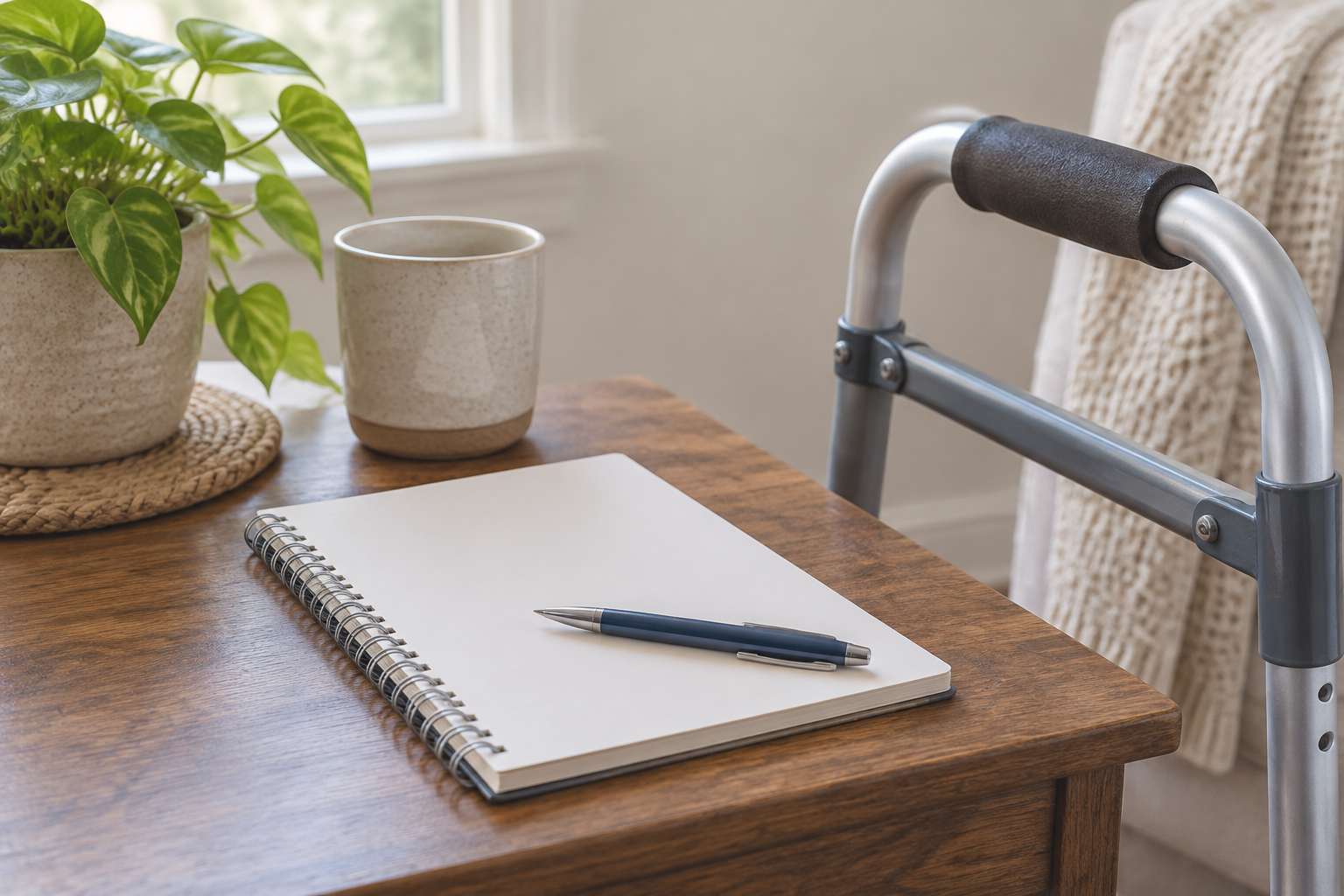
If you use a cane, walker, wheelchair, or another mobility aid, describe both the equipment and the help you already use when discussing detox intake in FL. The name of a device is a starting point, but it does not explain your whole routine. Someone who uses a walker independently may have different needs from someone who also needs another person's help getting up from a chair.
Separate three questions: what you currently use, what assistance you need, and what the receiving team needs to confirm about the proposed setting. You do not have to determine admission suitability yourself. Your role is to describe your situation accurately so the appropriate team can consider it alongside your other care needs.
What mobility details should you share before intake?
Start with your usual mobility aid and the everyday assistance you already receive. The broader detox assessment and admission process considers health and support needs together, while a conversation about drug and alcohol detox gives you an opportunity to explain how those needs affect your daily routine.
MedlinePlus explains that mobility aids help people walk or move from place to place when they have a disability or injury. Examples include canes, crutches, walkers, wheelchairs, motorized scooters, and prostheses. It also identifies ramps, stairlifts, and handrails as aids that can help people move around their environment. This makes the surrounding space relevant, not just the device you bring.
Use ordinary descriptions rather than trying to assign yourself a medical category. Explain what happens during a typical day, including situations in which you need more help. A short written summary can keep important distinctions clear during a conversation.
- Name the aid: Say whether you use a cane, walker, wheelchair, scooter, crutches, or another device, and whether you use more than one.
- Describe when you use it: Explain whether it is part of all movement or mainly used for longer distances or particular activities.
- Describe personal assistance: State whether someone helps you stand, move between surfaces, manage doors, or complete other daily tasks.
- Explain environmental needs: Mention the steps, distances, seating arrangements, or bathroom features that affect your ordinary routine.
- Identify existing guidance: Tell the receiving team if a health professional has given you instructions about your device or mobility.
Keep ability and assistance separate. Saying that you can move between a bed and a wheelchair may leave out that another person helps each time. If you are calling for someone else, report what you have observed and identify anything you do not know. Leave the adult receiving care involved whenever possible.
How do arrival needs differ from everyday access?
Arrival concerns getting to the intake location; everyday access concerns how you would move through the proposed stay. Use Florida Helps contact options to raise practical questions, and keep them connected to the individualized planning described in detox assessment and admission guidance.
A workable drop-off arrangement does not answer every question about a bedroom, bathroom, or shared space. Likewise, information about a building entrance does not establish what personal assistance is available. Ask about the particular areas you would use rather than relying on a general description of the setting.
| Part of the visit | What to explain | What to ask the receiving team |
|---|---|---|
| Drop-off and entrance | Your aid and any help needed getting from the vehicle to intake. | Where should you arrive, and what route would you use? |
| Intake conversation | Whether sitting, standing, or moving between seats requires assistance. | What arrangement is planned for the assessment conversation? |
| Movement during a stay | How you use your aid between sleeping, bathroom, and shared areas. | How would those routes work with your specific device? |
| Daily personal tasks | The help you already need with transfers, bathing, dressing, or toileting. | Who should discuss whether the proposed arrangement meets those needs? |
If a family member usually helps at home, describe that assistance without assuming the same arrangement will continue during treatment. Ask how support-person involvement would be handled and what the plan would be after that person leaves. Their willingness to help is important information, but it does not by itself establish what the receiving setting can provide.
For a powered device, ask whether the team needs details about its size, charging requirements, or storage. Present these as questions about your equipment, not assumptions about available space or electrical arrangements. The answer needs to apply to the actual location being considered.
Who should confirm access and care questions?
The receiving team should address the proposed setting, while clinical questions belong with the appropriate health professional. You can request a conversation with Florida Helps and explain that you have both access questions and health questions related to detox care.
Different questions may need different people. Admissions can be a starting point for asking who should discuss arrival arrangements. Questions about how your mobility needs fit with withdrawal care require the clinical team considering your situation. Questions about changing or fitting your mobility aid belong with a professional qualified to assess the device and your needs.
MedlinePlus advises that a health care provider or physical therapist may help choose a mobility aid. It notes that some devices require sufficient strength or balance and that crutches, canes, and walkers should be fitted. A poorly fitting device can be uncomfortable and unsafe. Do not assume that changing to a smaller or different aid is the right answer to an access concern.
Try asking for a concrete explanation rather than a broad reassurance. For example: “I use a wheelchair and need another person to help me move to a bed. Who should discuss that need with me before arrival?” This identifies the task without asking a nonclinical contact to decide whether a particular level of care is appropriate.
If the answer addresses only the entrance, bring the conversation back to the rest of your routine. The goal is a shared understanding of what you need throughout the proposed stay, not simply permission to bring a device.
What if your needs, date, or receiving setting changes?
Tell the team what changed and revisit the arrangements affected by that change. Planning for detox care depends on current needs, and the assessment and admission framework explains why recommendations can change when new information becomes available.
A conversation about one location or date should not be treated as an answer for every later arrangement. A different receiving location may involve different routes and spaces. A change in your assistance needs may also leave an earlier description incomplete. Explain the change without trying to decide its clinical significance yourself.
- Identify what is different. State whether the change concerns your mobility aid, the help you need, the proposed location, the appointment date, or your transportation.
- Update the relevant person. Ask who needs the information. Changes in health or function should reach the clinical team rather than remain only in a scheduling conversation.
- Revisit the affected details. Ask whether the arrival route, daily assistance discussion, equipment arrangements, or support-person plan needs another conversation.
- Clarify the current plan. Before organizing travel around an earlier discussion, ask which location and date are now proposed and which questions remain unresolved.
Keep the distinction between an appointment and a care recommendation clear. A scheduled conversation is not the same as a clinical assessment, and an assessment does not require you to know the final plan in advance. Ask the team to explain what the next step is and which decisions depend on further discussion.
If another setting is recommended, ask how your mobility information will be included in planning for that setting. Describe the same everyday needs again when necessary. Do not assume that details about one building, room, or support arrangement automatically carry over to a different location.
How can you share current care details privately?
Begin with a request to speak, then ask how to share health information with the appropriate team. The Florida Helps contact form asks people to keep health and insurance details out of the form; the fuller discussion belongs within the assessment and admission process.
A callback request can stay simple: “I would like to discuss adult detox care and mobility-related access questions.” You do not need to place your diagnosis, medication list, detailed assistance needs, or insurance information in that initial request. Ask how and with whom to discuss those details before sending records or a longer health summary.
Prepare a private note for the conversation. Include your usual device, the assistance you currently receive, any professional instructions you already follow, and the practical questions that matter most to you. If you have current care records, ask the team what information is relevant and how it should be shared. Do not assume that every document is needed.
When someone helps you make the call, decide what you want them to explain and what you prefer to discuss yourself. A support person can help remember questions or describe assistance they provide. Their involvement should support your participation, not replace your account of your needs or the team's assessment.
Before ending the conversation, summarize what you understand: the proposed next step, who will address the access questions, and how any remaining health details should be communicated. It is reasonable to ask for an explanation again if a general answer does not address your particular routine.
Call 8669319677 to request information.
Frequently asked questions
What details from my existing situation should intake know first?
Start with the mobility aid you use and the help you already need during an ordinary day. Explain whether you use the aid all the time or for particular activities. Mention assistance with standing, moving between surfaces, or personal tasks. If someone else is calling, they should distinguish observed facts from details they do not know.
Who can answer questions specific to my mobility needs?
Ask the receiving team who should discuss access arrangements and who should address clinical concerns. A health care provider or physical therapist may help with choosing or fitting a mobility aid. The clinicians assessing your detox needs should consider how your health and assistance needs fit with the proposed care setting.
What should the receiving team confirm before admission?
Ask about the actual arrival location, the route to intake, movement between everyday spaces, and how your stated assistance needs would be addressed. Include questions specific to your device when relevant. An answer about the entrance alone does not explain bathroom access, transfers, or support throughout a proposed stay.
What if the proposed setting or appointment date changes?
Ask which earlier arrangements still apply and which need another discussion. Confirm the current location and date, and explain any changes in your device or assistance needs. Information about one building or planned stay should not be assumed to describe another. Clinical changes should reach the appropriate clinical team.
How can I share current care details privately?
Keep the initial website request brief and ask how to discuss health information with the appropriate team. Florida Helps asks people not to put health or insurance details in its contact form. Prepare your mobility summary privately, then ask what records are relevant and how the receiving team wants them shared.