
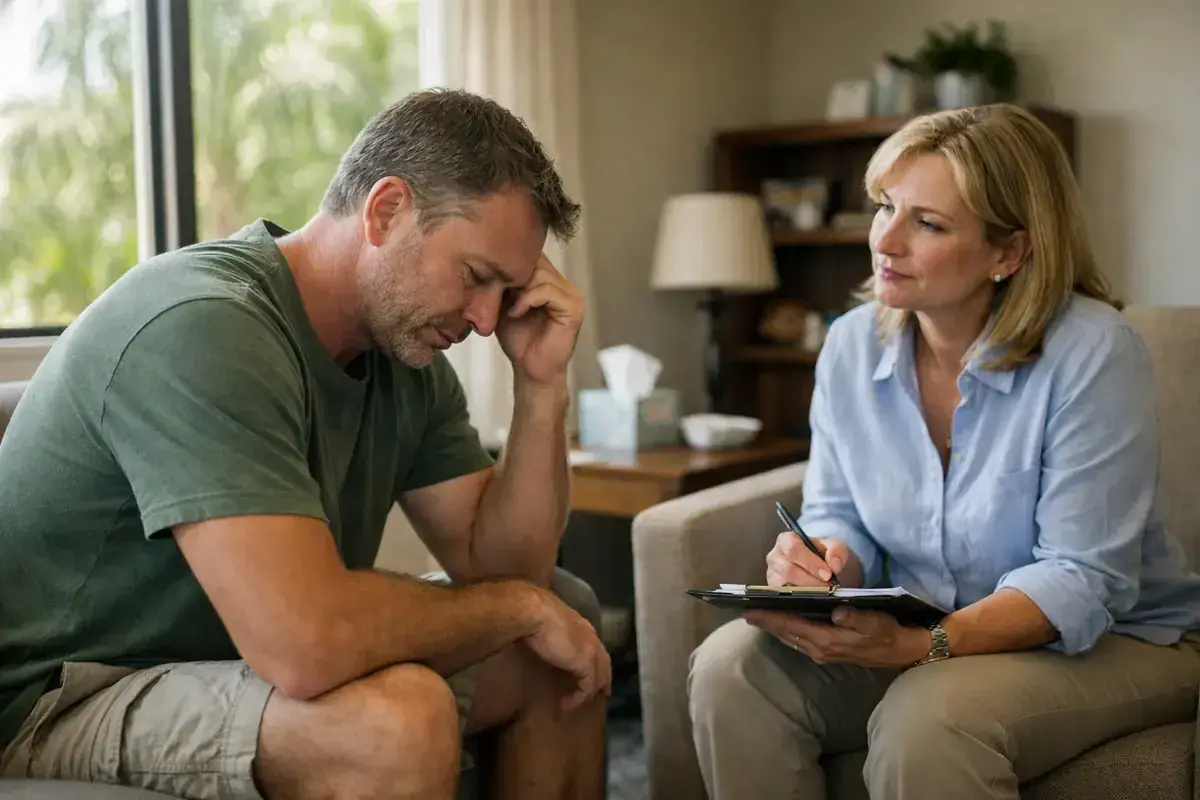
Gabapentin is prescribed for conditions such as nerve pain, seizures, and sometimes anxiety-related symptoms, but it can also lead to physical dependence in some people. When someone takes it regularly for a period of time, stopping suddenly or cutting back too fast may cause gabapentin withdrawal. For adults and families in Florida, this can be confusing because the medication may seem less risky than other substances, yet the withdrawal process can still be distressing and, in some cases, medically concerning.
Florida Helps offers medically supervised detox in Florida. If withdrawal is starting or you are afraid to stop on your own, call 866-931-9677 today.
If you are worried about gabapentin withdrawal, it is important not to guess your way through it. The safest next step is a professional assessment and, when needed, medically supervised detox. Florida Helps provides care in Florida for people dealing with substance use and co-occurring mental health concerns, including detox, residential treatment, and outpatient services. You can learn more about medically supervised detox at https://floridahelps.com/programs/detox/ or call 866-931-9677 to talk through options.
What gabapentin withdrawal is and why it happens
Gabapentin affects signaling in the nervous system. Over time, the brain and body may adapt to its presence, especially when it is taken regularly, at higher doses, or along with other substances. If the medication is stopped abruptly, that adjustment can trigger withdrawal symptoms. Not everyone who takes gabapentin will experience withdrawal, but the risk is real enough that stopping without medical input can be unsafe.
Withdrawal may be more likely when gabapentin has been used for a long time, when doses have increased, or when a person has a history of substance misuse. In Florida treatment settings, it is also common to see gabapentin involved with alcohol, opioids, or benzodiazepines, which can complicate symptoms and raise the level of care needed. A careful assessment helps determine whether detox, residential care, or outpatient treatment is the right place to begin.
Because symptoms can overlap with anxiety, insomnia, other medication changes, or withdrawal from additional substances, self-diagnosis is not enough. A licensed clinical team can review substance use, mental health history, current medications, and medical concerns before recommending a taper, monitoring, or a higher level of care. That kind of individualized assessment is especially important during Florida’s hot months, when dehydration and poor sleep can make people feel worse.
Common gabapentin withdrawal symptoms
Gabapentin withdrawal symptoms can range from uncomfortable to severe. Some people notice early anxiety and restlessness, while others develop more intense physical and psychological symptoms over the next day or two. The presentation can vary based on dose, length of use, age, overall health, and whether other substances are involved. Families often describe a loved one as suddenly agitated, sleepless, or unlike themselves after trying to stop.
Symptoms may include both body-based and mood-based changes. While not every person will experience the same pattern, warning signs should be taken seriously, especially if they escalate quickly. In a medically supervised detox setting, providers monitor for symptom changes and respond based on the person’s condition rather than using a one-size-fits-all approach.
- Anxiety, agitation, or panic-like feelings
- Insomnia or vivid, disturbing dreams
- Nausea, sweating, tremors, or rapid heart rate
- Mood swings, irritability, or depressed mood
- Confusion, disorientation, or, in some cases, seizure risk
How levels of care differ for gabapentin withdrawal
| Level of care | Best for | Support provided | Typical next step |
|---|---|---|---|
| Medically supervised detox | Active withdrawal or medical risk | Monitoring, stabilization, assessment | Residential or outpatient |
| Residential treatment | Ongoing symptoms or high relapse risk | 24/7 structure and therapy | Step down to outpatient |
| Outpatient treatment | Stable symptoms and strong support | Scheduled therapy and follow-up | Continued recovery care |
| Emergency evaluation | Seizure, confusion, or severe instability | Immediate medical attention | Detox or hospital-based care |
| Home taper without supervision | Not ideal for many cases | Limited safety oversight | Often needs reassessment |
Gabapentin withdrawal timeline: what to expect
There is no single timeline that fits everyone, but gabapentin withdrawal often begins within roughly 12 hours to a few days after the last dose or a sharp dose reduction. Early symptoms may include unease, insomnia, sweating, or stomach upset. For some people, the most intense phase happens in the first several days. Others experience a more uneven course, particularly if multiple substances are involved or if there is an underlying mental health condition.
A supervised setting can help distinguish expected withdrawal discomfort from warning signs that need prompt attention. This matters in Florida communities where people may try to manage symptoms alone at home, continue working outdoors, or travel long distances between counties without support. Even when symptoms seem manageable at first, they can intensify quickly, which is one reason detox should start with an assessment rather than a plan made from online advice alone.
After the acute phase, some people still feel emotionally raw, fatigued, or sleep-deprived. That does not necessarily mean detox failed; it often means the person needs ongoing treatment and stabilization. Florida Helps can help patients move from detox into the level of care that fits their needs, including residential or outpatient services, so treatment does not stop at the point where symptoms begin to ease.
When withdrawal becomes dangerous and why detox matters
Gabapentin withdrawal should not be brushed off as only mild discomfort. In some cases, people may develop severe anxiety, disorientation, blood pressure changes, or seizures. The risk can be higher if gabapentin is mixed with alcohol, opioids, benzodiazepines, or other sedating drugs. According to guidance widely used in addiction medicine, including principles from ASAM and information from NIDA and SAMHSA, polysubstance use and co-occurring mental health conditions can increase complexity and safety concerns during withdrawal.
Medically supervised detox provides monitoring, supportive care, and treatment planning in a structured environment. It also helps reduce the chance that a person returns to substance use simply to stop the symptoms. In Florida, where access to street drugs can vary by region and heat-related stress can worsen physical instability, trying to self-manage at home can be especially risky. Starting detox at https://floridahelps.com/programs/detox/ gives people a safer, more accountable entry point into care.
A detox recommendation is never automatic. The right level of care follows an assessment of symptoms, medical history, psychiatric needs, substance use patterns, and home support. Some people may need residential treatment after detox, while others may transition to outpatient care. What matters most is getting evaluated early instead of waiting for withdrawal, relapse, or a mental health crisis to force the decision.
- Higher concern if there is a history of seizures
- Higher concern if gabapentin is used with alcohol or sedatives
- Higher concern if the person has severe anxiety, depression, or confusion
- Higher concern if there is no reliable support at home
- Higher concern if withdrawal follows heavy or long-term use
Withdrawal can be dangerous to manage alone. Our Florida detox program provides 24/7 medical monitoring and a plan for what comes next. Call 866-931-9677.
Detox, residential, or outpatient: choosing the right starting point
Many families ask whether detox is really necessary or whether outpatient care is enough. The answer depends on the assessment. Detox focuses on safe withdrawal and stabilization. Residential care adds round-the-clock structure and therapy after detox, which may be helpful if there is relapse risk, unstable living conditions, or significant mental health distress. Outpatient treatment can work well for some people who are medically stable and have reliable support, but it is not the safest first step for everyone.
For Florida residents, logistics also matter. Distance, transportation, hurricane season disruptions, family responsibilities, and work demands can all affect the plan. A good treatment recommendation balances safety with practicality, but it should not minimize medical risk. If you are unsure where to start, beginning with a detox evaluation is often the clearest path. Florida Helps can assess the situation and guide the next step based on actual needs, not assumptions.
Related reading
- Orlando Gabapentin Withdrawal Help
- Miami Gabapentin Withdrawal Symptoms
- Tampa Gabapentin Withdrawal Detox Guide
- Jacksonville Gabapentin Withdrawal Support
- Can Florida ERs Treat Gabapentin Withdrawal?
- South Florida Gabapentin Detox Resources
- Florida 988 for Gabapentin Withdrawal Crisis
- Gabapentin Withdrawal in Florida
- Florida Prescription Rules and Gabapentin Misuse
If you or someone you love is showing signs of gabapentin withdrawal, do not wait for symptoms to spiral. Start with a professional assessment and ask whether medically supervised detox is the safest next step. Florida Helps serves adults and families in Florida with detox, residential, and outpatient treatment based on individual needs. Learn more at https://floridahelps.com/programs/detox/ or call 866-931-9677 now to speak with someone about getting started.
Start medically supervised detox in Florida
Do not wait for withdrawal to get worse. Our admissions team can talk through detox at Florida Helps and the next level of care. Call 866-931-9677.
Frequently asked questions
Can you die from gabapentin withdrawal?
Gabapentin withdrawal is not something to dismiss. While experiences vary, severe complications can occur, including seizures or dangerous instability, especially when other substances are involved. The safest response is to seek professional evaluation rather than trying to predict whether symptoms will stay mild. In Florida, medically supervised detox may be the most appropriate starting point after assessment.
How long does gabapentin withdrawal last?
The timeline is different for each person. Symptoms may begin within hours to a few days after stopping and can be strongest in the first several days, but sleep, mood, and anxiety issues may last longer. Factors such as dose, duration of use, other drugs, and medical history all matter. A treatment team can assess what level of support is needed.
Should I stop gabapentin cold turkey?
Stopping suddenly is generally not a good idea unless a medical professional has told you to do so in a specific situation. Abrupt discontinuation can raise the risk of withdrawal symptoms and other complications. If dependence is possible, the best next step is a clinical assessment. That evaluation helps determine whether a taper, detox, or another treatment approach is safer.
Is gabapentin withdrawal like opioid withdrawal?
They are not the same, but there can be overlap in symptoms such as anxiety, sleep problems, sweating, and distress. Gabapentin withdrawal can also bring confusion, agitation, or seizure risk in some cases. Because the picture may be complicated by co-use with opioids, alcohol, or benzodiazepines, professional assessment is important instead of assuming the withdrawal will follow one pattern.
When should someone in Florida go to detox for gabapentin withdrawal?
Detox should be considered when there are moderate to severe withdrawal symptoms, a history of heavy or long-term use, co-occurring mental health concerns, polysubstance use, or limited support at home. It is also wise to seek urgent help for seizures, disorientation, or rapid worsening. Florida Helps can start with an assessment and recommend the appropriate level of care.
Further treatment information
These public health resources offer background for comparing options and preparing questions for a care team. They do not confirm local appointment availability.