
7-OH is short for 7-hydroxymitragynine, a potent compound found naturally in kratom, but only in trace amounts. The products now showing up at gas stations and vape shops are a different story. They’re far more concentrated, they act on the same brain receptors as opioids, and Florida has moved to ban the strongest versions outright.
If you or someone you love has come to rely on 7-OH tablets or shots, know that kratom and 7-OH addiction treatment is available, and medically supervised care can make stopping far safer.
Florida Helps admissions is available 24/7 if 7-OH use has become hard to control.
What 7-OH Is and How It Differs From Plain Kratom
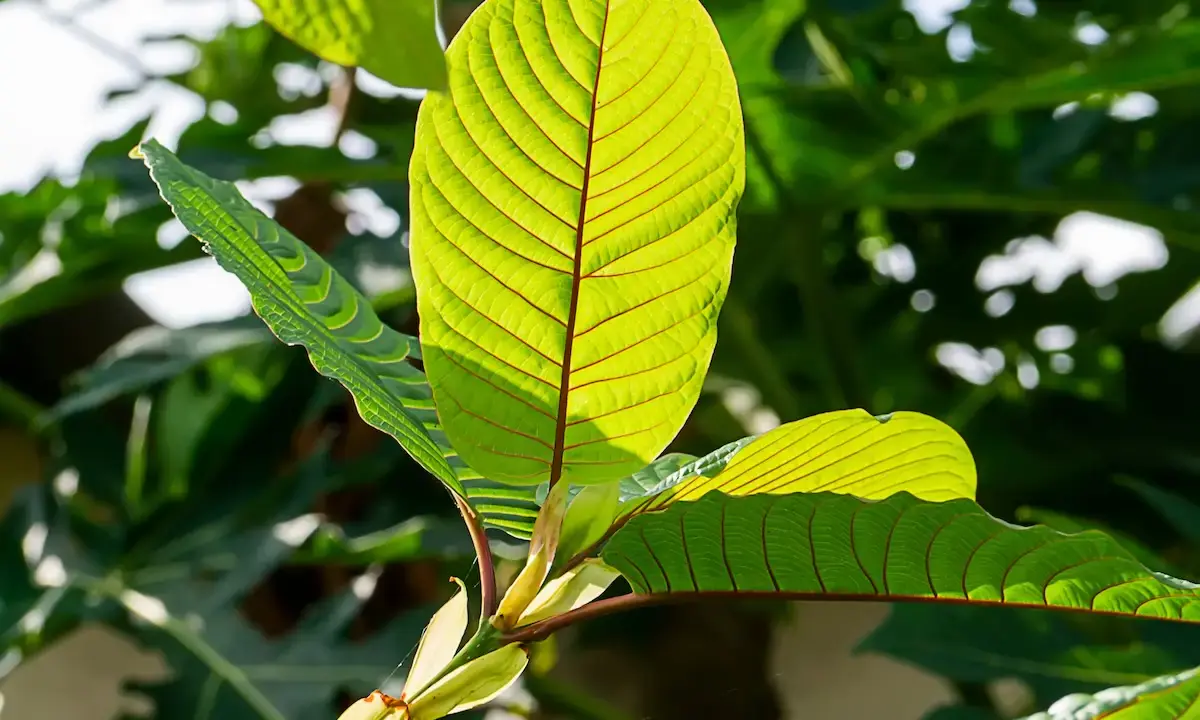
Kratom comes from the leaves of Mitragyna speciosa, a tree native to Southeast Asia. According to the National Institute on Drug Abuse (NIDA), kratom can produce stimulant-like effects at low doses and opioid-like effects at higher ones. The plant contains dozens of alkaloids, but two matter most here: mitragynine, the main alkaloid, and 7-hydroxymitragynine, or 7-OH, a minor one.
In the natural leaf, 7-OH makes up only about 0.01 to 0.04 percent of the plant. The difference with today’s retail products comes down to concentration. Manufacturers isolate or semi-synthesize 7-OH and press it into tablets, gummies, drink mixes, and shots sold under brand names like Hydroxy, 7Tabz, and 7OHMZ. DEA laboratory testing has found that these commercial products often contain far more 7-OH than anything present in botanical kratom. In other words, 7-OH isn’t “just kratom.” It’s the plant’s most opioid-like ingredient, stripped out and packed into a dose the leaf could never deliver on its own.
Why 7-OH Acts Like an Opioid
Both mitragynine and 7-OH are partial agonists at the brain’s mu-opioid receptors, the same receptors that morphine, oxycodone, and heroin act on. That’s why 7-OH can relieve pain and create a sense of calm or euphoria, and it’s also why it carries classic opioid risks. The FDA warns that kratom’s opioid compounds can cause sedation, nausea, constipation, physical dependence and withdrawal, and, at high doses, respiratory depression that can be fatal.
7-OH is the bigger concern because it’s simply more potent. Research indicates that 7-hydroxymitragynine has substantially greater mu-opioid receptor potency than mitragynine, and even than classical opioids like morphine. Florida’s State Surgeon General has described concentrated 7-OH products as acting on opioid receptors and being linked to addiction, overdose, and seizures.
The Risk Profile: Dependence, Overdose, and Children

Because 7-OH behaves like an opioid, regular use can lead to tolerance, needing more for the same effect, followed by physical dependence and withdrawal when use stops. Florida officials have tied the harm to real numbers: state medical examiners have linked at least 587 overdose deaths to these products since 2013, and recent Poison Control cases have included patients ranging from infants to older adults, with more than 25 percent of some case sets requiring ICU care.
A separate danger is how these products are marketed and sold. Bright packaging and candy-like flavors sit on convenience-store counters within easy reach of teenagers. Florida’s Agriculture Commissioner reported that state inspectors removed more than 23,000 illegal 7-OH packages from retailers after the state’s emergency rules took effect.
If you’re a parent who found one of these products, you’re not overreacting. You can learn more about how kratom acts on opioid receptors, or talk with our team about next steps.
Florida’s Regulatory Status (As of July 2026)
Florida has moved aggressively on this issue. In August 2025, Attorney General James Uthmeier signed an emergency rule targeting concentrated 7-OH. On June 22, 2026, he signed an expanded emergency rule placing 7-OH and several related compounds, including mitragynine pseudoindoxyl, 7-acetoxymitragynine, MGM-15, and MGM-16, into Schedule I in Florida. Under the rule, no product may contain more than 1 milligram of these chemicals per gram or milliliter, and any product containing 7-OH must contain at least 100 times more regular mitragynine by mass. Violations can carry penalties of up to 30 years in prison.
At the federal level, the DEA filed a notice of intent on July 1, 2026 to temporarily place 7-OH, above a specified threshold, and three related substances into Schedule I, after HHS confirmed they have no accepted medical use and a high potential for abuse. The temporary federal scheduling order isn’t expected to take effect before August 5, 2026. The FDA has also issued warning letters to companies selling 7-OH products, stating that the compound is not an approved drug and doesn’t meet safety standards.
How 7-OH Is Sold and How to Spot It

Part of what makes 7-OH risky is how ordinary it looks. It’s sold at gas stations, convenience stores, vape and smoke shops, and online, in forms that resemble candy or supplements: tablets, capsules, gummies, drink mixes, dissolvable strips, and small “shot” bottles.
Florida officials have named brands marketed in appealing flavors, including Hydroxy, 7Tabz, 777 Jackpot Alkaloids, Roxy 7-OH, and 7OHMZ, and have warned that some sellers use mislabeling to dodge detection.
If you find a product advertising “7-OH,” “7-hydroxy,” or a high-potency kratom “extract,” it’s worth treating it as an opioid-like substance, not a harmless herbal supplement.
Who Is Most at Risk
Anyone can develop a problem, but a few groups warrant extra concern. Teens and young adults are drawn in by the flavors, low cost, and easy access at the counter. People already managing chronic pain, anxiety, or a prior opioid problem may find 7-OH’s effects especially reinforcing. And people who use it daily just to feel “normal,” or to avoid feeling sick between doses, have likely crossed from casual use into dependence.
Florida’s Poison Control has reported cases spanning ages from infants, through accidental exposure, to older adults, which shows just how widely these products have spread.
Signs of 7-OH Dependence
Dependence can build quietly. Common signs include needing higher doses for the same effect, taking 7-OH to head off withdrawal (feeling sick, anxious, or achy between doses), failed attempts to cut down, spending more money and time securing the product, and continuing use despite problems at work, school, or home.
When a legal supply suddenly disappears, as it now has in Florida, people who are heavily dependent can be caught off guard by kratom and 7-OH withdrawal symptoms, which resemble opioid withdrawal.
Getting Help

The good news is that this is treatable, and no one has to white-knuckle it alone. Florida Helps provides kratom and 7-OH addiction treatment, including medically supervised detox with 24/7 monitoring in Miramar, so withdrawal is managed by clinicians rather than endured on your own.
After stabilization, many clients step into residential treatment to build recovery skills and our team coordinates step-down care as needed. If a co-occurring concern like anxiety or depression is part of the picture, our dual diagnosis program treats both together.
If 7-OH or kratom use has become hard to stop, our admissions team can walk you through the admission process and check your coverage. Call (866) 931-9677 or verify your insurance online to start detox today.
A note on cost: Florida Helps accepts select insurance plans, and Blue Cross and Cigna are commonly accepted. Most other plans are treated as out-of-network unless verified, and Medicaid and Medicare are not accepted. The fastest way to get accurate, individualized information is to verify your insurance benefits with our team.
If you or someone you love is in crisis, call or text 988 (Suicide & Crisis Lifeline), or call 911 for a medical emergency. If withdrawal symptoms feel dangerous, seek medical care right away. Don’t stop use abruptly without medical support.
If you have any questions, you’re welcome to contact Florida Helps directly.
Frequently Asked Questions
Is 7-OH Legal in Florida?
No, not the concentrated products. As of July 2026, Florida has placed 7-OH and several related compounds into Schedule I by emergency rule, and products exceeding the state’s low concentration limits are illegal to sell or possess. A federal temporary scheduling action is also underway and isn’t expected to take effect before August 5, 2026. Because this is changing quickly, it’s worth verifying the current status before relying on it.
Is 7-OH an Opioid?
7-OH isn’t a traditional plant-based or prescription opioid, but it behaves like one. It’s a partial agonist at the brain’s mu-opioid receptors, the same receptors morphine and oxycodone act on, which is why it can cause opioid-like effects, dependence, withdrawal, and, at high doses, dangerous respiratory depression.
How Is 7-OH Different From Kratom?
7-OH is one of the alkaloids inside kratom. In the natural leaf, it makes up only about 0.01 to 0.04 percent of the plant. The retail “7-OH” products sold as tablets, gummies, and shots are concentrated or semi-synthetic versions that deliver far more of this opioid-like compound than the leaf ever could, which makes them substantially more potent and risky.
Sources & Citations
All statistics, dates, laws, and clinical claims are grounded in the primary and authoritative sources below.
- National Institute on Drug Abuse (2026) ‘Kratom’, National Institute on Drug Abuse, 11 March. Available at: https://nida.nih.gov/research-topics/kratom (Accessed 22 July 2026).
- Florida Office of the Attorney General (2026) ‘Attorney General James Uthmeier signs emergency rule immediately scheduling dangerous 7-OH-related substances’, Florida Office of the Attorney General, 22 June. Available at: https://www.myfloridalegal.com/newsrelease/attorney-general-james-uthmeier-signs-emergency-rule-immediately-scheduling-dangerous-7 (Accessed 22 July 2026).
- U.S. Drug Enforcement Administration (2026) ‘DEA to temporarily schedule 7-OH and related substances to protect public safety’, U.S. Drug Enforcement Administration, 1 July. Available at: https://www.dea.gov/press-releases/2026/07/01/dea-temporarily-schedule-7-oh-and-related-substances-protect-public (Accessed 22 July 2026).
- American Psychiatric Association (2025) ‘What is kratom and why is it raising concerns?’, American Psychiatric Association, 22 October. Available at: https://www.psychiatry.org/news-room/apa-blogs/what-is-kratom-and-why-is-raising-concerns (Accessed 22 July 2026).
- U.S. Food and Drug Administration (2025) ‘FDA and kratom’, U.S. Food and Drug Administration, 2 December. Available at: https://www.fda.gov/news-events/public-health-focus/fda-and-kratom (Accessed 22 July 2026).
- Sexton, Christine (2026a) ‘More 7-OH related products made illegal in Florida by a new emergency rule’, Florida Phoenix, 22 June. Available at: https://floridaphoenix.com/2026/06/22/more-7-oh-related-products-made-illegal-in-florida-by-a-new-emergency-rule/ (Accessed 22 July 2026).
- Sexton, Christine (2025) ‘Florida AG issues emergency rule banning kratom compound’, Florida Phoenix, 13 August. Available at: https://floridaphoenix.com/2025/08/13/florida-ag-issues-emergency-rule-banning-kratom-compound/ (Accessed 22 July 2026).
- Drug Enforcement Administration (2026) ‘Schedules of controlled substance: Temporary placement of 7-hydroxymitragynine above a specified threshold in Schedule I’, Federal Register, 6 July. Available at: https://www.federalregister.gov/documents/2026/07/06/2026-13580/schedules-of-controlled-substance-temporary-placement-of-7-hydroxymitragynine-above-a-specified (Accessed 22 July 2026).