
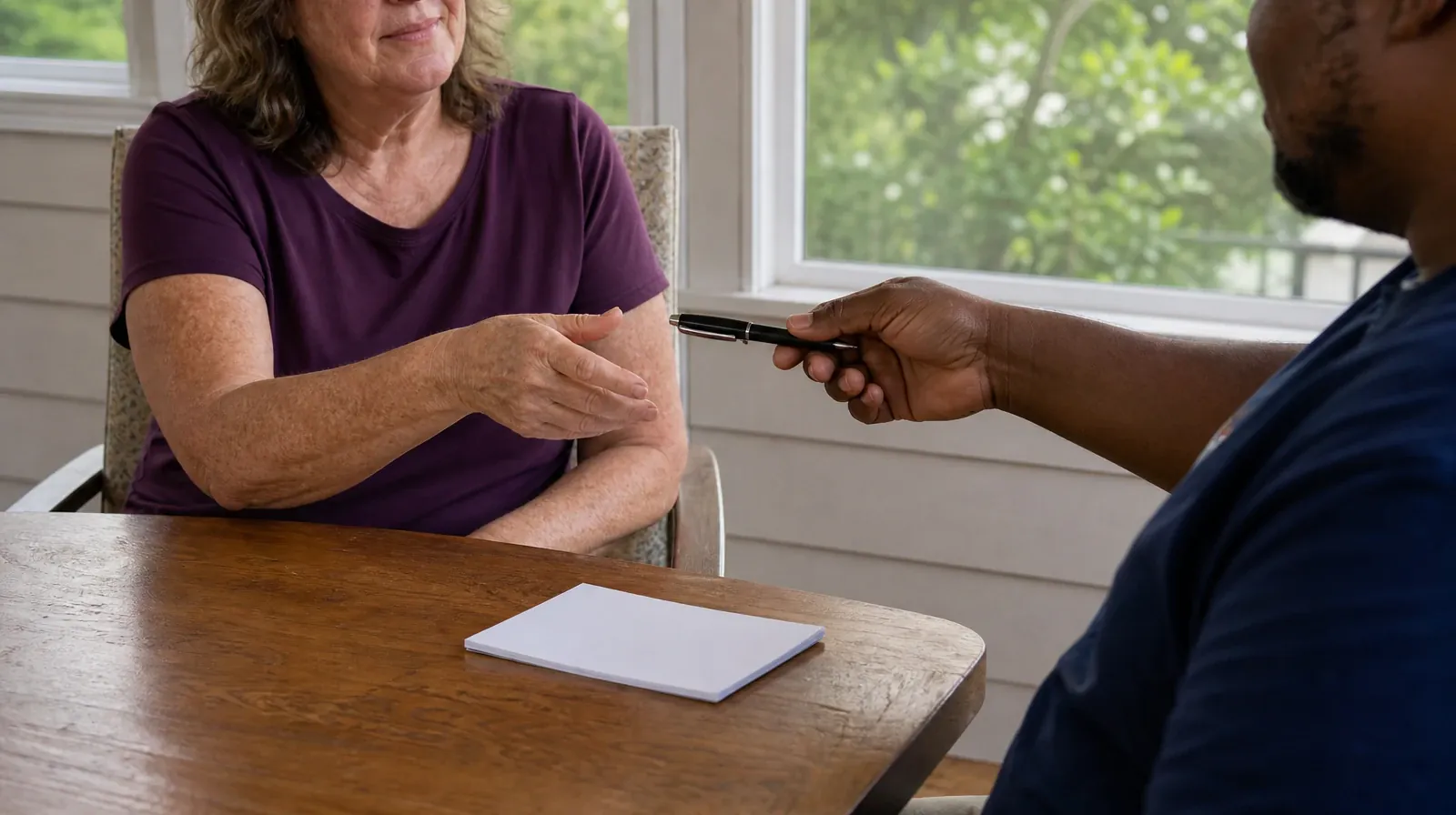
Two care options
Understanding drug and alcohol detox options for Palm Beach Gardens residents
Detox and residential treatment serve different parts of adult addiction care. If you’re looking at addiction care for Palm Beach Gardens residents or treatment options for Palm Beach County residents, the important distinction is this: beginning to stop substance use and continuing addiction treatment aren’t the same task.
When drug or alcohol use is taking up more of your day, it can be hard to think beyond stopping. Detox focuses on that beginning. Florida Helps offers adult drug and alcohol detox, giving you a specific treatment option to consider rather than leaving you to make sense of every possible type of help at once.
Residential treatment means living at a treatment program while receiving addiction care. Its value is the opportunity to make treatment a central part of daily life, rather than another task squeezed around your usual responsibilities. Florida Helps offers residential drug and alcohol addiction treatment as well as detox, so the conversation can include both needs.
Sources
- Understand the difference: Adult detox and residential care serve different purposes, even when both matter to your treatment journey.
- Know what residential means: Residential treatment means living at the program, with addiction care at the center of your day.
Your needs
Finding a fit in adult detox and residential care for Palm Beach Gardens residents
Your needs matter more than choosing a treatment label on your own. The Palm Beach Gardens addiction treatment information and Palm Beach County care information give you a starting point. Different people may need different types of care, and treatment can involve more than one type.
You may be concerned about your own drinking or drug use, or noticing changes in someone you love. Either way, you don’t need to settle on a diagnosis to take that concern seriously. Getting help can begin while you’re still unsure what the problem means or which treatment option would be appropriate.
Drug and alcohol detox options for Palm Beach Gardens residents deserve a closer look when you’re considering a change. A useful starting point is understanding what each option is for, rather than assuming everyone follows the same path. The purpose of care is to address the person’s needs, not make the person fit a label.
Sources
- Start where you are: Your concern is enough reason to begin a conversation, even without a diagnosis or settled treatment choice.
- Leave room for individual needs: Treatment may involve more than one type of care, depending on the needs of the individual.
Treatment location
Where Palm Beach Gardens residents receive detox and residential care
Florida Helps’ treatment facility is at 3600 Red Road, Suite 501-A, Miramar, FL 33025. For you, addiction treatment from Palm Beach Gardens and care for Palm Beach County residents mean considering treatment away from your home community, with a clear understanding of where care takes place.
Location matters because treatment is a real part of your life, not just a name on a list. If you’re considering residential care, you’re considering living at the program. Knowing the destination helps make that choice concrete and gives you a clearer picture of what stepping into this kind of care involves.
Searching for Drug and Alcohol Detox for Palm Beach Gardens, FL Residents may begin close to home, but the next step can still be a simple phone conversation. You don’t have to resolve the whole decision today. Florida Helps’ admissions team is the point of contact for discussing its adult detox and residential treatment.
Sources
- A clear treatment destination: Palm Beach Gardens is your starting community; Florida Helps provides its adult treatment at the Miramar facility.
- One step at a time: A phone conversation gives you a manageable first step while you consider what treatment would mean.
Getting started
Starting a conversation about Palm Beach Gardens detox and residential treatment
Care planning starts with understanding the two options Florida Helps offers: adult detox and residential addiction treatment. Alongside Palm Beach Gardens treatment support and Palm Beach County addiction care information, a phone conversation with admissions gives you a direct way to begin discussing help for yourself or a loved one.
You don’t need a polished explanation of what’s happening. You may only know that substance use is making life harder, or that carrying the worry alone is wearing you down. Calling lets you bring that concern into a conversation about treatment instead of continuing to sort through unfamiliar care terms on your own.
Adult detox and residential care for Palm Beach Gardens residents can be discussed without treating the call as a decision about every step ahead. Start with what’s happening now. Call (866) 931-9677 to talk with Florida Helps about its adult care options and take the next step at your own pace.
Sources
- A direct way to connect: Admissions begins by phone, so you can speak directly about your interest in adult addiction treatment.
- No perfect explanation needed: You can call for yourself or a loved one without having the entire treatment path decided.
Looking ahead
Thinking beyond the first step in Palm Beach Gardens addiction care
Treatment can involve more than one type of care over time. As you consider addiction recovery options for Palm Beach Gardens residents and adult treatment for Palm Beach County residents, it helps to see detox as one possible part of care, rather than the whole answer to ongoing substance use concerns.
The first step can feel big enough on its own. You don’t have to map out every later stage to understand why continued treatment matters. Detox and residential treatment have different purposes, and keeping both in view makes room for needs that reach beyond the beginning of stopping drug or alcohol use.
For a loved one, this distinction can also make the situation easier to understand. Beginning care and continuing care are related, but they aren’t identical. Florida Helps offers both adult detox and residential addiction treatment. When you’re ready to move from worrying about the options to discussing them, call and start with the concern that brought you here.
Sources
- Think about continuing care: A treatment path can include different types of care rather than one step that addresses every need.
- Keep the next step manageable: Understanding both detox and residential treatment helps you see beyond the first decision without rushing it.
Straight answers, without pressure
Questions people often ask
You can read what feels useful and bring the rest into a private conversation.
Are detox and residential treatment the same thing?
No. Detox addresses the beginning of stopping substance use, while residential treatment means living at a program for addiction care. Florida Helps offers both for adults. They serve different purposes, so thinking about treatment as more than a single step can make the options easier to understand.
Where would I receive treatment if I live in Palm Beach Gardens?
Florida Helps provides adult detox and residential addiction treatment at its Miramar facility. Palm Beach Gardens is the community you’re coming from. Residential care involves living at the program, so understanding the treatment setting is part of understanding what this option would mean for your daily life.
Can care include support for mental health concerns?
Florida Helps includes co-occurring support within adult drug and alcohol detox and residential addiction care. That means mental health concerns can be part of the addiction-care picture. This is not a separate psychiatric admissions program. You don’t need to put a diagnosis on your experience to describe what’s troubling you.
Can I call about treatment for someone I love?
Yes. You can call about adult treatment for a loved one, even if you’re still trying to understand the options. The immediate step is a conversation with admissions, not choosing every part of care. Call Florida Helps at (866) 931-9677 to talk about getting help.
Educational information for adults and loved ones. A qualified professional can help apply it to your health and circumstances. Editorial oversight: Tim Francis.