
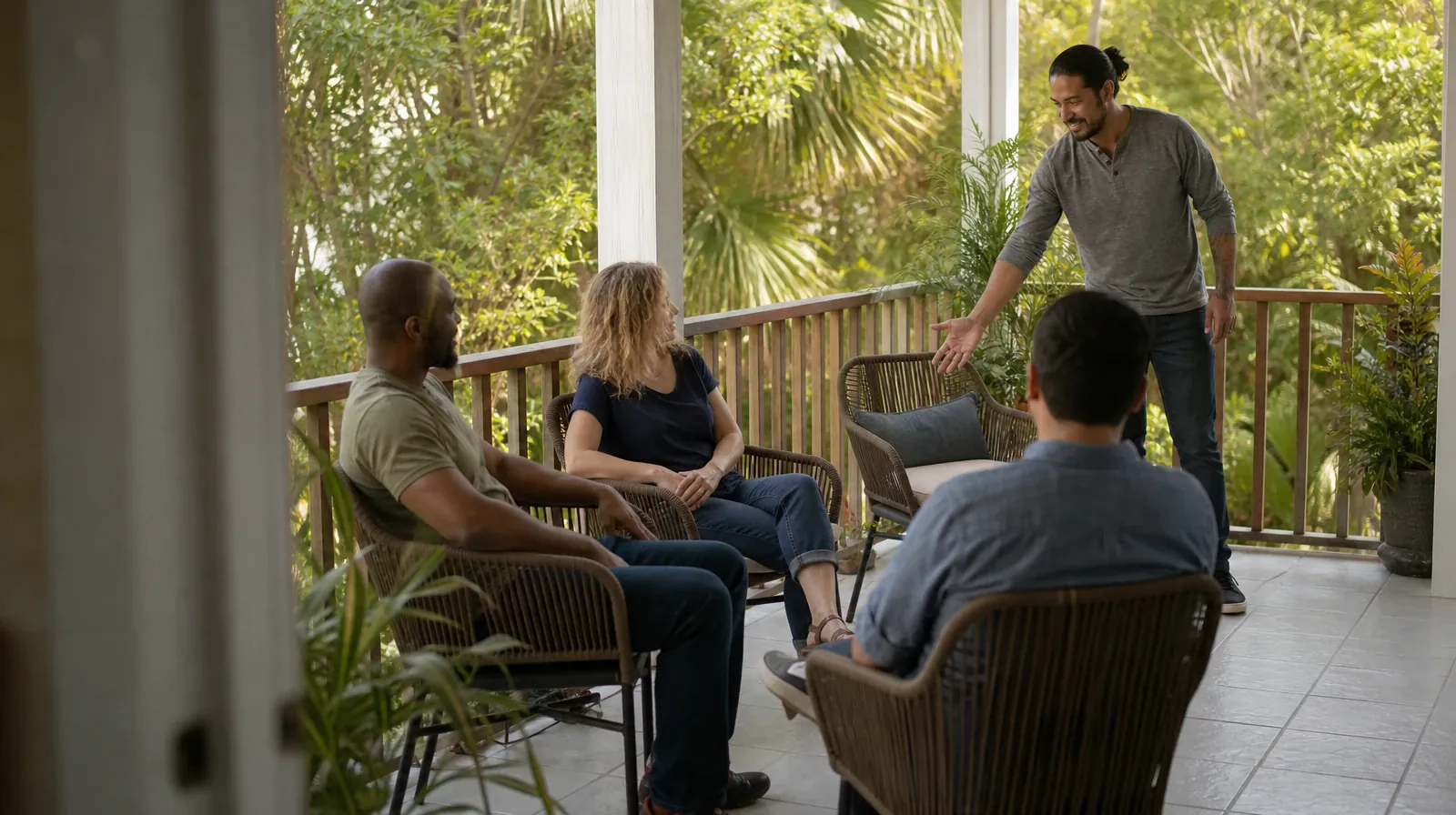
Notice the pattern
Changing social routines around Vicodin use in South Florida
Social habits can become closely tied to Vicodin use. Learn about Vicodin and opioid use and explore Florida Helps’ adult treatment programs as you consider what may need to change. Changing Social Routines Around Vicodin Use in South Florida can begin with noticing which plans leave you feeling supported and which make it harder to move toward the help you want.
You might notice that certain gatherings, people, places, or times of day have become part of a pattern you want to change. You don’t need to judge yourself for that. Paying attention to what feels difficult can help you decide where a different routine or added support could make daily life feel more manageable.
Changing a routine may reduce contact with reminders or situations linked to use, but it isn’t a substitute for treatment when treatment is needed. Support for opioid use disorder can involve different approaches, including counseling and behavioral therapies. What fits depends on the person’s health, substance use, goals, and practical circumstances.
Sources
- Start with awareness: Notice which social plans feel supportive and which ones you may want to change.
- Keep the bigger picture: A new routine can help, while treatment may provide additional support.
Add connection
Build support into South Florida Vicodin recovery routines
Avoiding every social situation can leave you feeling isolated. Read about Vicodin concerns and see the adult care Florida Helps offers while thinking about how support could fit into your life. Changing social routines during Vicodin recovery in South Florida can mean choosing connection that feels steadier, not trying to manage everything alone.
A trusted person may offer practical help, emotional support, a listening ear, or help finding care. You can share only what feels manageable; you don’t have to explain everything at once. A private conversation with someone you trust may be a gentle way to let them know you could use support.
If one conversation doesn’t help, another trusted person or a health professional may respond differently. Support doesn’t have to come from one source. It can include people in your life and, when appropriate, structured adult treatment. The right next step depends on what you’re facing and what kind of help you want.
Sources
- Choose support that feels safe: Connection can make change feel less solitary without requiring you to tell everyone.
- Let support be practical: A trusted person or professional may help you find a useful next step.
Take a manageable step
Make South Florida Vicodin routine changes realistic
A change is more likely to fit your life when it reflects your real responsibilities and circumstances. Explore Vicodin information and review Florida Helps’ adult treatment options as you consider what support may be useful. Changing routines around Vicodin use doesn’t require solving every part of life at once.
You might begin by noticing one part of the week that feels difficult, then consider a different activity or more supportive company. Keep the change small enough to manage alongside work, family, and other responsibilities. If your circumstances change, it’s reasonable to adjust the plan rather than treat a difficult day as failure.
A routine shift can be one part of a broader effort. Treatment planning for opioid use disorder should take a person’s health, substance use, goals, and practical circumstances into account. If you have questions about medication, a qualified prescribing professional is the right person to answer them; a website can’t determine what is appropriate for you.
Sources
- Keep it workable: Small, flexible changes can fit better around everyday responsibilities.
- Make room for your needs: Your circumstances and goals matter when considering treatment support.
Understand treatment options
South Florida Vicodin support from people and treatment
Support may come from someone you trust, a health professional, or an adult treatment program. Learn more about Vicodin use and see Florida Helps’ adult programs to understand the options in context. The aim isn’t to force a particular path, but to make it easier to find support that matches your situation.
Florida Helps provides adult drug and alcohol detox and residential addiction treatment at its facility in Miramar, Florida. These programs may be relevant if you’re considering structured care for substance use. Co-occurring support is available within those adult detox and residential programs; it is not a separate mental health admission.
Treatment for opioid use disorder can involve medication, counseling, and behavioral therapies, but that general information doesn’t mean a particular therapy or medication is offered at Florida Helps. A treatment plan should reflect the person’s needs and circumstances. Calling admissions can help you understand the facility’s actual adult program options.
Sources
- Know where care is based: Florida Helps’ adult detox and residential care is located in Miramar.
- Get information directly: A call can help you understand the adult programs and discuss a possible next step.
Talk about support
A South Florida conversation about Vicodin support
You can start with one conversation about what’s happening and what kind of help you want. Review information about Vicodin and learn about Florida Helps’ adult treatment programs as you consider whether to call. You don’t have to settle every decision before talking with admissions.
If you’re ready to discuss care, call Florida Helps admissions at (866) 931-9677. The facility is in Miramar, and the adult program scope includes drug and alcohol detox and residential addiction treatment. A conversation can help you understand those options and decide what you want to do next.
Changing social routines around Vicodin use in South Florida may feel easier with another person’s support, but there’s no single routine that works for everyone. You can begin with the concern that feels most important today. If you’re calling for someone you love, you can also discuss the adult program options as a concerned family member.
Sources
- Begin with a call: One conversation can help make the next step clearer without committing you to a decision.
- Reach out for information: You can call for yourself or discuss options for a loved one.
Straight answers, without pressure
Questions people often ask
You can read what feels useful and bring the rest into a private conversation.
Do I need to stop seeing everyone I know?
No. The goal isn’t to cut off every relationship. You can notice which settings or habits feel connected to Vicodin use and make room for safer, more supportive routines. A trusted person may help you feel less alone. If you’re considering treatment, a call can help you understand Florida Helps’ adult program options.
Can changing my routine replace treatment?
Routine changes can support recovery, but they don’t replace treatment when you need more help. Treatment for opioid use disorder may combine medication, counseling, and behavioral therapies, with a plan shaped around the person. Florida Helps provides adult drug and alcohol detox and residential addiction treatment in Miramar.
What if I’m not sure what kind of help I need?
You don’t need to have everything figured out before reaching out. A conversation can begin with what’s happening now and the kind of support you want. Florida Helps’ admissions team can talk with you about its adult detox and residential addiction treatment. Medication questions belong with a qualified prescribing professional.
Can a family member call about someone they love?
Yes. If you’re worried about someone, you can call to discuss Florida Helps’ adult treatment options. You don’t need to diagnose your loved one or have every detail ready. A call can help you understand the program scope and consider a next step that respects their circumstances.
Educational information for adults and loved ones. A qualified professional can help apply it to your health and circumstances. Editorial oversight: Tim Francis.