
Begin with one concern
Starting a conversation about Xanax use in South Florida
You can begin by naming what you’ve noticed and what kind of support you want, without having every detail figured out. Our guide to Xanax explains the topic, while Florida Helps adult treatment programs describes the care available in Miramar. Sharing one concern can be enough to begin.
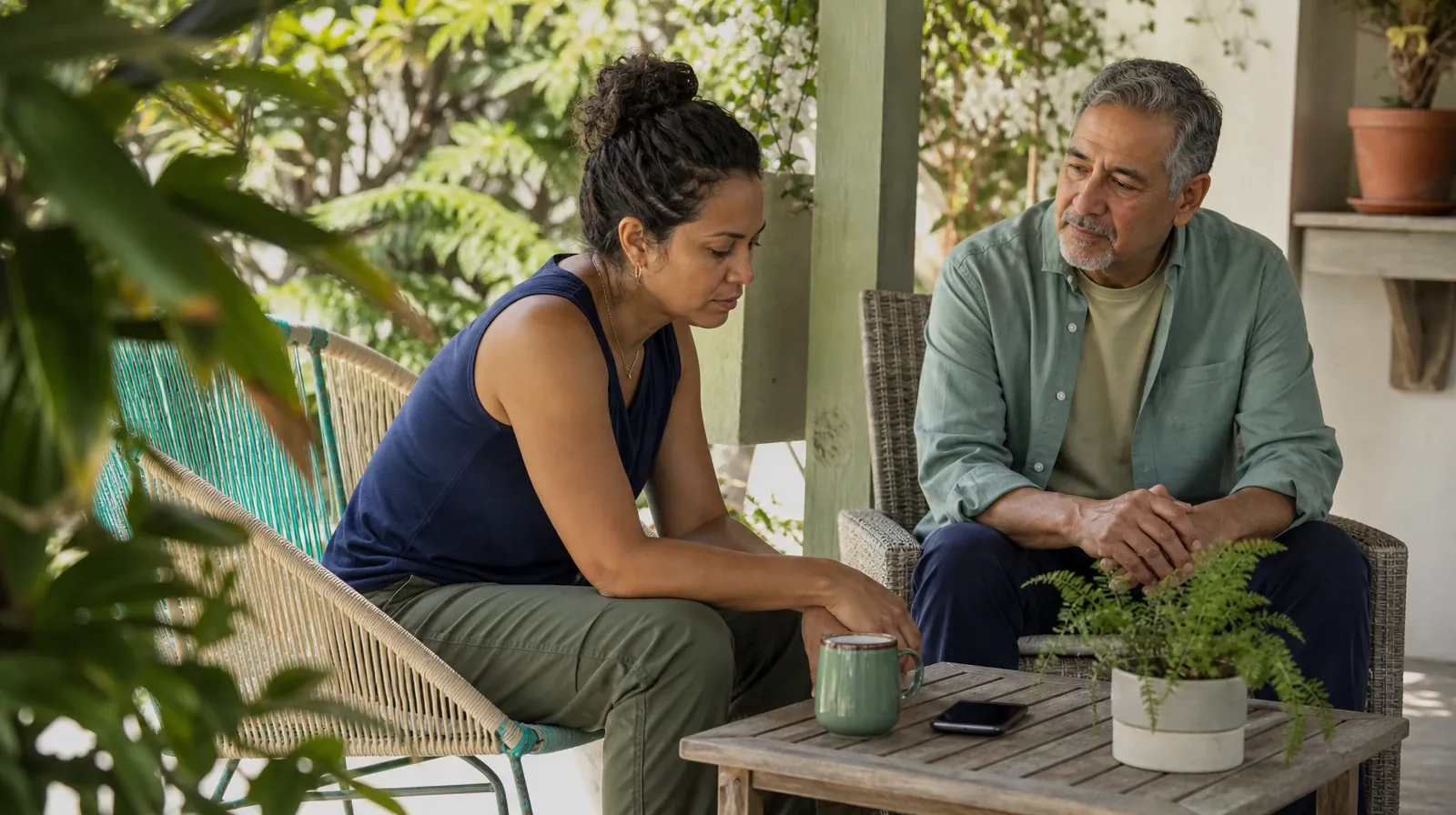
It can feel hard to bring up Xanax use, especially if you’re unsure how the other person will react. You don’t need to prove a problem or give a complete account. Choose the part you’re ready to share: what’s concerning you, what has changed, or why you want someone beside you while you think through next steps.
You might want a listener, emotional support, practical help, or help finding care. Those are different needs, and it’s okay if you’re still sorting them out. A clear, small request can help the other person understand what would be useful now, rather than leaving both of you to guess.
Sources
- Start where you are: A conversation can begin with one concern, even if you’re not ready to explain everything.
- Make the need clear: Name the kind of support you want, whether that’s listening, practical help, or help finding care.
Talk about concerns, not labels
Talking about Xanax without deciding on a diagnosis
You don’t need to diagnose yourself or your loved one to ask for support. The Xanax information page offers general context, and adult treatment options explain Florida Helps’ detox and residential programs. People respond differently to substances, so a conversation can focus on what’s happening rather than a label.
Prescription medicines can be misused when they’re taken differently from directions, but a single description doesn’t tell you what another person’s needs are. Concerns about Xanax use deserve care and attention without assumptions. A trusted conversation is a way to share what you’re seeing or experiencing, not a test you must pass.
Substance use concerns vary in severity, and a professional assessment is needed to understand an individual’s situation. You can be honest about uncertainty and still ask for support. If the first person you speak with isn’t helpful, another trusted person or a health professional may offer a different response.
Sources
- No label required: You can talk about concerns without deciding what they mean or applying a diagnosis.
- Keep it individual: A professional assessment, not a website or one conversation, evaluates individual care needs.
Make room for an honest conversation
Choosing a private moment to discuss Xanax concerns
A private moment can make a difficult conversation easier to begin. The Xanax resource gives you a place to learn more, and Florida Helps’ adult programs explain treatment options for adults. You can keep the conversation simple and share only what feels useful at that time.
When you’re ready to talk, choose a time and place where you can speak privately and without rushing. The goal isn’t to make a perfect case; it’s to let someone you trust know what’s concerning you. You can pause, take the conversation one part at a time, and decide what you’re comfortable sharing.
A focused request may make it easier for the other person to respond. You might want company while you look for care, help with a practical task, or simply someone to listen. You don’t have to explain every detail or settle the whole question of treatment in one conversation.
Sources
- Choose a calmer moment: Privacy and time can create more room for an honest, unhurried conversation.
- Keep the request manageable: One specific need can give a trusted person a clearer way to support you.
Support can take different forms
Finding support for Xanax use in South Florida
Support might mean being heard, getting practical help, or connecting with care; it doesn’t have to mean making every decision immediately. Our Xanax resource provides general information, and the adult programs page describes Florida Helps’ treatment in Miramar. Talking with someone can help you consider what kind of support feels useful.
If someone you trust is concerned about your Xanax use, their role can be to listen and help you think through options, not to diagnose you. You can tell them what would help in the moment. If you want care, connecting with a health professional or treatment admissions team can be a next step.
If you’re supporting a loved one, remember that this can be tiring and isolating. Your own trusted support, restorative routines, or a support group may help you care for yourself as well. You can offer support without carrying the whole situation alone or taking responsibility for someone else’s choices.
Sources
- Let support fit the need: Support can be emotional, practical, or focused on finding professional care.
- Care for yourself, too: Loved ones can seek their own support while caring about someone else.
Consider care at your own pace
Considering adult treatment for Xanax use in South Florida
If you’re considering treatment, Florida Helps provides adult drug and alcohol detox and residential addiction treatment at its facility in Miramar. Read about Xanax and adult treatment programs to understand the general context and care scope. A call can help you discuss the concern and available options.
Detox and residential treatment are different forms of support within adult addiction care. Residential care involves living at a treatment program. Florida Helps provides adult drug and alcohol detox and residential addiction treatment; co-occurring support is available only within those programs. A conversation with admissions can help you understand whether these treatment options may fit your situation.
You don’t have to wait until you’ve found the perfect words or know exactly what you need. If you’re ready to talk, call Florida Helps admissions at (866) 931-9677. You can describe what’s happening and discuss adult treatment options without presuming a diagnosis or commitment.
Sources
- Understand the care available: Florida Helps provides adult detox and residential addiction treatment in Miramar.
- Talk through a next step: A direct admissions call can help you discuss the concern and treatment options.
Straight answers, without pressure
Questions people often ask
You can read what feels useful and bring the rest into a private conversation.
Do I need to know whether Xanax use is a disorder before I tell someone?
No. You can share what you’ve noticed and how it’s affecting you without labeling it or deciding what care you need. People’s experiences differ, and only an individualized professional assessment can evaluate a substance use disorder. A trusted person can support you while you consider what to do next.
What if the person I tell doesn’t respond well?
A difficult response doesn’t mean you were wrong to reach out. You can turn to another trusted person or a health professional; someone else may respond differently. You also don’t have to explain everything at once. Start with the part that feels most important to your safety or well-being.
How can I support someone who tells me about Xanax use?
Listen without trying to diagnose or judge them. They may want emotional support, practical help, a listener, or help finding care. You can let them say what would feel useful now. Supporting someone can be tiring, too, so keep your own trusted support and routines in view.
What kind of treatment does Florida Helps provide?
Florida Helps provides adult drug and alcohol detox and residential addiction treatment at its facility in Miramar, Florida. Co-occurring support is offered only within those programs. A call can help you discuss the concern and whether those adult treatment options may fit; it can’t establish a diagnosis or promise an outcome.
Educational information for adults and loved ones. A qualified professional can help apply it to your health and circumstances. Editorial oversight: Tim Francis.