
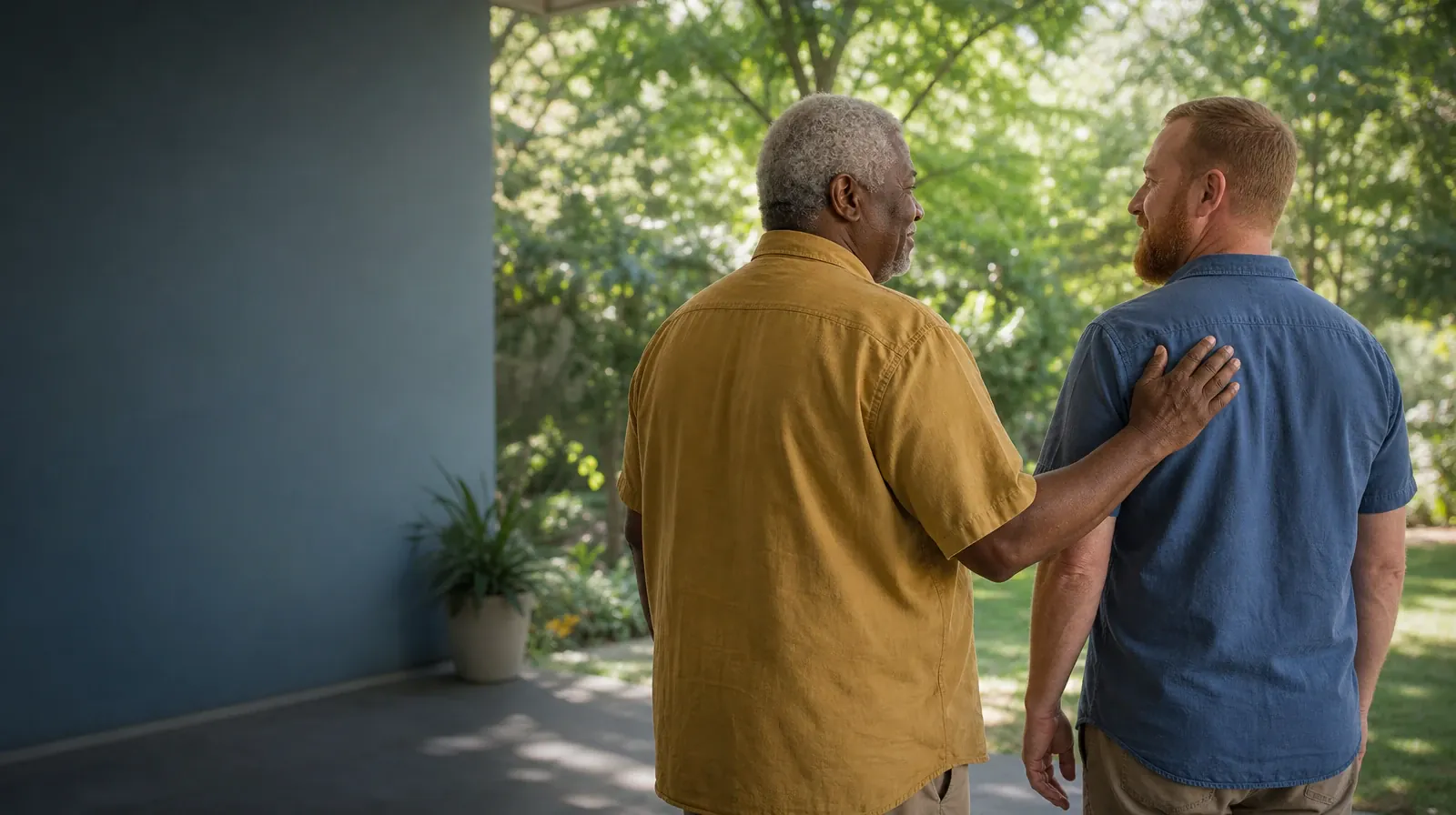
A supportive starting point
Supporting a Partner With Alcohol Use in South Florida Starts With Respect
A caring conversation can begin with what you’ve noticed and how it affects you, without labeling your partner or demanding an immediate decision. Learn about alcohol-related concerns and Florida Helps adult programs to understand what support may involve. Your partner’s choices remain their own.
Alcohol use disorder is a medical condition, not a character flaw, and people’s experiences differ. That means concern doesn’t have to turn into blame. You can describe specific changes that worry you, listen to your partner’s perspective, and make room for a conversation about help without claiming to know what diagnosis or care they need.
Supporting a partner with alcohol concerns in South Florida can also mean recognizing your own limits. You can care deeply and still avoid taking responsibility for another adult’s choices. If alcohol use is affecting your relationship or daily life, outside guidance may help you understand possible next steps without making a commitment on your partner’s behalf.
Sources
- Lead with respect: Focus on care and observable concerns rather than blame, labels, or ultimatums.
- Leave room for choice: Your partner can consider support while keeping the decision about care their own.
Care depends on the person
Alcohol Concerns in South Florida Deserve Individual Attention
People respond differently to alcohol, and one person’s experience can’t determine another’s risks or care needs. Read about alcohol use and treatment and adult care options to see why individual assessment matters. A professional can consider a person’s circumstances rather than assume one path fits everyone.
It may be tempting to compare your partner with someone else or decide that the problem is either severe enough or not severe enough for help. Those comparisons can’t settle what care is appropriate. Substance use concerns vary, and a professional assessment is needed to understand an individual’s situation and needs.
Supporting a partner with alcohol use in South Florida doesn’t require you to work out the clinical answer yourself. Florida Helps provides adult drug and alcohol detox and residential addiction treatment in Miramar. Its care may include co-occurring support within those programs. A conversation can clarify the program scope and help you understand whether it may be relevant.
Sources
- Avoid guessing: An individual assessment is more useful than comparisons or assumptions about severity.
- Understand the care: Florida Helps’ adult programs are detox and residential addiction treatment in Miramar.
Understanding treatment options
A South Florida Alcohol Care Path Can Include More Than Stopping
Stopping alcohol use and receiving ongoing treatment are not the same thing; a care plan should consider what happens beyond detox. Explore alcohol treatment information and Florida Helps’ adult programs to understand the distinction. What may help depends on the person’s needs and professional guidance.
Alcohol treatment choices aren’t one-size-fits-all. A health professional can consider drinking patterns, overall health, and preferences when discussing next steps. Treatment for alcohol concerns can involve different approaches, but general information about an option doesn’t mean that a particular service or therapy is offered at a specific facility.
Florida Helps offers adult drug and alcohol detox and residential addiction treatment in Miramar. Detoxification and withdrawal management alone aren’t the same as ongoing treatment, so thinking about care beyond stopping matters. For a partner, understanding the actual program scope can make the next conversation more grounded and less focused on trying to choose treatment without professional input.
Sources
- Consider what follows: Detox and ongoing treatment are distinct parts of a possible care path.
- Keep care personal: A professional can discuss options in light of your partner’s individual needs.
Support without taking control
Supporting a Partner With Alcohol Concerns in South Florida Includes Boundaries
You can offer care and encouragement while protecting your own well-being. Learn about alcohol treatment considerations and adult program options to understand the support available through Florida Helps. Being supportive doesn’t mean controlling another person’s choices or carrying the situation by yourself.
A partner’s alcohol use can affect the relationship and the people close to them. You’re allowed to recognize that impact and set limits that feel important for your well-being. Boundaries aren’t a punishment or a treatment plan; they’re a way to be clear about what you can and can’t take responsibility for.
Encouraging help can be one part of supporting a partner with alcohol use in South Florida, but your partner decides whether to pursue care. Florida Helps’ programs are adult drug and alcohol detox and residential addiction treatment in Miramar, with co-occurring support only within those programs. You can call for information even if your partner hasn’t decided to call.
Sources
- Protect your well-being: You can care about your partner without managing every choice or outcome.
- Keep the next step open: Information about care can help you understand options without assuming enrollment.
Talk with Florida Helps
A South Florida Alcohol Treatment Conversation Can Start With a Call
You don’t have to decide everything before getting information. Read about alcohol-related care and Florida Helps adult programs, then call to discuss the programs and your partner’s situation. A call is a chance to understand the available level of care, not a commitment to treatment.
If you’re worried about your partner, a direct conversation with Florida Helps can give you clearer information about adult drug and alcohol detox and residential addiction treatment in Miramar. Staff can discuss the program scope with you. Your partner’s circumstances still need individual consideration, and calling doesn’t establish that a particular program is the right fit.
For supporting a partner with alcohol use in South Florida, a small next step can feel more manageable than trying to solve everything at once. You can call Florida Helps at (866) 931-9677 to talk about the adult programs. You can start with what’s happening now and decide what, if anything, you want to do next.
Sources
- Get clear information: A call can provide information about Florida Helps’ adult treatment programs.
- Take one step at a time: You can learn about care without presuming your partner’s diagnosis or enrollment.
Straight answers, without pressure
Questions people often ask
You can read what feels useful and bring the rest into a private conversation.
How can I support my partner without taking over?
You can speak honestly about what you’ve noticed, listen without trying to diagnose, and let your partner make their own decisions. Support can include encouraging professional help while keeping boundaries that protect your own well-being. You don’t have to manage your partner’s care alone.
Does my partner need to reach a crisis before seeking help?
No. You can encourage a conversation about support when alcohol use is affecting daily life, even if there’s no immediate crisis. A professional assessment can help clarify what care may fit. If someone faces an immediate emergency, contact emergency services.
What treatment does Florida Helps offer?
Florida Helps offers adult drug and alcohol detox and residential addiction treatment at its facility in Miramar, Florida. Co-occurring support is available only within those programs. A call can help you understand the programs and discuss whether they may fit your partner’s needs.
Can I call if my partner isn’t ready to call?
Yes. You can call Florida Helps for information as a concerned partner. The conversation can help you understand the adult detox and residential care programs and what next steps may be relevant. Calling doesn’t mean your partner has agreed to treatment or is enrolled.
Educational information for adults and loved ones. A qualified professional can help apply it to your health and circumstances. Editorial oversight: Tim Francis.