
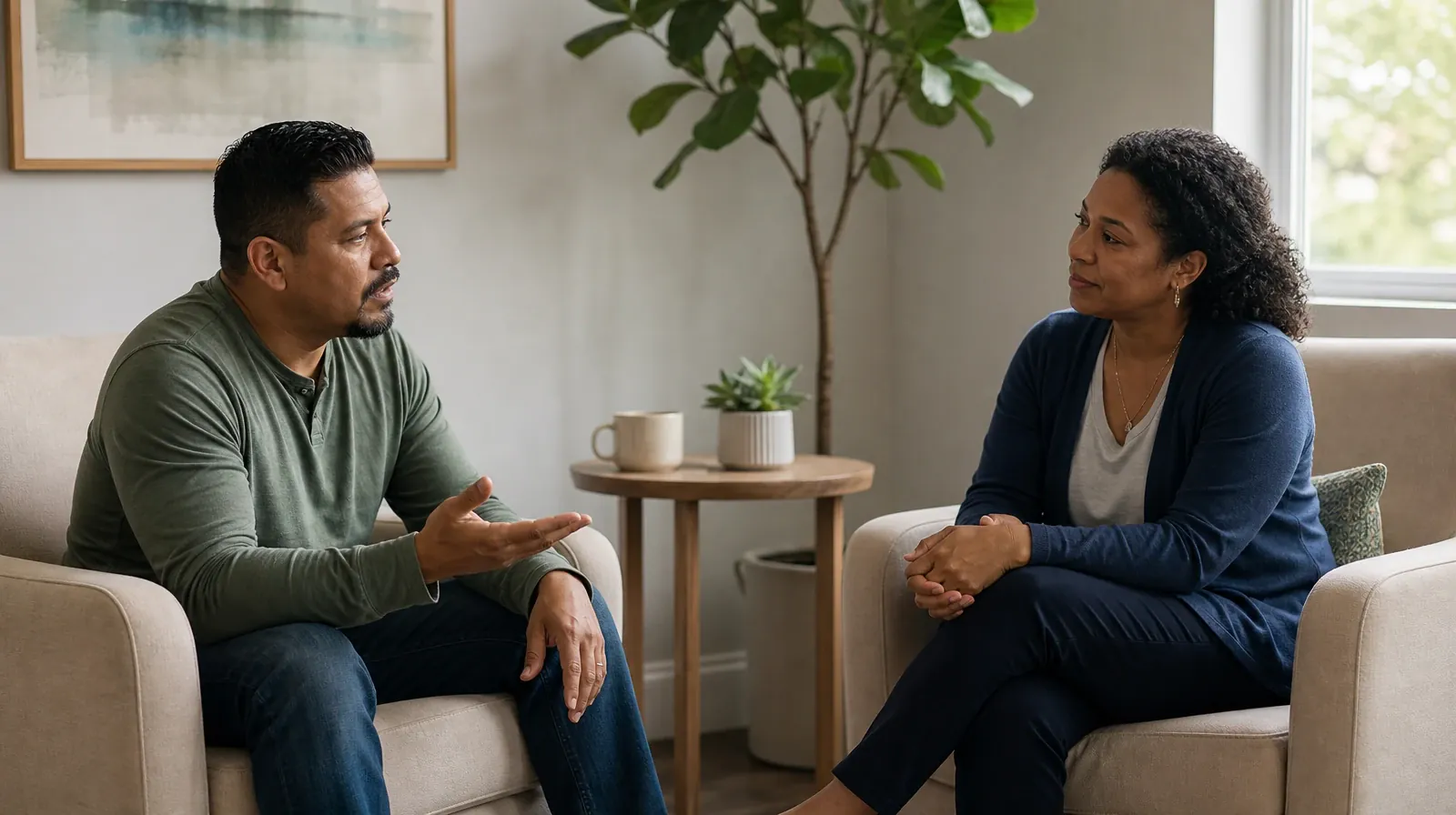
Support begins with respect, clarity, and room for choice
Supporting a family member using hallucinogens in South Florida
Learn about hallucinogens and explore adult treatment options as you think about how to support someone you love. A calm, respectful approach can keep the conversation focused on care rather than blame. You can express concern while leaving room for your adult family member to make choices.
You may have noticed changes in routines, relationships, work, or communication. These observations matter, but they don’t tell you by themselves what diagnosis or treatment a person needs. Try to stay with what you’ve seen and how it affects you. Listening without judgment can make it easier for your loved one to share what’s happening.
Support doesn’t have to wait until a situation feels like a crisis. If the concern is weighing on you, a call can help you understand what Florida Helps offers for adults. Its programs include drug and alcohol detox and residential addiction treatment in Miramar. You can learn what those levels of care mean for your family’s next steps.
Sources
- Lead with respect: Share specific concerns with care, while recognizing that your loved one makes their own decisions.
- Start before crisis: Support for a family member using hallucinogens in South Florida can begin with a clear, caring conversation.
Hallucinogens are a broad category, so individual experiences vary
Understanding hallucinogen use and different experiences
Explore information about hallucinogens alongside Florida Helps adult care options to put your concern in context. Hallucinogens are a broad category, and people’s experiences differ. A label alone can’t explain what your family member is experiencing or determine which type of care may be appropriate.
Your loved one’s experience may not match what you’ve heard from someone else. Focus on the impact you can observe instead of trying to interpret every change or assign a diagnosis. If substance use is affecting daily life or relationships, that concern is worth discussing with care, even when you don’t have every detail.
Treatment can include more than one type of care depending on a person’s needs. Residential care means living at a treatment program; inpatient care generally means staying overnight in a hospital or treatment program. These terms describe broad care settings, not a recommendation for your family member. Florida Helps provides adult detox and residential addiction treatment in Miramar.
Sources
- Keep the person in view: A broad category doesn’t make every person’s experience the same; pay attention to the individual impact.
- Understand care settings: Learning about adult residential treatment can clarify one care option without assuming it is the right fit.
A practical first conversation can focus on observable impact
Talking about concerns and seeking support
Read about hallucinogen-related concerns and adult treatment at Florida Helps as you decide what support could look like. A useful conversation can begin with what you’ve noticed and your care for the person. You don’t need to have a diagnosis or a complete account of events to reach out.
Choose a moment when you can speak calmly and privately, if that feels appropriate. Describe a specific change and why it concerns you, then give your loved one space to respond. Avoid turning the conversation into an argument about labels. Even if they aren’t ready to consider treatment, steady, respectful support can keep communication open.
You can also get information for yourself. Calling Florida Helps gives you a way to learn about its adult drug and alcohol detox and residential addiction treatment. That conversation can make the available care less abstract and help you think through what a possible next step could involve. You aren’t making a diagnosis or committing your family member to treatment by calling.
Sources
- Speak from concern: Grounding a conversation in observed changes can help keep it caring and specific.
- Get information for yourself: A call can help you understand adult care options even if your loved one hasn’t decided.
Care depends on adult needs, not a family member’s conclusion
How adult treatment may relate to family concerns
Review hallucinogen information and Florida Helps programs to distinguish general treatment information from the care offered at its facility. A family member’s conclusion doesn’t determine what treatment is needed. Florida Helps provides adult drug and alcohol detox and residential addiction treatment, with co-occurring support within those programs.
Treatment needs vary. The Substance Abuse and Mental Health Services Administration explains that care can involve more than one type of treatment, depending on a person’s needs. Therapy or counseling may take place individually or in groups and commonly focuses on healthier ways to cope and changing patterns. These general descriptions don’t establish that a particular therapy is offered at Florida Helps.
Florida Helps’ adult care is based at its facility in Miramar, Florida. Its scope is drug and alcohol detox and residential addiction treatment; co-occurring support is provided within those programs. A call can help you understand this care in relation to your concern about hallucinogens. The information here doesn’t establish a hallucinogen-specific treatment or medication protocol.
Sources
- Keep treatment individual: General treatment descriptions can offer context, but individual care depends on a person’s needs.
- Know the care setting: Adult detox and residential addiction treatment at Florida Helps are provided in Miramar, Florida.
The next step can be learning what adult care involves
Taking a next step for an adult loved one
Find hallucinogen-related information and details about Florida Helps adult programs as you consider what would help now. You can call even if your loved one hasn’t chosen treatment. The conversation is a chance to understand the adult care Florida Helps provides and consider what may make sense next.
For many families, the hardest part is knowing where to begin. You can start with the concern that brought you here, rather than having every detail organized. Florida Helps’ adult programs include drug and alcohol detox and residential addiction treatment in Miramar. Learning what those programs involve can help you replace uncertainty with a clearer understanding of the available care.
Treatment decisions belong to the adult who may receive care, and a family member’s call doesn’t assume diagnosis or enrollment. If you want to understand Florida Helps’ programs, call admissions at (866) 931-9677. You can talk about your concern, get information about adult care, and decide what you want to do next.
Sources
- Take one manageable step: One conversation can help you understand the care available without deciding everything at once.
- Call for information: Call Florida Helps admissions to discuss adult treatment options for your family’s concern.
Straight answers, without pressure
Questions people often ask
You can read what feels useful and bring the rest into a private conversation.
Does hallucinogen use mean my adult child has an addiction?
Not necessarily. A family member’s concern can’t determine a diagnosis, and experiences with hallucinogens vary. What you can notice is how substance use may be affecting your adult child’s daily life, relationships, or sense of safety. A call can help you understand what adult care Florida Helps provides.
What treatment does Florida Helps provide?
Florida Helps provides adult drug and alcohol detox and residential addiction treatment at its facility in Miramar, Florida. Co-occurring support is within those programs. A phone conversation can help you learn about these care options and whether they may fit your family’s current concern.
Does Florida Helps offer a specific hallucinogen therapy or medication?
The information here doesn’t establish a hallucinogen-specific therapy or medication protocol at Florida Helps. In general, treatment can involve different types of care depending on a person’s needs, and medication is relevant for some substance use disorders. A qualified health professional should discuss medication.
Can I call if my adult child hasn’t decided to get help?
Yes. You can call to learn about adult detox and residential addiction treatment even if your family member hasn’t made a decision. A conversation can give you a clearer picture of the care Florida Helps provides, so you can consider a next step without assuming a diagnosis or enrollment.
Educational information for adults and loved ones. A qualified professional can help apply it to your health and circumstances. Editorial oversight: Tim Francis.