
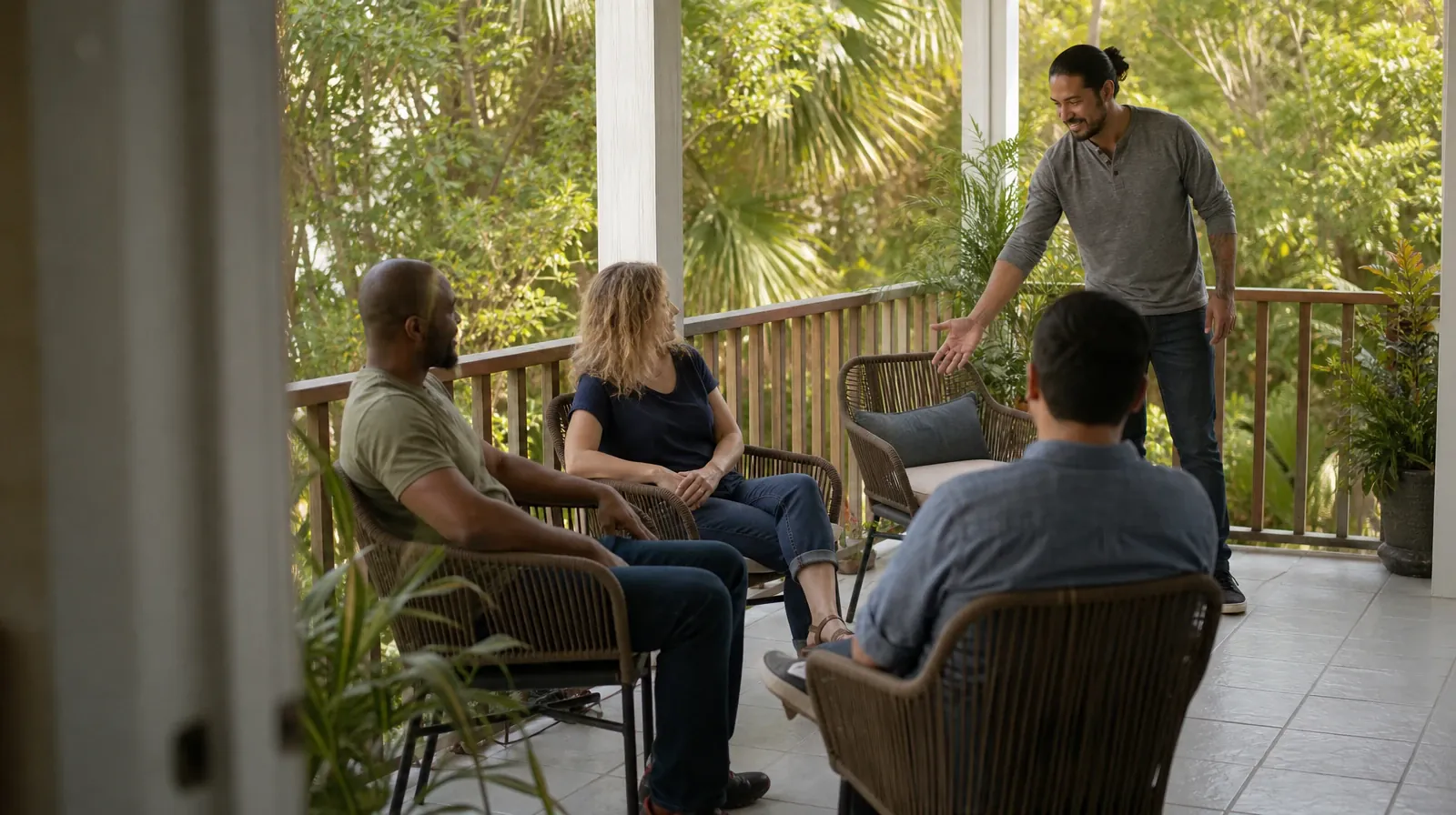
Clear language and recovery information in South Florida
Clear language and recovery information in South Florida
Faith and recovery information and adult treatment program details can help you understand the options without assuming what you believe or need. Language and accessibility for faith and recovery in South Florida starts with communication that lets you take in the information, express concerns, and consider support at your own pace.
When substance use is affecting daily life, it can be difficult to absorb unfamiliar terms or decide what to do next. You deserve a conversation that uses plain words and leaves room for your perspective. Language access and faith-informed recovery in South Florida should begin with listening, not assumptions about a person's beliefs, background, or readiness.
Florida Helps provides adult drug and alcohol detox and residential addiction treatment in Miramar. Co-occurring support is part of those programs only. A phone conversation can give you a clearer picture of those care options and help you explain communication needs. It is a practical first step, not a commitment to treatment.
Sources
- Understand the options: Plain explanations can help you understand the difference between available treatment paths.
- Keep your voice in the conversation: Your beliefs and communication preferences are part of your perspective, not a diagnosis.
Faith and recovery choices in South Florida
Faith and recovery choices in South Florida
Faith and recovery guidance and Florida Helps program information can give you context while you consider care. Faith may shape what feels meaningful to you, but it does not determine whether a particular treatment path is appropriate. You can share what matters without needing to fit someone else's expectations.
You or your loved one may draw strength from faith, have questions about how treatment relates to spiritual life, or prefer not to make faith part of care. Those differences deserve respect. Accessible recovery information for faith communities in South Florida should make space for personal choice rather than suggest that everyone approaches recovery in the same way.
The care Florida Helps provides is adult drug and alcohol detox and residential addiction treatment in Miramar. Co-occurring support is available within those programs, not as a separate mental health program. Call to talk about the situation and hear more about the treatment paths. You can decide what to do after you have the information.
Sources
- Your beliefs are your own: Faith can be part of your personal context without being treated as a requirement.
- Keep the discussion practical: A conversation can focus on the concern and the care Florida Helps provides.
Starting a recovery conversation in South Florida
Starting a recovery conversation in South Florida
Faith and recovery resources and adult program information can help you begin with what feels relevant now. You do not need to have every concern settled before speaking with someone. A call lets you describe what is happening and hear about the treatment options in straightforward terms.
If you are supporting someone you love, it can be hard to know how to help while also respecting their choices. You can reach out to get information for yourself. Language access and faith-informed recovery in South Florida means making room for a real conversation, including questions about communication, without presuming that anyone has already chosen treatment.
Call Florida Helps at (866) 931-9677 to discuss adult detox and residential addiction treatment in Miramar. The conversation can clarify what the programs involve and whether you want to take another step. There is no need to turn a first call into a promise; it can simply help replace uncertainty with useful information.
Sources
- Start where you are: You can call for information even if you are not ready to make a decision.
- Support without taking over: A loved one can seek information without claiming to speak for the person needing care.
Understanding adult treatment options in South Florida
Understanding adult treatment options in South Florida
Faith and recovery support information and Florida Helps adult treatment options provide context for a more informed conversation. Treatment can involve different types of care depending on a person's needs. Knowing the basic difference between detox and residential treatment can make the next discussion easier to follow.
Detox and residential treatment are distinct parts of the adult care offered by Florida Helps in Miramar. Residential care means living at a treatment program; inpatient care generally means staying overnight at a hospital or treatment program. These terms describe different settings, and the right way to understand a person's options depends on their circumstances.
Florida Helps provides adult drug and alcohol detox and residential addiction treatment, with co-occurring support only within those programs. Language and Accessibility for Faith and recovery in South Florida includes making these distinctions understandable, rather than assuming that one description answers every concern. Call to hear about the programs and discuss what is happening in your family.
Sources
- Know the basic distinction: Detox and residential care refer to different parts of the treatment picture.
- Consider the whole situation: Treatment choices depend on a person's needs and the care available to them.
A private first conversation about recovery in South Florida
A private first conversation about recovery in South Florida
Faith and recovery information and adult treatment details can help you decide whether a direct conversation would be useful. If language, faith, or accessibility concerns are weighing on you, you can bring them into the discussion. You do not have to settle every question before reaching out.
A call can help make treatment feel less abstract. You can describe the concern in your own words and hear about Florida Helps' adult drug and alcohol detox and residential addiction treatment in Miramar. If a specific language or communication need matters, share it directly so the conversation can address that concern as clearly as possible.
Language access and faith-informed recovery in South Florida is not about promising that every need can be met in a particular way. It is about making space for an honest discussion of what matters to you and explaining the care Florida Helps provides. Call (866) 931-9677 to talk about the next step.
Sources
- Get information, then decide: One conversation can give you concrete information without obligating you to proceed.
- Make room for what matters: Your language and faith-related concerns are appropriate to raise directly.
Straight answers, without pressure
Questions people often ask
You can read what feels useful and bring the rest into a private conversation.
Does faith determine whether someone can receive addiction treatment?
Faith can be important to you or your loved one, but it does not by itself define what care may fit. Florida Helps provides adult drug and alcohol detox and residential addiction treatment in Miramar. Call to discuss the concern and learn about the care offered.
What treatment does Florida Helps provide?
Florida Helps provides adult drug and alcohol detox and residential addiction treatment at its facility in Miramar, Florida. Co-occurring support is available only within those programs. A call can help you understand these treatment paths and whether you want to consider them.
Can I call before deciding to enter treatment?
Yes. A call is a way to talk about what is happening and get information about the adult programs. You do not have to make a treatment decision during the conversation. Call Florida Helps at (866) 931-9677 when you are ready to talk.
Can language needs be discussed during a call?
You can tell Florida Helps what language or communication needs matter to you or your loved one. Call (866) 931-9677 to discuss those needs before making plans.
Educational information for adults and loved ones. A qualified professional can help apply it to your health and circumstances. Editorial oversight: Tim Francis.