
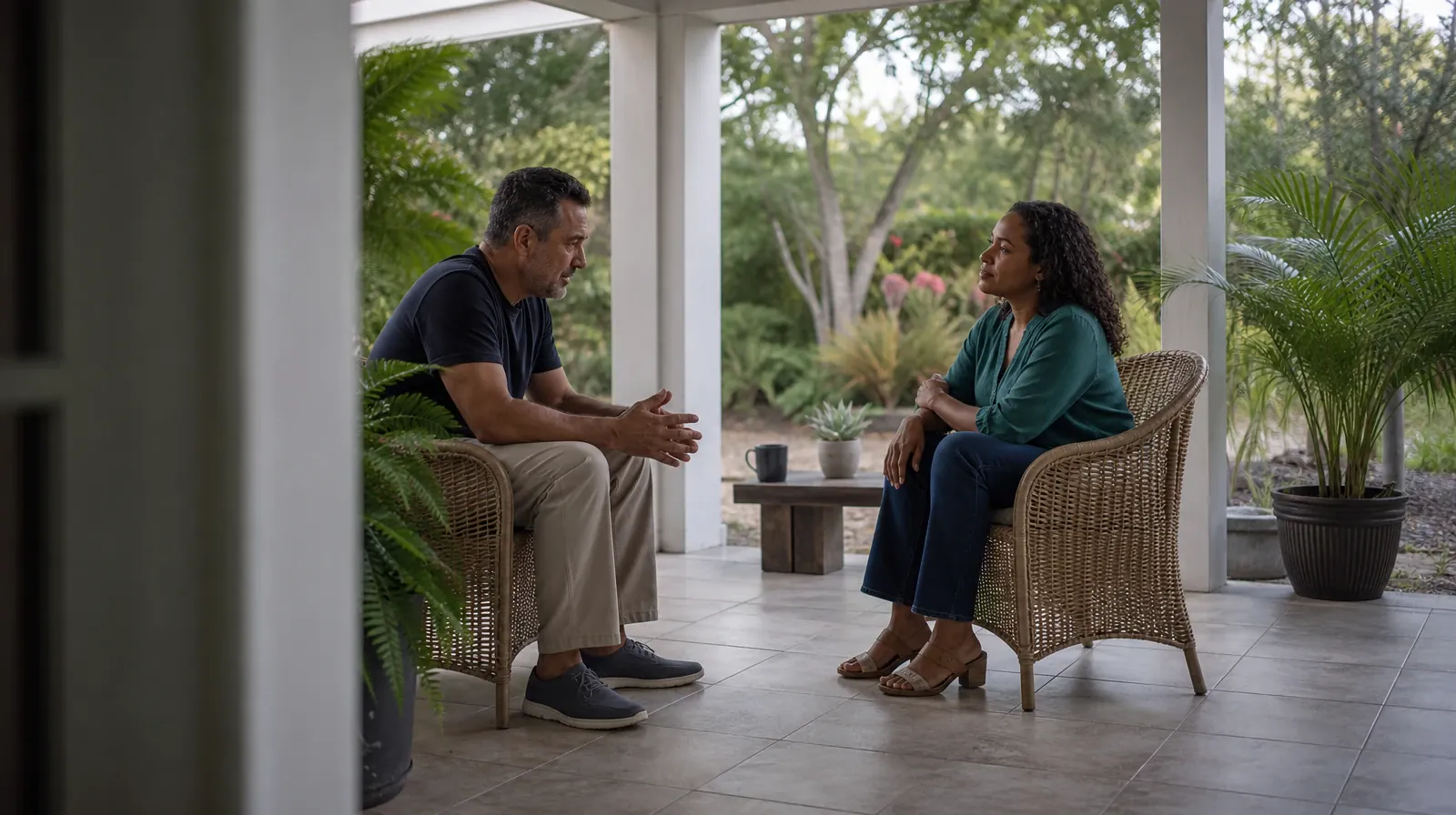
Prescriber conversations
Talking With a Prescriber About Faith and Recovery in South Florida
A prescriber conversation can focus on whether medication may be relevant; it doesn’t decide your whole recovery path. Learn about faith and recovery support and Florida Helps adult programs as distinct parts of the picture. You can consider your values, concerns, and care needs without assuming medication is the right choice.
Medication can be part of treatment for some substance use disorders, but it isn’t the whole of recovery. A qualified health professional can discuss whether it fits your situation. That conversation can help you understand an option without requiring you to set aside your beliefs or decide on every part of care at once.
Talking with a prescriber about faith and recovery may be one part of a broader search for support. Florida Helps provides adult drug and alcohol detox and residential addiction treatment in Miramar. If you’re weighing care for yourself or someone you love, call admissions to discuss the program and the concern.
Sources
- A discussion, not a decision: Medication is a possible part of care for some substance use disorders, not a requirement for every person.
- A clear care option: Florida Helps offers adult detox and residential addiction treatment at its facility in Miramar.
Faith and professional care
Faith and Recovery Support Alongside South Florida Addiction Treatment
Faith community support and professional treatment can have different roles in your life. Explore faith and recovery resources alongside adult addiction treatment programs to understand those options. Spiritual connection may matter to you; treatment addresses substance use through care that depends on your needs.
You don’t have to treat faith and professional care as competing choices. Your faith community may be important for spiritual connection and personal support. Treatment has a different purpose: it provides care for substance use. How these supports fit together is personal, and you can keep your beliefs in view while considering care.
Florida Helps provides adult drug and alcohol detox and residential addiction treatment in Miramar. Co-occurring support is available within those programs, rather than as a separate mental health program. Call admissions to discuss the care offered and whether it may fit what you or your loved one is facing.
Sources
- Room for both: Spiritual support and professional treatment can meet different needs without cancelling each other out.
- Treatment in context: Florida Helps provides detox and residential addiction treatment for adults in Miramar.
Participation and choice
Your Role in South Florida Faith and Recovery Decisions
The person considering care remains an active part of decisions about recovery and medication. Read about faith and recovery support and Florida Helps’ adult care options to see how personal support and treatment differ. A loved one can offer support, while the person receiving care keeps a voice in decisions.
If you’re supporting someone you love, concern can make it tempting to take over. Their preferences and participation still matter. A prescriber discusses medication with the person receiving care, and a treatment decision can reflect that person’s situation. Listening and offering support can leave room for them to describe what matters to them.
A prescriber conversation can help you consider medication as one topic rather than a complete definition of recovery. For questions about Florida Helps’ adult programs, you or your loved one can call admissions. The call can clarify the care offered without presuming a diagnosis or enrollment.
Sources
- Keep their voice central: The person considering care should have a voice in decisions about treatment and medication.
- Support without taking over: Loved ones can learn about Florida Helps programs without making decisions on another adult’s behalf.
Medication and care roles
Understanding Prescriber and Treatment Roles in South Florida
Clear roles can make a medication discussion easier to understand. Explore Florida Helps’ adult treatment programs and faith and recovery support for the separate parts of the decision. A qualified health professional discusses medication; Florida Helps offers detox and residential addiction treatment for adults in Miramar.
A prescriber conversation concerns whether medication may be appropriate for your situation. Treatment can include more than one type of care, depending on a person’s needs. Therapy and counseling may take place individually or in groups and commonly focus on coping and changing patterns. The combination of care depends on the person’s needs.
Florida Helps provides adult drug and alcohol detox and residential addiction treatment in Miramar. Co-occurring support is within those programs. If medication is on your mind, discuss it with a qualified health professional. You can call Florida Helps admissions to learn about its adult programs.
Sources
- Know the roles: Medication decisions belong in a conversation with a qualified health professional.
- Understand the care: Program details can help you understand the treatment setting without assuming a specific therapy.
Levels of care
South Florida Recovery: Understanding Levels of Care
Learning how levels of care differ can make your next step feel more manageable. Read about Florida Helps adult programs and faith and recovery support as you consider the options. Residential care involves living at a treatment program; the right level depends on a person’s needs.
Residential care means living at a treatment program. Inpatient care generally means staying overnight in a hospital or treatment program. These descriptions can help you understand the setting, but they don’t determine which level fits a particular person. That depends on individual needs and should be considered with appropriate professional guidance.
Florida Helps provides adult drug and alcohol detox and residential addiction treatment at its facility in Miramar, Florida. If you’re considering how a prescriber conversation fits with your faith and recovery, a call can help you learn about those programs. You can then decide what step makes sense.
Sources
- Understand the setting: Residential care involves living at a treatment program; inpatient care generally includes an overnight stay.
- Talk about care: Call Florida Helps admissions to learn about adult detox and residential addiction treatment in Miramar.
Straight answers, without pressure
Questions people often ask
You can read what feels useful and bring the rest into a private conversation.
Does talking with a prescriber mean I have to take medication?
No. A conversation can help you understand whether medication may be relevant to your situation. Medication is one possible part of treatment for some substance use disorders, and decisions about it belong in a discussion with a qualified health professional. You can learn about care options without assuming a particular choice.
Can faith community support and professional treatment work alongside each other?
They can serve different purposes. Your faith community may offer spiritual connection and personal support, while professional treatment addresses substance use through care suited to your needs. You can value both. Florida Helps offers adult drug and alcohol detox and residential addiction treatment in Miramar; call to discuss the program.
What kinds of care does Florida Helps offer?
Florida Helps offers adult drug and alcohol detox and residential drug and alcohol addiction treatment at its facility in Miramar, Florida. Co-occurring support is part of those programs. A call can help you understand the program scope and whether it may fit the concern you’re facing.
Can I call if I’m concerned about someone I love?
Yes. You can call admissions to talk about the available adult programs and the concern affecting your loved one. The call can help you understand what Florida Helps offers, while the person considering care remains central to decisions about treatment and any medication.
Educational information for adults and loved ones. A qualified professional can help apply it to your health and circumstances. Editorial oversight: Tim Francis.