
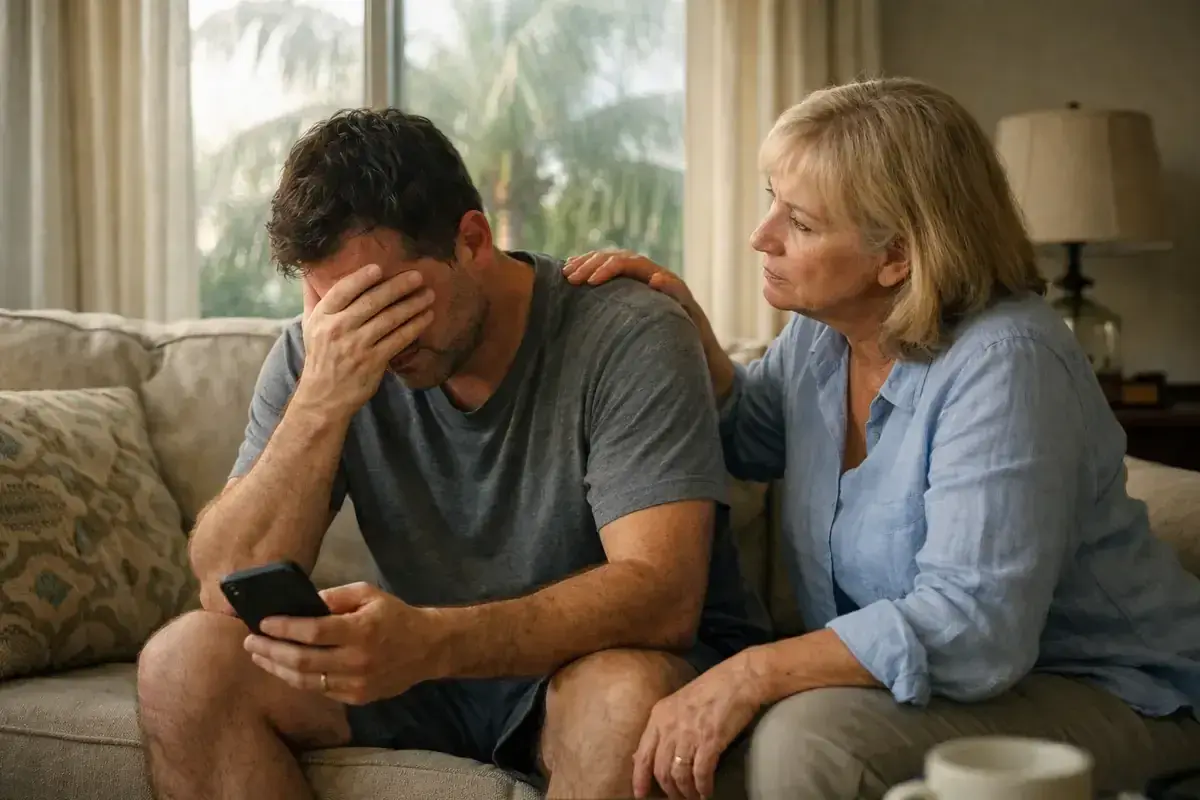
When someone in Florida is crashing after heavy or prolonged Adderall use, families may not know whether they are dealing with withdrawal, a mental health crisis, or a medical emergency. The 988 Suicide and Crisis Lifeline can be an important first step when a person is in emotional distress, talking about self-harm, feeling hopeless, or becoming overwhelmed during withdrawal. It offers immediate crisis support, but it is not the same as addiction treatment.
Florida Helps offers medically supervised detox in Florida. If withdrawal is starting or you are afraid to stop on your own, call 866-931-9677 today.
If Adderall withdrawal is severe, confusing, or mixed with other substance use, medically supervised detox may be the safest next step. Florida Helps provides assessment-based care and can help adults move from crisis into structured treatment, including detox, residential care, and outpatient services. To start help now, call 866-931-9677 or visit https://floridahelps.com/programs/detox/. Families in Florida should not wait for symptoms to spiral before reaching out.
What Florida 988 can do during an Adderall withdrawal crisis
In Florida, 988 connects callers with trained crisis counselors for urgent emotional and behavioral health support. If Adderall withdrawal brings panic, severe depression, agitation, suicidal thoughts, or a sense that a person may harm themselves, calling or texting 988 can help de-escalate the moment and guide the next step. This can be especially important when a person is ashamed, exhausted, or refusing to talk with family members but will engage with a neutral crisis counselor.
What 988 does not do is replace a substance use assessment, medical monitoring, or a detox plan. Adderall withdrawal can involve mood changes, deep fatigue, sleep disruption, irritability, and strong cravings. In some Florida households, those symptoms are complicated by alcohol, benzos, cocaine, or opioid use. When that is the case, or when safety is uncertain, families should move quickly from crisis support toward a clinical evaluation for medically supervised detox at https://floridahelps.com/programs/detox/.
When Adderall withdrawal needs more than a crisis line
Adderall withdrawal is often described as a crash, but the experience is not always mild. According to NIDA and SAMHSA, stimulant withdrawal can include depressed mood, increased sleep, insomnia, agitation, slowed thinking, poor concentration, and intense craving. Some people also become emotionally volatile or feel unable to function. In Florida, where heat, driving distances, and isolation can make a crisis feel even more unmanageable, families may need in-person treatment rather than phone support alone.
A medical assessment matters because the safest level of care depends on the whole picture, not just one symptom. A person who has taken high doses, misused pills by snorting, combined Adderall with alcohol, or has a history of depression, trauma, bipolar disorder, or suicidal thinking may need closer monitoring. Florida Helps uses an assessment to recommend the most appropriate path, which may include detox, residential treatment, or outpatient care after stabilization.
- Call 988 right away if the person is talking about suicide, hopelessness, or self-harm.
- Call 911 or go to the nearest emergency room in Florida if there is chest pain, seizure, loss of consciousness, violent behavior, or suspected overdose.
- Seek a detox assessment quickly if withdrawal includes severe depression, inability to care for basic needs, or heavy use of multiple substances.
- Do not assume that sleeping all day after stopping Adderall means the danger has passed; mood can worsen after the initial crash.
Florida crisis response options for Adderall withdrawal
| Situation | Best first contact | Purpose | Next move |
|---|---|---|---|
| Suicidal thoughts, panic, severe emotional distress | 988 | Crisis counseling | Arrange assessment or emergency care |
| Chest pain, seizure, unconsciousness, violence | 911 | Immediate emergency response | ER and medical stabilization |
| Severe withdrawal, cravings, depression, mixed substance use | Florida Helps detox | Clinical assessment | Detox, then residential or outpatient |
| Milder symptoms, stable home, no safety risk | Treatment consultation | Level-of-care guidance | Assessment and outpatient plan if appropriate |
| Unsure what is happening | 988 or treatment call | Clarify risk | Move to 911 or detox based on symptoms |
Florida warning signs families should take seriously
Families often first notice a change after a person runs out of medication, stops buying pills, or comes down after a binge. They may sleep for long stretches, miss work or classes, stop answering calls, become unusually irritable, or seem emotionally flat. In Florida communities from Miami to Jacksonville to the Panhandle, loved ones sometimes mistake this for laziness or burnout. It may actually be withdrawal, a co-occurring mental health condition, or both.
Risk goes up when there is confusion about what was taken. Some people believe they only used Adderall, but pills obtained outside a pharmacy may be counterfeit or mixed with other substances. Others use Adderall to balance late nights, drinking, or cocaine use, then crash hard when everything stops. A thorough assessment can identify whether medically supervised detox is the safest place to begin before moving into residential or outpatient treatment.
- Sudden hopelessness, crying spells, or statements like “everyone would be better off without me”
- Severe exhaustion paired with agitation, paranoia, or inability to sleep normally
- Strong cravings that create pressure to get more pills immediately
- Mixing stimulants with alcohol, sedatives, cannabis, or opioids during the crash
- Missing work, school, parenting duties, or basic self-care because symptoms feel unmanageable
988, 911, or detox: choosing the right next step in Florida
In a real crisis, families do not need perfect wording to ask for help. What matters is choosing the right lane. If a person is in immediate danger, 911 is the emergency response. If they are emotionally overwhelmed, suicidal, or in a behavioral health crisis but not facing an immediate life-threatening event, 988 is the right call. If the person is medically stable but clearly unable to stop using safely or manage withdrawal, detox is often the most effective next step.
For many Florida adults, the process starts with one phone call and then moves quickly into an assessment. That assessment looks at substance use history, mental health symptoms, physical health concerns, sleep, nutrition, medications, and home safety. Care decisions should follow that assessment, not guesswork. If detox is recommended, Florida Helps can help families start care promptly and continue into the level of treatment that fits the person’s needs.
Withdrawal can be dangerous to manage alone. Our Florida detox program provides 24/7 medical monitoring and a plan for what comes next. Call 866-931-9677.
Why medically supervised detox matters for stimulant withdrawal
People sometimes hear that stimulant withdrawal is “not usually dangerous” and assume medical care is unnecessary. That can be misleading. The most urgent risks are often psychiatric, behavioral, or related to polysubstance use rather than the stimulant alone. A person may be profoundly depressed, impulsive, dehydrated, sleep-deprived, or unable to stop using. In Florida, where many families are trying to manage a crisis at home while juggling work, childcare, or distance between relatives, supervised detox can create stability quickly.
Detox also creates a bridge into continued treatment instead of a repeat cycle of crashing and returning to use. During detox, the focus is safe monitoring, symptom support, evaluation for co-occurring mental health needs, and planning what comes next. After assessment, a person may step into residential treatment for more structure or outpatient care if that is clinically appropriate. To start that process, call 866-931-9677 or visit https://floridahelps.com/programs/detox/.
- 24/7 monitoring in a structured setting during the withdrawal period
- Assessment for depression, suicidality, and other co-occurring mental health concerns
- Support for sleep disruption, nutrition, hydration, and medication review when appropriate
- Planning for next-step treatment so the person is not discharged back into the same high-risk pattern
How Florida families can act today
If your loved one is crashing after Adderall use, keep the response calm and direct. Remove access to large quantities of substances, stay with the person if they may be at risk of self-harm, and avoid arguments about blame. In Florida, where people may be far from extended family support or trying to hold things together during hurricane season stress, tourism work schedules, or campus pressure, practical action matters more than lectures. Start with safety, then move quickly into professional help.
The strongest next step is to arrange an assessment for medically supervised detox rather than trying to manage severe withdrawal alone. Florida Helps can guide adults and families through that first decision and recommend the appropriate level of care after evaluation. If there is immediate emotional crisis, call or text 988. If there is imminent danger, call 911. To start treatment-focused help now, call 866-931-9677 and ask about detox at https://floridahelps.com/programs/detox/.
Related reading
- Adderall Withdrawal
- Florida Prescription Stimulant Laws and Adderall
- Miami Adderall Withdrawal Help
- South Florida Adderall Detox Programs
- Adderall Withdrawal in Florida
If you are dealing with a Florida 988 Adderall withdrawal situation right now, do not wait for the crash to become a larger emergency. Crisis support can help in the moment, but treatment is what creates a path forward. Call 866-931-9677 to discuss a confidential assessment and start medically supervised detox if it is recommended. You can also learn more at https://floridahelps.com/programs/detox/.
Start medically supervised detox in Florida
Do not wait for withdrawal to get worse. Our admissions team can talk through detox at Florida Helps and the next level of care. Call 866-931-9677.
Frequently asked questions
Is Adderall withdrawal an emergency in Florida?
Sometimes. Adderall withdrawal can range from fatigue and low mood to severe depression, suicidal thinking, or unstable behavior. It becomes an emergency if there is immediate danger, chest pain, seizure, loss of consciousness, or violent behavior. In Florida, call 911 for immediate medical emergencies and call or text 988 for urgent emotional crisis support.
Should I call 988 or a detox program first?
If the person is in acute emotional distress, talking about self-harm, or you do not feel safe waiting, start with 988. If the situation is medically stable but clearly beyond what can be managed at home, call a detox program for an assessment. Many Florida families use both: crisis support first, then treatment planning right away.
Can someone go straight from a 988 crisis call into treatment?
Yes, that can happen, but it depends on the assessment and the person’s immediate needs. A 988 counselor may encourage emergency evaluation, community crisis services, or follow-up with a treatment provider. In Florida, a detox assessment helps determine whether the person needs supervised withdrawal support, residential care, or outpatient treatment after stabilization.
What if my loved one says they are just tired and wants to sleep it off?
Sleepiness can be part of stimulant withdrawal, but it should not be brushed off automatically. Watch for worsening depression, inability to wake normally, refusal to eat or drink, confusion, statements about hopelessness, or use of other substances. If there is any safety concern, contact 988, 911, or a detox program in Florida for guidance.
Does everyone withdrawing from Adderall need residential treatment after detox?
Not always. The right next step depends on the assessment, including mental health symptoms, home stability, relapse risk, polysubstance use, and the person’s ability to function safely. Some Florida adults need residential treatment for more structure, while others may step down to outpatient care after detox if that is clinically appropriate.
Further treatment information
These public health resources offer background for comparing options and preparing questions for a care team. They do not confirm local appointment availability.