
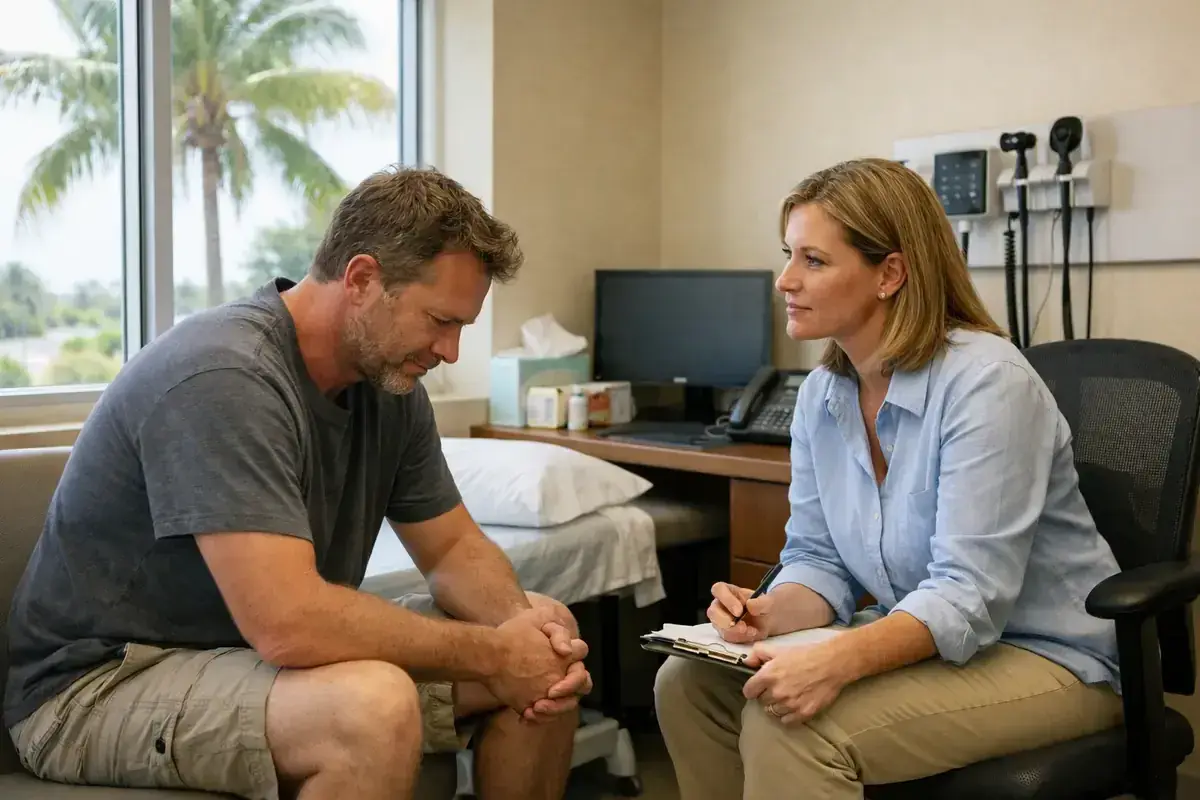
When someone in South Florida is struggling with Adderall misuse, stopping on their own can feel overwhelming. Even though stimulant withdrawal is not usually managed the same way as alcohol or benzodiazepine withdrawal, the crash that follows heavy or prolonged use can bring intense fatigue, depression, sleep disruption, agitation, anxiety, and strong cravings. For many adults and families, that is exactly when medical support matters most. A structured detox setting can help stabilize symptoms, monitor mental health, and create a safe bridge into ongoing care.
Florida Helps offers medically supervised detox in Florida. If withdrawal is starting or you are afraid to stop on your own, call 866-931-9677 today.
If you are searching for south florida adderall withdrawal help, it is important to look for a program that starts with a clinical assessment and builds care around the person’s needs. Florida Helps offers medically supervised detox as part of a broader continuum that includes residential and outpatient treatment in Florida. You can learn more or start help now at https://floridahelps.com/programs/detox/ or by calling 866-931-9677.
What Adderall withdrawal can look like in South Florida
Adderall is a prescription stimulant containing amphetamine salts. Some people begin taking it as prescribed and later develop a pattern of misuse, while others use it without a prescription to stay awake, study longer, work extended shifts, or manage weight. In South Florida, where people may be balancing tourism-driven jobs, nightlife, long commutes, seasonal stress, and year-round heat, stimulant misuse can become tied to daily functioning before the person realizes how much they depend on it.
When use stops or sharply decreases, withdrawal may begin with a crash. People often feel physically drained, mentally slowed down, emotionally flat, or deeply irritable. Some sleep for long periods, while others feel exhausted but cannot rest well. Depression can become severe enough to affect safety, especially if a person already has anxiety, trauma, bipolar disorder, ADHD, or another mental health concern. According to NIDA and ASAM, stimulant withdrawal can involve significant mood changes and requires careful clinical attention.
A Florida detox program can help sort out whether symptoms are mostly withdrawal, a co-occurring mental health issue, sleep deprivation, dehydration, or another medical concern. That distinction matters in a climate like South Florida, where exhaustion, poor nutrition, and heat exposure can complicate how a person feels in the first days after stopping stimulants.
- Common withdrawal symptoms may include fatigue, increased sleep, depression, anxiety, agitation, slowed thinking, increased appetite, and cravings.
- Some people also report headaches, body discomfort, vivid dreams, trouble concentrating, and mood swings.
- A clinical assessment helps determine whether detox, residential care, or outpatient treatment is the safest next step.
Why medically supervised detox is often the safest first move
Many families are surprised to learn that stimulant withdrawal can be dangerous even when it is not typically associated with the same seizure risk seen in alcohol withdrawal. The biggest concerns are often psychiatric and functional: suicidal thinking, panic, severe depression, paranoia, impulsive behavior, and the immediate urge to use again just to get relief. Trying to push through that alone in an apartment, hotel, dorm, or family home in South Florida can quickly become unmanageable.
Medically supervised detox provides monitoring, symptom support, rest, hydration, nutrition, and evaluation. Just as important, it creates distance from the triggers that often drive repeated stimulant use, including work pressure, nightlife, social circles, and easy access to pills. At Florida Helps, detox care decisions follow an assessment so the team can recommend the right level of support rather than a one-size-fits-all plan.
If you need a place to begin, start with detox. A focused, medically supervised setting can reduce chaos, improve safety, and make it easier to move directly into continued treatment instead of returning to use after a short crash. Visit https://floridahelps.com/programs/detox/ or call 866-931-9677 to talk through options in Florida.
- Assessment of withdrawal symptoms and mental health needs
- Monitoring for depression, suicidality, agitation, or other risks
- Supportive care such as sleep, hydration, meals, and medication when clinically appropriate
- Planning for step-down into residential or outpatient treatment in Florida
How levels of care differ
| Level of care | Best for | What it provides | When it may be used |
|---|---|---|---|
| Medically supervised detox | Early withdrawal, safety concerns, heavy recent use | Monitoring, stabilization, assessment, symptom support | First step after stopping Adderall or other substances |
| Residential treatment | High relapse risk or unstable mental health | 24-hour structure, therapy, routine, continued support | After detox when home is not enough |
| Outpatient treatment | Stable home and lower immediate risk | Therapy sessions while living at home | After detox or residential, based on assessment |
| Dual-diagnosis treatment planning | Co-occurring anxiety, depression, trauma, bipolar symptoms, ADHD questions | Integrated mental health and substance use care | At any level when mental health needs are present |
| Aftercare planning | Transition back to daily life in Florida | Relapse prevention, referrals, continued support | Before discharge from a treatment level |
What to expect from South Florida Adderall detox programs
A quality south florida adderall withdrawal program should begin by learning the full picture: how much Adderall is being used, whether other substances are involved, prior withdrawal experiences, mental health history, physical health concerns, and the home environment the person would return to. In South Florida, clinicians may also ask about work schedules, housing instability, travel, legal stress, and support systems because those factors can shape the safest discharge plan.
Detox itself is not the whole treatment process. For many people, the first days are about stabilization: sleeping, eating, rehydrating, lowering distress, and re-establishing a basic routine. As the person becomes more alert, the treatment team can help identify next steps. Someone with severe cravings, a relapse history, or a dual-diagnosis condition may need residential treatment. Another person with a stable home and lower risk may transition to outpatient care after assessment.
Families should also know that a stimulant detox plan may look different from what they expect. There is not a single medication that simply “cures” Adderall withdrawal. Instead, care is individualized and supportive, with ongoing monitoring and adjustments based on how the person responds.
Detox vs. residential vs. outpatient: choosing the right level of care
People often search for detox when what they really need is a full treatment path. Detox addresses immediate stabilization, but recovery from stimulant misuse usually requires more than getting through the first crash. Ongoing therapy can help with cravings, mood regulation, relapse prevention, family strain, work stress, and the reasons the person kept returning to Adderall in the first place. That is especially relevant in South Florida, where fast-paced social and work environments can become part of the cycle.
The right fit depends on assessment findings. A person with severe depression, repeated relapse, polysubstance use, or unstable housing may need residential care after detox. Someone who is medically and psychiatrically stable, motivated, and well supported at home may step into outpatient treatment instead. The goal is not to choose the easiest level of care; it is to choose the safest and most clinically appropriate one.
Withdrawal can be dangerous to manage alone. Our Florida detox program provides 24/7 medical monitoring and a plan for what comes next. Call 866-931-9677.
Related reading
- Adderall Withdrawal
- Florida 988 for Adderall Withdrawal Crisis
- Florida Prescription Stimulant Laws and Adderall
- Miami Adderall Withdrawal Help
- Adderall Withdrawal in Florida
If you or someone you love is dealing with south florida adderall withdrawal, do not wait for the crash, cravings, or depression to get worse. A medically supervised detox can provide a safer, more stable starting point and help connect you to the next level of care in Florida. To take the first step, call Florida Helps at 866-931-9677 or visit https://floridahelps.com/programs/detox/ today.
Start medically supervised detox in Florida
Do not wait for withdrawal to get worse. Our admissions team can talk through detox at Florida Helps and the next level of care. Call 866-931-9677.
Frequently asked questions
How long does Adderall withdrawal last?
The timeline varies based on dose, duration of use, sleep loss, other substances, and mental health history. Many people feel a strong crash in the first several days, followed by fatigue, low mood, sleep changes, and cravings that can continue longer. An assessment helps determine what level of support is appropriate and how long stabilization may take.
Is Adderall withdrawal dangerous?
It can be. The main concerns are often severe depression, suicidal thoughts, agitation, paranoia, intense cravings, and rapid return to use. Risks may be higher when someone also uses alcohol or other drugs, has a mental health condition, or is isolated at home. That is why medically supervised detox can be an important first step.
Can I detox from Adderall at home in South Florida?
Some people try, but home detox can be risky when mood symptoms, cravings, or other substances are involved. In South Florida, access to nightlife, work pressure, and easy contact with people or places tied to use can make relapse more likely. A professional assessment can help determine whether detox, residential, or outpatient care is safest.
What happens after detox?
After detox, the next step depends on the assessment and how the person is functioning. Some people benefit from residential treatment for more structure and support. Others may be appropriate for outpatient care. Continued treatment often focuses on relapse prevention, mental health needs, family communication, and rebuilding daily routines without stimulant misuse.
How do I get help for south florida adderall withdrawal right now?
A good first move is to contact a Florida program that offers medically supervised detox and ongoing treatment options. Florida Helps can talk with you about symptoms, safety concerns, and what level of care may fit after assessment. You can call 866-931-9677 or visit https://floridahelps.com/programs/detox/ to get started.
Further treatment information
These public health resources offer background for comparing options and preparing questions for a care team. They do not confirm local appointment availability.