
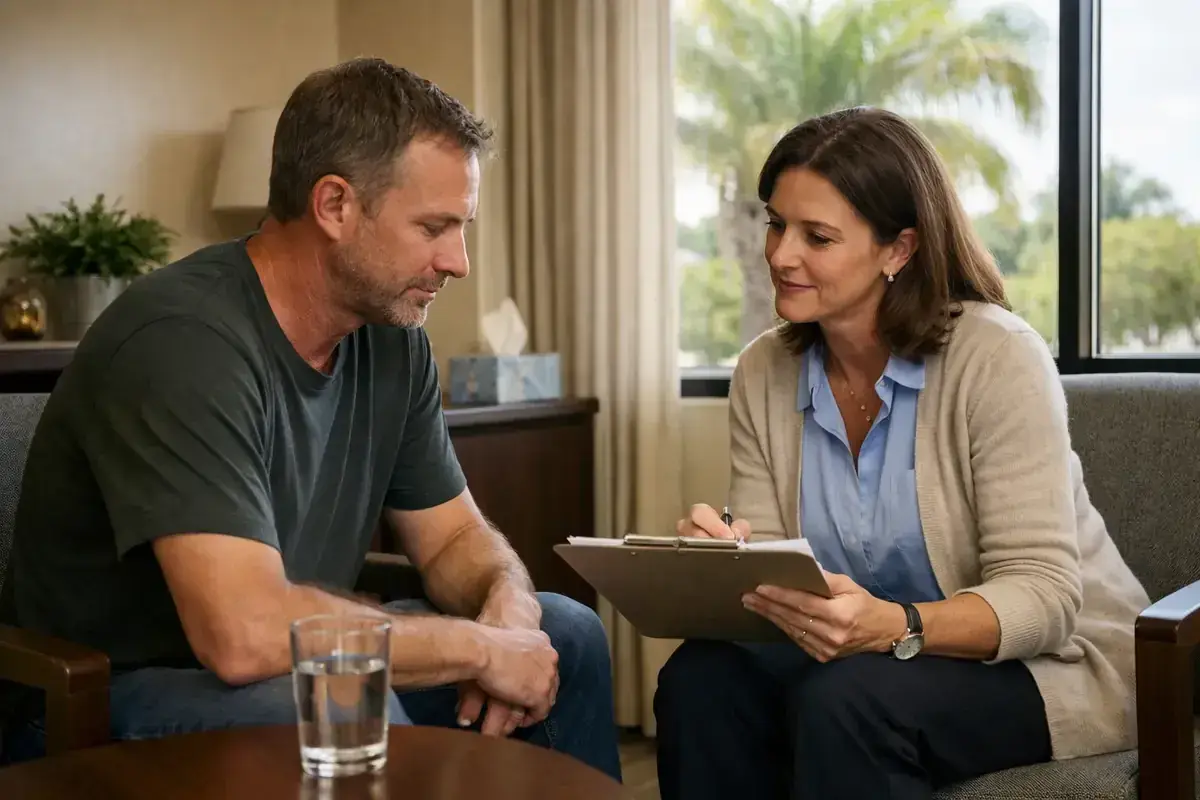
If you are searching for orlando alcohol withdrawal medication, you may be trying to help yourself or someone you love get through the first hard days after stopping alcohol. That decision matters. Alcohol withdrawal can become dangerous quickly, especially when a person has been drinking heavily, has a history of withdrawal symptoms, or also uses other substances. In Central Florida, the safest next step is often an in-person clinical assessment followed by medically supervised detox when appropriate.
Florida Helps offers medically supervised detox in Florida. If withdrawal is starting or you are afraid to stop on your own, call 866-931-9677 today.
Florida families often want clear answers before making a call. What medicines are used? How long does detox take? Is home detox ever safe? At Florida Helps, treatment decisions follow an assessment, not a one-size-fits-all plan. If alcohol use has become hard to control, start with professional help rather than trying to manage severe withdrawal alone. Learn more about medically supervised detox at https://floridahelps.com/programs/detox/ or call 866-931-9677.
Why alcohol withdrawal can become a medical emergency
Alcohol affects the brain, nervous system, sleep, mood, blood pressure, and heart rate. When drinking stops suddenly, the body can rebound in ways that range from mild shakiness to severe confusion, hallucinations, seizures, and delirium tremens. Guidance from ASAM and NIAAA supports careful monitoring because symptoms do not always stay mild. A person may feel manageable anxiety early on, then worsen over the next day or two.
In Orlando and across Florida, the heat, dehydration risk, and common co-occurring health issues can complicate withdrawal further. That is one reason medically supervised detox matters. A licensed treatment team can assess symptom severity, medical history, other drug use, and mental health needs before recommending the right level of care. If detox is indicated, prompt admission can reduce risk and create a safer bridge into residential or outpatient treatment.
- Common early symptoms include tremor, sweating, nausea, anxiety, headache, and insomnia.
- More serious symptoms can include high blood pressure, rapid pulse, hallucinations, seizures, and severe agitation.
- Risk rises with prior severe withdrawal, daily heavy drinking, older age, certain medical conditions, and use of sedatives or opioids.
What Orlando alcohol withdrawal medication may include
Alcohol withdrawal medication is not a single pill or a single protocol. It is a medically directed approach chosen after assessment. In many detox settings, medications may be used to reduce the risk of seizures, calm overactive nervous system symptoms, support sleep, and address nausea or dehydration. The exact plan depends on symptoms, health history, pregnancy status, liver concerns, and whether other substances are involved.
Because this is YMYL-sensitive medical care, it is important not to self-prescribe based on internet lists. Some medicines that help one person can be unsafe for another. In a Florida detox program, clinicians may also monitor vital signs, orientation, hydration, and withdrawal scoring over time, adjusting treatment as needed. That is very different from trying to detox at home with leftover medication or advice from friends.
- Assessment guides medication choice, dose, timing, and monitoring.
- Medications may be used short term during detox rather than as a stand-alone solution.
- Supportive care can include fluids, nutrition, sleep support, and monitoring for complications.
- Medication decisions should account for liver health, seizure history, and co-occurring mental health symptoms.
Orlando alcohol withdrawal medication and care setting comparison
| Situation | Possible care setting | Medication role | Why assessment matters |
|---|---|---|---|
| Mild symptoms, stable health | Outpatient or monitored detox | May reduce symptoms | Confirms home is appropriate |
| Moderate symptoms | Detox program | Often used with close monitoring | Risk can change over hours |
| History of seizures or delirium tremens | Higher-acuity detox or hospital-level evaluation | Medication often needs tighter supervision | Serious complications are possible |
| Alcohol plus other substances | Detox with expanded monitoring | Medication plan may need adjustment | Drug interactions and overdose risk |
| Ongoing cravings after detox | Residential or outpatient follow-up | Different medications may be considered | Detox needs differ from maintenance care |
What to expect in a medically supervised detox program in Florida
A detox admission usually begins with questions about drinking patterns, prior withdrawals, medical conditions, prescriptions, other substances, and current symptoms. Staff may review mental health concerns such as depression, panic, or trauma symptoms, since these can intensify during withdrawal. From there, the care team recommends the appropriate setting and monitors closely. At Florida Helps, care decisions follow an assessment so treatment matches the person, not the other way around.
Florida residents often need more than stabilization alone. Once the most acute withdrawal symptoms are managed, the next step may be residential treatment, outpatient care, or dual-diagnosis support depending on clinical needs. That continuity matters because detox addresses immediate physical withdrawal, but ongoing treatment addresses relapse triggers, coping skills, family stress, and the underlying pattern of alcohol use. Explore the detox program here: https://floridahelps.com/programs/detox/.
Families in Orange, Osceola, Seminole, Lake, and nearby counties often ask how to prepare. Bringing a medication list, emergency contacts, and honest information about recent alcohol use helps the assessment go more smoothly. If a person is already confused, vomiting repeatedly, hallucinating, or at risk of seizure, immediate medical evaluation is warranted rather than waiting for symptoms to pass.
Detox at home versus supervised detox in Orlando
Many adults first consider tapering or detoxing at home because it feels private or simpler. For some people with mild symptoms and strong medical guidance, outpatient support may be appropriate. But home withdrawal becomes risky when symptoms escalate, the drinking pattern has been heavy, or there is any history of severe withdrawal. In those situations, medically supervised detox provides monitoring and rapid response if the person worsens.
For Central Florida families, another practical issue is environment. Access to alcohol, daily stressors, caregiving demands, and transportation barriers can make home detox harder to complete safely. A structured setting removes many of those triggers while making medication, hydration, and observation consistent. If there is any doubt about severity, it is safer to seek an assessment first and let clinicians recommend whether detox, residential care, or outpatient treatment fits best.
Withdrawal can be dangerous to manage alone. Our Florida detox program provides 24/7 medical monitoring and a plan for what comes next. Call 866-931-9677.
Signs it is time to call now
You do not need to wait for a crisis to ask for help. If stopping alcohol has led to repeated failed attempts, worsening anxiety, morning drinking, blackouts, or withdrawal symptoms that start within hours, it is time to talk with a treatment professional. Families should pay close attention when a loved one becomes secretive, confused, medically fragile, or unable to function at work or home after trying to quit.
A strong response is appropriate here: start medically supervised detox instead of trying to push through another dangerous withdrawal. Florida Helps offers detox as part of a broader continuum that may include residential and outpatient care. If you are in Orlando or elsewhere in Florida, visit https://floridahelps.com/programs/detox/ and call 866-931-9677 to discuss next steps after an assessment.
- Call right away if there is hallucination, seizure activity, severe shaking, chest pain, or confusion.
- Seek urgent help if the person cannot keep fluids down, has passed out, or is mixing alcohol with sedatives or opioids.
- Do not leave the person alone if symptoms are rapidly worsening or they seem disoriented.
- Families can help by giving clear information about recent drinking, medications, and past withdrawals.
How detox fits into longer-term alcohol treatment in Florida
Detox is the beginning, not the whole plan. Once withdrawal is stabilized, many people benefit from a step-down plan that may include residential treatment, partial hospitalization, intensive outpatient, outpatient therapy, family support, and medication management for alcohol use disorder when clinically appropriate. SAMHSA and NIDA both emphasize ongoing care because early recovery is a high-risk period for return to use without continued support.
For Floridians, aftercare planning should also account for real-life logistics such as hurricane-season disruptions, travel between counties, work schedules in tourism or hospitality, and family responsibilities. A thoughtful discharge plan can support continuity even when life feels busy or unpredictable. The most important first move, though, is entering detox safely and letting the assessment determine what level of care should come next.
Related reading
- Alcohol Withdrawal Medication
- Miami Alcohol Withdrawal Medication Options
- Florida 988 and Alcohol Detox Medication Support
- Alcohol Withdrawal Medication in Florida
- Tampa Alcohol Withdrawal Medication Detox Care
If you are worried about alcohol withdrawal, do not wait for symptoms to become overwhelming. A calm, professional assessment can clarify whether medically supervised detox is the safest next step and what level of care should follow. Florida Helps serves adults and families in Florida with detox, residential, and outpatient treatment options. To start, visit https://floridahelps.com/programs/detox/ or call 866-931-9677 today.
Start medically supervised detox in Florida
Do not wait for withdrawal to get worse. Our admissions team can talk through detox at Florida Helps and the next level of care. Call 866-931-9677.
Frequently asked questions
What medication is used for alcohol withdrawal in Orlando detox programs?
There is no single medication for everyone. Detox clinicians choose medications based on the person’s symptoms, drinking history, medical issues, and other substances involved. Some medicines are used short term to lower withdrawal risk and improve comfort, while supportive care and monitoring remain essential throughout the process.
Can I detox from alcohol at home with medication?
Sometimes people hope to manage withdrawal at home, but that can be unsafe if symptoms are moderate to severe or if there is a history of seizures, delirium tremens, or mixed substance use. The safer first step is an assessment. A clinician can determine whether supervised detox, outpatient support, or a higher level of care is appropriate.
How long does alcohol withdrawal usually last?
Symptoms often begin within hours after the last drink and may intensify over the next one to three days, though timing varies. Some effects improve within several days, while sleep, mood, and cravings may last longer. Because symptoms can escalate after they begin, monitoring during detox is important when risk factors are present.
What happens after detox at Florida Helps?
After detox, the next recommendation depends on the assessment and the person’s progress. Some people may need residential treatment for structure and stabilization, while others may step into outpatient care. Ongoing treatment focuses on relapse prevention, mental health, coping skills, and support for daily life in Florida recovery.
When should a family call for help right away?
Call immediately if a loved one has hallucinations, severe confusion, seizure activity, chest pain, repeated vomiting, or is hard to wake up. Do not assume those symptoms will pass. If someone in Orlando or anywhere in Florida is at risk during alcohol withdrawal, seek urgent medical help and contact Florida Helps for detox guidance.
Further treatment information
These public health resources offer background for comparing options and preparing questions for a care team. They do not confirm local appointment availability.