
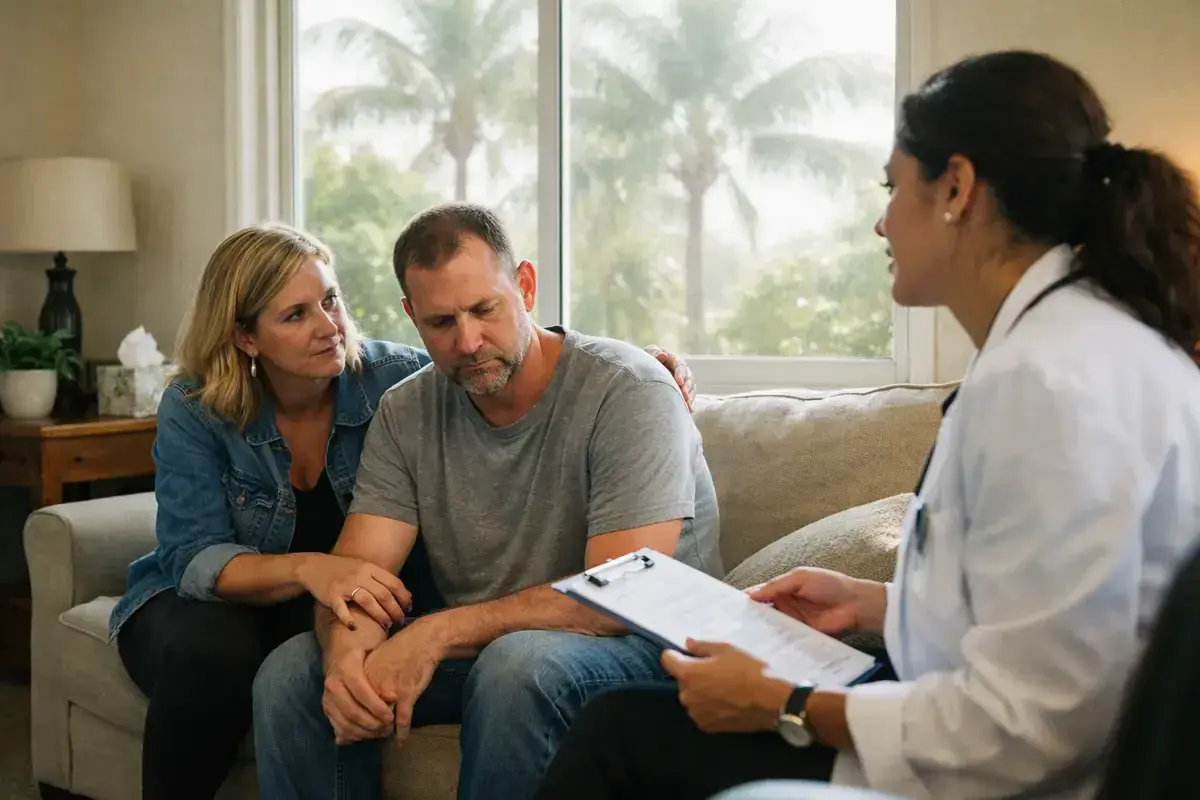
When someone stops or sharply reduces heavy alcohol use, withdrawal can begin quickly and become dangerous without warning. In Florida, that risk may be harder to manage because heat, humidity, sun exposure, and dehydration can intensify stress on the body. Families often search for a clear alcohol withdrawal timeline florida residents can trust, especially when symptoms seem to change by the hour.
Florida Helps offers medically supervised detox in Florida. If withdrawal is starting or you are afraid to stop on your own, call 866-931-9677 today.
The safest next step is to start with a professional assessment and follow a care plan based on medical needs, substance use history, and mental health concerns. Florida Helps offers medically supervised detox as part of a full continuum that includes residential and outpatient care. If you are worried about alcohol withdrawal in Florida weather, call 866-931-9677 or learn more at https://floridahelps.com/programs/detox/.
Why Florida heat matters during alcohol withdrawal
Alcohol withdrawal already places strain on the nervous system, heart rate, blood pressure, sleep, and fluid balance. In Florida, high temperatures and heavy humidity can make sweating, nausea, vomiting, tremors, and anxiety feel worse. A person may assume they only need rest, cold drinks, or time indoors, but heat-related stress can overlap with withdrawal symptoms in ways that are hard to judge at home.
That is one reason medically supervised detox is so important in this state. According to ASAM, alcohol withdrawal can range from mild symptoms to severe complications including seizures and delirium tremens. In a hot Florida climate, it may be harder for families to tell whether someone is becoming dangerously dehydrated, confused, or medically unstable. A clinical assessment helps determine whether detox, residential care, or outpatient treatment is the right level of support.
A typical alcohol withdrawal timeline florida families should know
While each person’s timeline is different, symptoms often begin within hours after the last drink. Early symptoms can include sweating, shakiness, nausea, headache, anxiety, irritability, and trouble sleeping. For some people, these symptoms remain moderate. For others, they escalate fast. A history of daily heavy drinking, prior withdrawal episodes, seizures, certain medical conditions, or use of other substances can increase risk.
The period of greatest concern is usually the first several days, but the exact course depends on the individual. Some people develop worsening agitation, elevated pulse, high blood pressure, vomiting, disorientation, hallucinations, or seizures. Because alcohol withdrawal can become a medical emergency, Florida residents should not try to “tough it out” in a hot apartment, parked car, job site, or beach setting. Medically supervised detox provides monitoring, symptom management, and a safer environment.
- 6 to 12 hours: early symptoms may start, including tremors, sweating, anxiety, nausea, and insomnia.
- 12 to 24 hours: symptoms may intensify; some people develop perceptual disturbances or severe restlessness.
- 24 to 72 hours: risk can rise for severe withdrawal, including seizures and delirium tremens in vulnerable individuals.
- 3 to 7 days: many acute symptoms begin to improve, though sleep and mood problems may continue.
- Beyond 1 week: cravings, anxiety, fatigue, and mood swings can persist and may need ongoing treatment support.
Alcohol withdrawal vs. heat-related stress in Florida
| Issue | Often seen in withdrawal | Can also worsen in Florida heat | Best response |
|---|---|---|---|
| Sweating | Common | Yes, humidity can intensify it | Medical assessment |
| Nausea or vomiting | Common | Heat can worsen dehydration | Supervised detox |
| Confusion | Possible in severe cases | May worsen with overheating | Urgent evaluation |
| Rapid heartbeat | Common | Heat stress may add strain | Clinical monitoring |
| Poor sleep | Common | Hot nights may aggravate it | Structured treatment |
How heat and dehydration can complicate the picture
Florida weather can magnify common withdrawal problems. Sweating and poor fluid intake can contribute to dehydration. Vomiting or diarrhea can make that worse. Heat can also increase dizziness, weakness, headache, irritability, and confusion, which may look similar to worsening withdrawal. Someone trying to quit alcohol at home may spend time outside, in a non-air-conditioned room, or moving between hot and cool settings, adding more strain to the body.
Families should take warning signs seriously, especially if the person cannot keep fluids down, seems disoriented, has chest pain, faints, experiences seizures, or shows severe agitation. Florida summers, long work shifts outdoors, and storm-season power outages can make home detox even less safe. In these situations, professional care is not just more comfortable; it can be medically necessary. To start detox in a supervised setting, visit https://floridahelps.com/programs/detox/.
- Heavy sweating in humid weather can worsen fluid loss.
- Nausea and vomiting can make rehydration difficult.
- Heat exhaustion symptoms can overlap with alcohol withdrawal.
- Poor sleep after hot nights can intensify anxiety and agitation.
- Outdoor work, boating, beach time, or power loss can increase risk.
Signs it is time to seek immediate detox support
Many people delay treatment because they hope symptoms will pass, they fear judgment, or they believe they need to hit a crisis point first. That is not necessary. A prompt assessment is the safer choice. If a person has had withdrawal before, especially severe withdrawal, the risk can return with future attempts to stop drinking. Co-occurring depression, panic, trauma symptoms, or other substance use can also complicate withdrawal and recovery planning.
Professional detox is especially important when symptoms are changing rapidly or the person cannot safely care for themselves. Florida Helps can evaluate the situation and recommend care based on medical and clinical needs. Depending on the assessment, that may include medically supervised detox, residential treatment, or outpatient services once the person is stable.
- Seizure activity or a history of withdrawal seizures
- Hallucinations, extreme confusion, or severe agitation
- Repeated vomiting, inability to drink fluids, or signs of dehydration
- Rapid heartbeat, high blood pressure concerns, or chest pain
- Suicidal thoughts, self-harm risk, or unsafe behavior
Withdrawal can be dangerous to manage alone. Our Florida detox program provides 24/7 medical monitoring and a plan for what comes next. Call 866-931-9677.
What medically supervised detox may look like in Florida
A supervised detox program is designed to help people withdraw from alcohol in a monitored environment where symptoms can be observed and addressed. The process usually begins with an assessment that reviews drinking history, current symptoms, medical issues, medications, mental health concerns, and risk factors for severe withdrawal. This step matters because the safest plan is different for each person.
In Florida, supervised detox also means removing environmental stressors that can make symptoms worse, including extreme heat, poor hydration, and unsafe home conditions. After stabilization, many people benefit from moving directly into residential or outpatient treatment instead of going back to the same stressors and triggers. Florida Helps offers detox within a broader continuum, which can support next-step planning after the initial withdrawal phase.
Detox is only the beginning of recovery
Withdrawal management addresses the immediate medical risk, but it does not treat the full pattern of alcohol use, cravings, mental health symptoms, or relapse triggers. SAMHSA and NIAAA both emphasize that ongoing treatment matters after detox. For many Florida adults, that next step may include residential care for structure and intensive support, or outpatient services when clinically appropriate after assessment.
Families can help by focusing on safety, not blame. Encourage the person to get assessed, avoid arguments when they are symptomatic, and do not assume hydration alone can solve alcohol withdrawal in Florida heat. Starting care now can reduce the risk of avoidable complications and create a clearer path forward. To begin medically supervised detox, call 866-931-9677 or visit https://floridahelps.com/programs/detox/.
Related reading
- Alcohol Withdrawal Timeline
- Jacksonville Alcohol Withdrawal Timeline Help
- Florida 988 During Alcohol Withdrawal Timeline
- Tampa Alcohol Withdrawal Timeline Day by Day
- Florida Detox Wait Times for Alcohol Withdrawal
If you are watching alcohol withdrawal unfold in Florida heat, do not wait for symptoms to become severe before getting help. Florida Helps can guide you toward the right next step after an assessment, including medically supervised detox and follow-up care. Call 866-931-9677 today or visit https://floridahelps.com/programs/detox/ to start.
Start medically supervised detox in Florida
Do not wait for withdrawal to get worse. Our admissions team can talk through detox at Florida Helps and the next level of care. Call 866-931-9677.
Frequently asked questions
Does Florida heat make alcohol withdrawal more dangerous?
It can. Heat and humidity may worsen sweating, dehydration, dizziness, sleep disruption, and physical stress during withdrawal. Those factors can make symptoms harder to manage and harder for families to interpret. Because alcohol withdrawal can escalate quickly, a medical assessment is the safest way to determine the right level of care.
How soon after the last drink can withdrawal start?
Symptoms often begin within 6 to 12 hours after the last drink, though timing varies by the person and their drinking pattern. Early signs may include tremors, anxiety, sweating, nausea, and insomnia. More serious complications can emerge later, which is why early evaluation and medically supervised detox are strongly recommended.
Can someone detox from alcohol at home in Florida?
Home detox may be risky, especially for people with heavy daily alcohol use, prior withdrawal, seizures, serious medical conditions, or co-occurring mental health symptoms. Florida heat, dehydration, and unstable home conditions can add more risk. A supervised detox program offers monitoring and a safer environment while a care plan is developed after assessment.
What happens after medically supervised detox?
After detox, the next step depends on the assessment and how the person is functioning medically and emotionally. Some people may need residential treatment for more structure and support. Others may transition to outpatient care when appropriate. Continuing treatment after detox can help address cravings, triggers, mental health concerns, and relapse prevention.
When should a family call for help right away?
Call immediately if the person has seizures, severe confusion, hallucinations, repeated vomiting, chest pain, inability to keep fluids down, suicidal thoughts, or behavior that seems unsafe. These can signal a medical or psychiatric emergency. Families in Florida should also act quickly when heat exposure or dehydration may be making the situation worse.
Further treatment information
These public health resources offer background for comparing options and preparing questions for a care team. They do not confirm local appointment availability.