
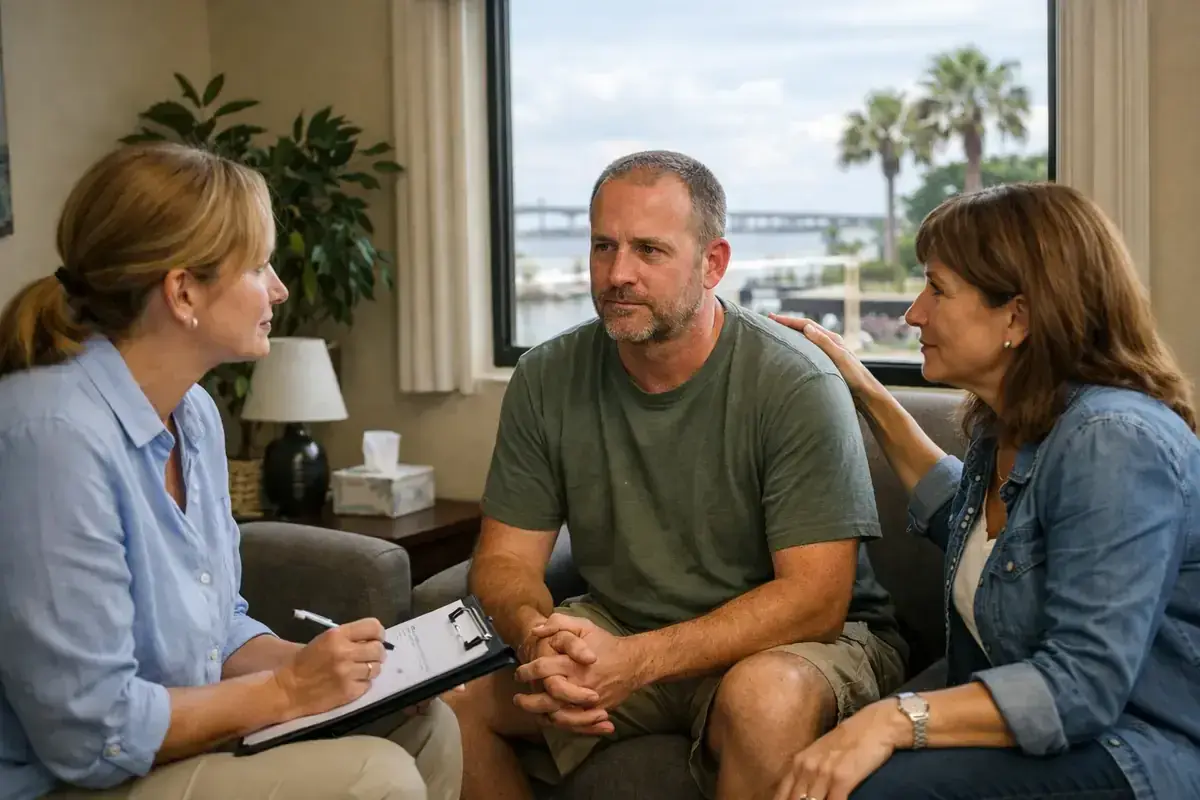
If you are searching for Jacksonville alcohol withdrawal timeline help, you may be worried about what happens when drinking stops and how fast symptoms can change. Alcohol withdrawal can range from uncomfortable to dangerous, and the timeline is not exactly the same for every person. In Florida, where heat, dehydration, and co-occurring stress can complicate recovery, it is especially important to take symptoms seriously and get a professional assessment before trying to quit on your own.
Florida Helps offers medically supervised detox in Florida. If withdrawal is starting or you are afraid to stop on your own, call 866-931-9677 today.
For adults and families in Jacksonville and across Florida, the safest next step is often medically supervised detox. Florida Helps offers detox, residential treatment, and outpatient care, with recommendations guided by an assessment of your symptoms, drinking pattern, medical history, and mental health needs. If alcohol has become hard to stop, call 866-931-9677 or visit https://floridahelps.com/programs/detox/ to start exploring medically supervised detox support now.
What the alcohol withdrawal timeline usually looks like
A typical alcohol withdrawal timeline begins within hours after the last drink, often with anxiety, sweating, shakiness, headache, nausea, trouble sleeping, or a racing heart. For some people, symptoms stay in the mild to moderate range. For others, they escalate quickly. According to ASAM and NIAAA, alcohol withdrawal can become a medical emergency, especially for people with a long history of heavy drinking, prior withdrawal episodes, seizures, or other health conditions.
In Jacksonville, families often ask whether the weather or local lifestyle changes the timeline. Florida heat does not cause withdrawal, but it can worsen fluid loss and make nausea, sweating, and dizziness harder to manage. Beach outings, long work shifts outdoors, and delayed care can add risk. That is one reason an in-person assessment matters. The goal is not to predict your exact course from the internet, but to determine whether you need medical monitoring from the start.
A general timeline may include early symptoms in the first 6 to 12 hours, possible intensification over the next 24 to 48 hours, and peak risk for serious complications during the first few days. Some people then deal with lingering sleep, mood, and concentration problems after the acute phase. Because timelines vary, Florida Helps can assess what level of care fits your situation and whether starting at https://floridahelps.com/programs/detox/ is the right first step.
Warning signs that mean do not wait
It can be hard for families to tell the difference between discomfort and danger. A person may look restless, sweaty, or irritable at first, then become confused, agitated, or medically unstable. Delirium tremens, seizures, severe blood pressure changes, and dehydration are medical concerns associated with alcohol withdrawal. SAMHSA and ASAM both stress that people at risk for severe withdrawal should receive medical evaluation rather than attempting detox alone at home.
If you are in Jacksonville or elsewhere in Florida and symptoms are getting worse, urgent action matters. Heat exposure, poor sleep, vomiting, and not drinking enough water can all make the situation harder to manage. If there is severe confusion, hallucinations, seizure activity, chest pain, trouble breathing, or loss of consciousness, seek emergency care right away. For non-emergency guidance on starting treatment, call Florida Helps at 866-931-9677.
- Shaking that is worsening instead of easing
- Severe vomiting, dehydration, or inability to keep fluids down
- Confusion, disorientation, hallucinations, or extreme agitation
- A history of withdrawal seizures or delirium tremens
- Heavy daily drinking combined with medical or mental health concerns
Jacksonville alcohol withdrawal timeline: general guide
| Time after last drink | Possible symptoms | Why support matters | Possible next step |
|---|---|---|---|
| 6-12 hours | Anxiety, tremor, nausea, sweating, insomnia | Symptoms can change fast | Assessment for detox |
| 12-24 hours | Worsening shakiness, elevated pulse, irritability | Risk level becomes clearer | Medical monitoring if indicated |
| 24-48 hours | Greater agitation, confusion in some cases | Complications may emerge | Supervised detox recommended for higher risk |
| 48-72 hours | Peak danger period for severe withdrawal in some people | Seizure and delirium risk require attention | Ongoing medical supervision |
| After 72 hours | Symptoms may begin easing, but sleep and mood problems can continue | Relapse risk can rise if discomfort persists | Transition to residential or outpatient care |
Why medically supervised detox is often the safest choice in Florida
Medically supervised detox is designed to help manage symptoms safely while clinicians monitor changes that can happen quickly in the alcohol withdrawal timeline. Care decisions follow an assessment, not a one-size-fits-all script. That assessment may consider how much and how often you drink, past detox attempts, current medications, liver or heart concerns, co-occurring anxiety or depression, and whether you have support at home. From there, the team can recommend the most appropriate starting point.
For many Florida residents, detox is also about stabilizing the whole person, not just waiting out a few rough days. Sleep disruption, panic, blood pressure changes, cravings, and mood swings can all affect safety and motivation. A supervised setting can reduce the chance that someone leaves symptoms untreated or returns to drinking to stop the discomfort. If you need Jacksonville alcohol withdrawal timeline help, starting with detox can create a safer bridge into ongoing treatment.
Florida Helps provides medically supervised detox and additional levels of care for those who need more support after withdrawal. That matters because stopping alcohol is only the first step. Once you are medically stable, the next phase may include residential care or outpatient treatment based on your assessment. To begin, visit https://floridahelps.com/programs/detox/ or call 866-931-9677 and ask about an assessment for detox.
- Medical monitoring during a period when symptoms can escalate
- Assessment-based recommendations for detox, residential, or outpatient care
- Support for co-occurring mental health and substance use concerns
- A structured transition from withdrawal management into continued treatment
What affects the Jacksonville alcohol withdrawal timeline
No two people have the exact same withdrawal experience. The timeline is influenced by how long alcohol use has been going on, how much a person drinks, and whether they use other substances. Health conditions can matter too, including liver disease, heart issues, chronic pain, trauma history, and untreated anxiety or depression. Even prior attempts to quit are important, because repeated withdrawals can sometimes become more severe over time, a risk pattern discussed by ASAM.
Daily life in Northeast Florida can also affect when people seek help. Some delay care because they need to keep working, care for children, or avoid discussing alcohol use with family. Others try to detox through a weekend at home, hoping Monday will be better. That approach can miss the period when serious symptoms emerge. An assessment helps sort out these risk factors and determine whether medically supervised detox is advisable before symptoms intensify.
- Amount and frequency of alcohol use
- Previous withdrawal episodes or seizures
- Physical health issues such as liver, heart, or sleep problems
- Mental health symptoms, including panic, depression, or trauma
- Use of other substances or medications
Withdrawal can be dangerous to manage alone. Our Florida detox program provides 24/7 medical monitoring and a plan for what comes next. Call 866-931-9677.
What happens after detox
A common question is whether detox alone is enough. For some people, withdrawal management is only the beginning. Detox can help a person get through the immediate medical risks of stopping alcohol, but it does not address all of the reasons drinking continued or the triggers that may lead to relapse. After assessment and stabilization, Florida Helps may recommend residential treatment or outpatient care depending on symptom severity, home support, and mental health needs.
In Florida, treatment planning often needs to account for real-life pressures like tourism and hospitality work schedules, transportation across a large metro area, family caregiving, and recovery support in the community. A thoughtful transition plan can make a big difference. Instead of viewing detox as the finish line, it helps to see it as the first protected step toward longer-term recovery work. That next step should be based on assessment, not guesswork or promises.
How families can respond today
If you are reading this for a spouse, parent, adult child, or friend, try to stay calm and avoid arguments about willpower. Alcohol withdrawal is not just a bad hangover, and shame usually makes people delay help. Focus on practical questions: When was the last drink? What symptoms are happening now? Has there ever been a seizure, hallucination, or severe withdrawal? Is the person medically stable enough to travel safely, or do they need emergency care first?
The most helpful step is often to connect with a treatment provider quickly and let an assessment guide the plan. Florida Helps can help you think through medically supervised detox and the next level of care after stabilization. If symptoms are progressing or you are unsure what is safe, do not wait for them to become dramatic. Call 866-931-9677 or visit https://floridahelps.com/programs/detox/ to ask about starting detox support in Florida.
- Do not assume withdrawal will stay mild because it started mild
- Watch closely for confusion, hallucinations, or seizure activity
- Encourage professional assessment instead of home detox guesswork
- Be ready to discuss drinking history, health conditions, and medications
- Use emergency services for severe or life-threatening symptoms
Related reading
- Alcohol Withdrawal Timeline
- Florida 988 During Alcohol Withdrawal Timeline
- Tampa Alcohol Withdrawal Timeline Day by Day
- Florida Detox Wait Times for Alcohol Withdrawal
- Miami Alcohol Withdrawal Timeline Guide
If you are worried about the Jacksonville alcohol withdrawal timeline, do not wait for symptoms to become severe before asking for help. A professional assessment can clarify the safest next step and whether medically supervised detox is appropriate. Call Florida Helps at 866-931-9677 or visit https://floridahelps.com/programs/detox/ to start the conversation about detox, stabilization, and continued treatment in Florida.
Start medically supervised detox in Florida
Do not wait for withdrawal to get worse. Our admissions team can talk through detox at Florida Helps and the next level of care. Call 866-931-9677.
Frequently asked questions
How long does alcohol withdrawal last?
The acute phase often starts within hours of the last drink and may intensify over the first one to three days, but there is no single timeline for everyone. Some symptoms improve after several days, while sleep, mood, and concentration issues can last longer. The safest approach is an assessment that looks at your specific risk factors rather than relying on averages alone.
Can I detox from alcohol at home in Jacksonville?
Some people hope to stop at home, but alcohol withdrawal can become serious without much warning. If you have heavy daily alcohol use, prior withdrawal problems, medical conditions, mental health concerns, or limited support at home, medically supervised detox is often the safer option. An assessment can help determine whether home management is appropriate or whether a higher level of care is needed.
When should someone go to the emergency room for alcohol withdrawal?
Emergency care is appropriate for severe confusion, hallucinations, seizures, chest pain, trouble breathing, loss of consciousness, or inability to keep fluids down. Those symptoms can signal a dangerous medical situation. If the situation is not clearly an emergency but you are concerned, contacting a detox provider promptly can help you decide the next step based on an assessment.
What happens after medically supervised detox?
After detox, the next recommendation depends on the assessment and how stable the person is physically and emotionally. Some people may benefit from residential treatment for more structure, while others may transition to outpatient care with continued support. The goal is to build on early stabilization rather than stopping treatment the moment withdrawal symptoms begin to ease.
Does Florida Helps offer only detox?
Florida Helps offers medically supervised detox as well as residential and outpatient care, which can be important if more support is needed after withdrawal. Because treatment planning follows an assessment, the recommended level of care depends on your alcohol use history, current symptoms, mental health needs, and home environment. Calling can help you understand what starting point may fit best.
Further treatment information
These public health resources offer background for comparing options and preparing questions for a care team. They do not confirm local appointment availability.