
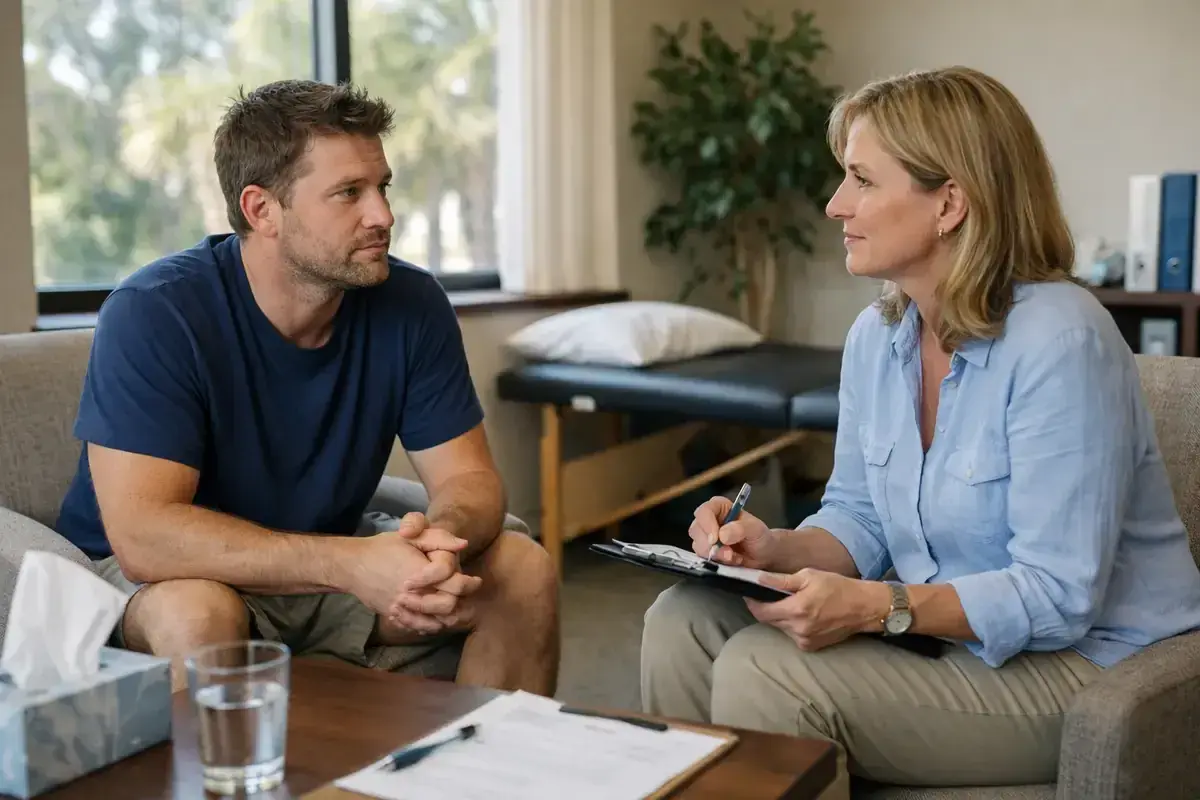
If you are searching for Jacksonville alcohol withdrawal medication help, it is important to know that alcohol withdrawal can become dangerous quickly. Shaking, sweating, vomiting, anxiety, insomnia, rising blood pressure, and confusion may seem manageable at first, but symptoms can escalate without warning. In Florida, where heat, dehydration, and travel between counties can complicate care, starting with a professional assessment is a safer step than trying to detox alone at home.
Florida Helps offers medically supervised detox in Florida. If withdrawal is starting or you are afraid to stop on your own, call 866-931-9677 today.
Florida Helps provides medically supervised detox and ongoing treatment options for adults who need support with alcohol use and co-occurring mental health concerns. Care decisions follow an assessment, so the right plan depends on your symptoms, history, current drinking pattern, medications, and overall health. If you or a loved one may need detox now, call 866-931-9677 or visit https://floridahelps.com/programs/detox/ to learn about medically supervised care in Florida.
Why alcohol withdrawal medication may be needed
Alcohol affects the brain and nervous system in ways that can make stopping suddenly risky. According to the American Society of Addiction Medicine and the National Institute on Alcohol Abuse and Alcoholism, withdrawal can range from mild discomfort to severe complications such as seizures or delirium tremens. Medication may be used during detox to reduce the intensity of symptoms, support safety, and help the body stabilize under medical supervision.
Medication is not one-size-fits-all. In Jacksonville and throughout Florida, a clinician should consider factors such as prior withdrawal episodes, history of seizures, age, liver health, pregnancy status, other substances used, and mental health symptoms. Some people need close monitoring in a structured detox setting, while others may be appropriate for a different level of care after assessment. The safest path is to be evaluated before deciding how to stop drinking.
- Signs that support may be needed include worsening tremors, severe anxiety, vomiting, confusion, or hallucinations.
- A past history of difficult withdrawal often raises concern for future withdrawal complications.
- Using alcohol along with benzodiazepines, opioids, or other sedating drugs increases medical risk.
- An assessment helps determine whether detox, residential care, or outpatient treatment is the best next step.
What medication support in detox can look like
When people talk about Jacksonville alcohol withdrawal medication, they are usually referring to medications used during detox to manage symptoms and reduce immediate medical risk. The exact approach depends on the assessment. In a medically supervised setting, clinicians may monitor vital signs, hydration, sleep, agitation, and orientation while adjusting care based on how symptoms change over time. The goal is not simply comfort. The goal is safer stabilization so treatment can continue.
Detox medication support is only one part of care. A Florida detox program may also address fluids, nutrition, sleep disruption, and co-occurring anxiety or depression symptoms when clinically appropriate. Because alcohol withdrawal can change rapidly over the first several days, professional monitoring matters. If you are considering stopping alcohol use, starting with medically supervised detox at https://floridahelps.com/programs/detox/ can be a more protective option than attempting to manage withdrawal alone.
- Medications may be used to reduce agitation, tremors, or risk during withdrawal when clinically indicated.
- Monitoring often includes blood pressure, pulse, temperature, hydration, and mental status.
- Care plans can change during detox as symptoms improve or become more severe.
- After detox, many people benefit from residential or outpatient treatment to support ongoing recovery.
Comparison: home withdrawal attempts and medically supervised detox
| Topic | At home without supervision | Medically supervised detox | After assessment next steps |
|---|---|---|---|
| Symptom monitoring | Limited, often informal | Ongoing clinical observation | Level of care adjusted as needed |
| Medication access | Not guided for detox safety | Medication support when indicated | Plan reviewed before discharge |
| Response to complications | Emergency response may be delayed | Faster recognition of escalation | Transition to residential or outpatient care |
| Support for co-occurring needs | Often inconsistent | Integrated medical and behavioral support | Referral and treatment planning |
| Environment | Triggers and alcohol access may remain | Structured setting focused on stabilization | Continued treatment based on assessment |
How Florida-specific factors affect detox planning
In Northeast Florida, practical issues often influence the safest detox plan. Jacksonville is spread across a large area, and long drives, limited support at home, or difficulty getting to appointments can make outpatient management unrealistic for some people. Florida’s climate can also worsen dehydration, especially if someone is already sweating, vomiting, or not eating well during withdrawal. These details may sound simple, but they matter when clinicians decide the safest level of care.
Florida families are also often coordinating care across counties or helping a loved one travel from the beach communities, the Southside, or nearby areas such as Orange Park, St. Augustine, or Fernandina Beach. A structured detox program can reduce the burden of trying to watch symptoms around the clock without medical training. After assessment, Florida Helps may recommend detox first, then residential or outpatient care depending on safety needs, stability, and recovery goals.
Detox versus trying to manage alcohol withdrawal at home
Many adults delay treatment because they hope to taper on their own, rest at home, or “push through” symptoms. Unfortunately, alcohol withdrawal does not always follow a predictable path. Someone may seem stable early on and then become much worse. Home settings also make it harder to respond to seizures, severe confusion, uncontrolled vomiting, or rapid changes in blood pressure. Family members usually want to help, but support alone is not the same as medical supervision.
For people in Jacksonville who are worried about missing responsibilities, the strongest step is still to start with an assessment and consider medically supervised detox. Detox can create a safer bridge into treatment instead of leaving the next few days to chance. Florida Helps offers detox as part of a broader continuum, which may include residential and outpatient care after stabilization. To take action now, call 866-931-9677 or review options at https://floridahelps.com/programs/detox/.
Withdrawal can be dangerous to manage alone. Our Florida detox program provides 24/7 medical monitoring and a plan for what comes next. Call 866-931-9677.
Related reading
- Alcohol Withdrawal Medication
- Miami Alcohol Withdrawal Medication Options
- Florida 988 and Alcohol Detox Medication Support
- Alcohol Withdrawal Medication in Florida
- Tampa Alcohol Withdrawal Medication Detox Care
If you are looking for Jacksonville alcohol withdrawal medication help, do not wait for symptoms to become harder to manage. A professional assessment can help determine whether medically supervised detox is the safest next step and what level of care should follow. Florida Helps offers detox along with residential and outpatient treatment in Florida. Call 866-931-9677 today, or visit https://floridahelps.com/programs/detox/ to start with medically supervised detox and move toward ongoing treatment support.
Start medically supervised detox in Florida
Do not wait for withdrawal to get worse. Our admissions team can talk through detox at Florida Helps and the next level of care. Call 866-931-9677.
Frequently asked questions
What is Jacksonville alcohol withdrawal medication help?
It generally means professional evaluation and, when appropriate, medication support during alcohol detox to reduce risk and manage symptoms. The specific medication approach is determined only after an assessment of withdrawal severity, medical history, other substances used, and mental health needs. In Florida, this is often part of a broader detox and treatment plan.
Can I detox from alcohol at home if my symptoms seem mild?
It may feel tempting, but alcohol withdrawal can change quickly and become dangerous. Even symptoms that begin as anxiety, sweating, tremors, or insomnia can escalate. A professional assessment is the safer first step, especially if you have had prior withdrawal, seizures, heavy daily drinking, or other health concerns.
How long does alcohol withdrawal usually last?
Timelines vary from person to person, which is why assessment matters. Early symptoms may begin within hours after the last drink, and some risks can increase over the next few days. Factors such as drinking pattern, age, liver health, and other substances can affect the course, so individualized medical guidance is important.
What happens after detox at Florida Helps?
After detox, the next recommendation depends on your assessment, stability, and recovery needs. Some people may benefit from residential treatment for a more structured environment, while others may continue with outpatient care. The goal is to build on stabilization with ongoing support for alcohol use, mental health symptoms, and relapse prevention.
When should I call for immediate help?
Call right away if you or a loved one is experiencing severe shaking, repeated vomiting, confusion, hallucinations, chest pain, seizures, fainting, or signs of dehydration. If there is an emergency, seek emergency medical attention immediately. For help starting treatment planning in Florida, you can also call 866-931-9677 to discuss detox options.
Further treatment information
These public health resources offer background for comparing options and preparing questions for a care team. They do not confirm local appointment availability.