
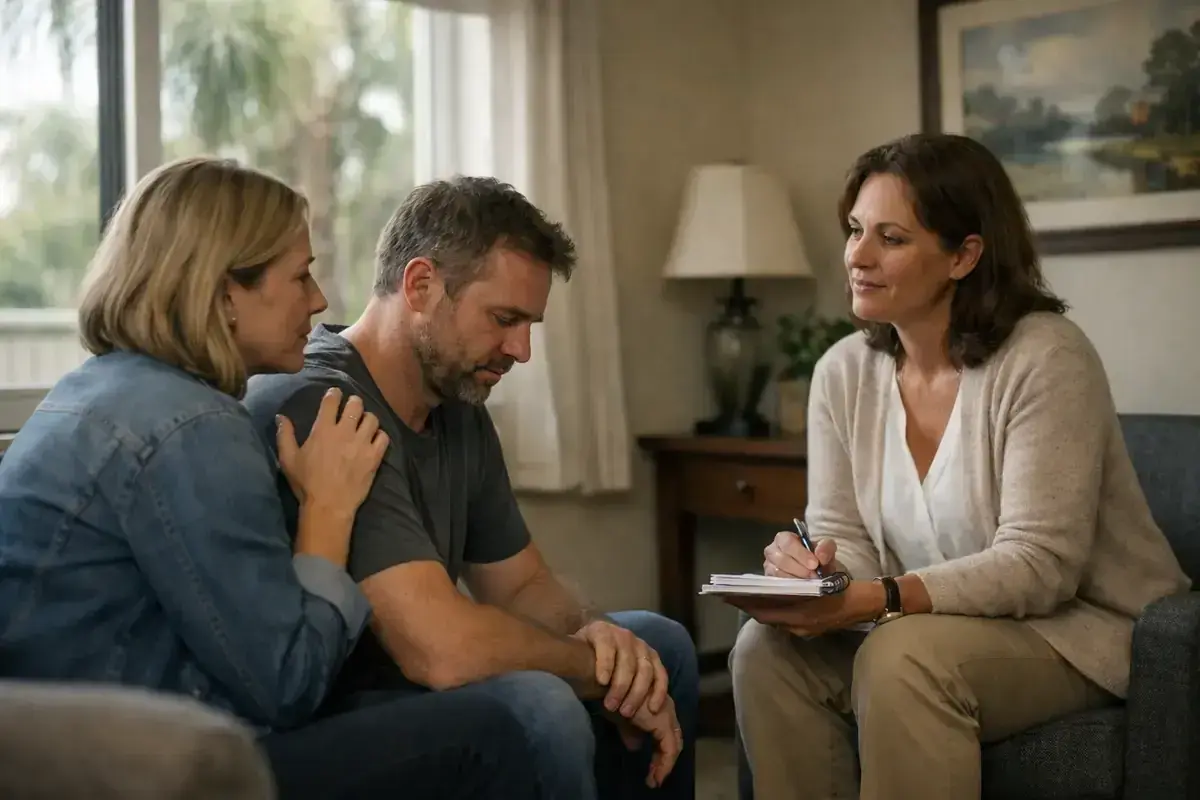
When alcohol use has become hard to control, stopping suddenly can feel frightening. Many people in Jacksonville first notice shakiness, sweating, anxiety, nausea, or trouble sleeping, then wonder whether those changes are normal or dangerous. Jacksonville alcohol withdrawal symptoms can range from mild to severe, and in some cases they can become a medical emergency. Families often see the change before the person drinking does, especially when confusion, agitation, or repeated drinking to avoid feeling sick starts to take over daily life.
Florida Helps offers medically supervised detox in Florida. If withdrawal is starting or you are afraid to stop on your own, call 866-931-9677 today.
If you are in Northeast Florida and worried about withdrawal, the safest next step is to get professional guidance and consider medically supervised detox. Florida Helps provides detox, residential, and outpatient care in Florida, and care decisions follow an assessment of the person’s symptoms, history, and immediate needs. You can learn more about detox at https://floridahelps.com/programs/detox/ or call 866-931-9677 to talk through options.
Why alcohol withdrawal should be taken seriously in Jacksonville
Alcohol affects the brain and nervous system. Over time, the body can adapt to repeated drinking, which means stopping suddenly may trigger a stress response as the system tries to rebalance. That is why alcohol withdrawal is not just a matter of willpower. Symptoms can begin within hours after the last drink and can intensify quickly, particularly for adults who have been drinking heavily, drinking daily, or who have gone through withdrawal before.
In Jacksonville and surrounding Duval County communities, people often try to detox at home because they want privacy or hope the symptoms will pass. Unfortunately, the course of withdrawal is not always predictable. According to ASAM and NIAAA, alcohol withdrawal can include severe complications such as seizures or delirium tremens. A medically supervised setting can monitor symptoms, support hydration and comfort, and respond quickly if the situation changes.
Common Jacksonville alcohol withdrawal symptoms to watch for
Early symptoms can look manageable at first, which is one reason people delay getting help. A person may seem restless, sweaty, irritable, or unable to sleep. They may also complain of stomach upset, headache, or a racing heart. In Florida’s heat and humidity, sweating and dehydration can add strain, especially if someone is already physically run down or spending time outdoors or in non-air-conditioned spaces.
As withdrawal progresses, symptoms can become more concerning. Hallucinations, severe tremors, rising blood pressure, confusion, fever, and seizures should never be brushed off. If a person becomes disoriented, cannot keep fluids down, or seems medically unstable, immediate medical attention is important. An assessment helps determine whether detox, residential treatment, or another level of care is appropriate.
- Common early symptoms: anxiety, shaking, sweating, nausea, vomiting, headache, insomnia
- Concerning symptoms: severe tremors, agitation, hallucinations, confusion, fever, seizures
- Risk can be higher after long-term heavy drinking, prior withdrawal episodes, or co-occurring medical or mental health conditions
- Mixing alcohol with sedatives or other substances can make withdrawal more complex and more dangerous
Alcohol withdrawal: home response vs. medically supervised detox
| Situation | At-home approach | Medically supervised detox | Why it matters |
|---|---|---|---|
| Mild early symptoms | Often underestimated | Symptoms monitored closely | Withdrawal can worsen quickly |
| History of heavy daily drinking | Family may not know risk level | Assessment reviews history and risk | Past pattern affects safety |
| Severe symptoms appear | Limited ability to respond | Clinical support available | Seizures and confusion need urgent care |
| Co-occurring anxiety or depression | Can complicate home detox | Mental health needs reviewed | Treatment planning is more complete |
| Next-step treatment planning | Often unclear | Residential or outpatient options discussed | Detox works best with follow-up care |
When home detox is risky and why medical detox is often the safer choice
A home detox plan may sound appealing, but alcohol withdrawal can shift from mild to severe without much warning. Someone who felt only anxious and shaky in the morning may become significantly worse by evening. That unpredictability is one reason professional detox is strongly recommended when there is a history of heavy alcohol use, prior withdrawal, blackouts, falls, seizures, or co-occurring depression, panic, trauma, or other health issues.
Medically supervised detox creates a safer environment for the first stage of recovery. The focus is stabilization, observation, symptom management, and planning for what comes next after detox. At Florida Helps, treatment recommendations follow an assessment rather than a one-size-fits-all plan. If you are comparing options in Florida, start with detox information here: https://floridahelps.com/programs/detox/. If symptoms are worsening now, call 866-931-9677.
- Medical supervision can help identify changing symptoms early
- Assessment considers alcohol use history, current symptoms, medications, and mental health
- Detox can be the first step before residential or outpatient care
- Family members should not try to “monitor” dangerous withdrawal alone
What to expect from detox and follow-up treatment in Florida
Detox is not the full treatment process, but it can be a critical first step. During detox, the goal is to help the body clear alcohol more safely while the care team monitors symptoms and evaluates immediate risks. Once a person is more medically stable, the next recommendation may be residential treatment, outpatient care, or another level of support based on the assessment, substance use history, home environment, and mental health needs.
For many adults in Jacksonville, continuity matters. A person may begin with detox and then need structured therapy, relapse prevention planning, family support, and care for anxiety, depression, or trauma symptoms. Florida-specific practical issues can also affect treatment planning, including transportation, family responsibilities, legal concerns, and weather-related disruptions during storm season. Planning ahead for the next step makes it more realistic to stay engaged in recovery.
- Detox addresses acute withdrawal; it is not the end of treatment
- Residential care may fit people needing a highly structured setting after detox
- Outpatient care may fit people who are medically stable and have a supportive home setting
- Co-occurring mental health symptoms should be evaluated as part of treatment planning
Withdrawal can be dangerous to manage alone. Our Florida detox program provides 24/7 medical monitoring and a plan for what comes next. Call 866-931-9677.
How families in Jacksonville can respond right now
Families often feel torn between wanting to help and not knowing what is safe. If your loved one is showing Jacksonville alcohol withdrawal symptoms, avoid arguing, lecturing, or making them “prove” they can stop on their own. Focus on safety, clear communication, and getting a professional opinion. If the person is confused, hallucinating, seizing, or cannot be safely monitored, emergency care may be needed immediately.
If the situation is urgent but not yet an emergency, encourage a same-day conversation about medically supervised detox. Keep the message simple: withdrawal can be dangerous, there is help available in Florida, and an assessment can clarify the safest next step. You can point them to https://floridahelps.com/programs/detox/ and offer to make the call together to 866-931-9677.
- Do stay calm and speak in short, direct sentences
- Do remove access to alcohol only if medical guidance is in place and safety is addressed
- Do gather basic information: last drink, amount used, medications, and medical history
- Do not assume symptoms are “just anxiety” if drinking recently stopped
- Do not leave a medically unstable person alone
Choosing help in Florida and taking the first step today
Finding treatment can feel overwhelming, especially when symptoms are already escalating. The most useful first step is not to search for perfect answers online. It is to speak with a treatment professional who can help sort out the urgency and discuss detox, residential, and outpatient options. Because alcohol withdrawal can become dangerous quickly, waiting for symptoms to pass can increase risk and make the process harder on both the person drinking and the family.
If you are in Jacksonville, the Beaches, Orange Park, St. Augustine, or elsewhere in Northeast Florida, consider starting with medically supervised detox rather than trying to manage withdrawal at home. Florida Helps offers Florida-based addiction treatment, and placement decisions follow an assessment of medical and clinical needs. To take action now, visit https://floridahelps.com/programs/detox/ or call 866-931-9677.
Related reading
- Alcohol Withdrawal Symptoms
- Can Florida Urgent Care Treat Alcohol Withdrawal?
- Tampa Alcohol Withdrawal Symptoms and ER Risks
- Alcohol Withdrawal Symptoms in Florida Heat
- Florida 988 for Alcohol Withdrawal Crisis Support
If you or someone you love is showing Jacksonville alcohol withdrawal symptoms, do not wait for things to get worse before asking for help. Medically supervised detox can be a safer place to begin, and the next step after detox can be planned based on a full assessment. Call Florida Helps at 866-931-9677 today or visit https://floridahelps.com/programs/detox/ to start the conversation.
Start medically supervised detox in Florida
Do not wait for withdrawal to get worse. Our admissions team can talk through detox at Florida Helps and the next level of care. Call 866-931-9677.
Frequently asked questions
How soon do alcohol withdrawal symptoms start after the last drink?
Symptoms often begin within several hours after the last drink, though the exact timing varies. Early signs can include anxiety, tremors, sweating, nausea, and trouble sleeping. Because symptoms can intensify over the first day or two, it is important not to assume a mild start means the process will stay mild.
Can alcohol withdrawal be life-threatening?
Yes. According to ASAM and NIAAA, severe alcohol withdrawal can include seizures, hallucinations, and delirium tremens, which can be life-threatening without prompt medical care. That is why medically supervised detox is strongly recommended for many people, especially those with heavy alcohol use, prior withdrawal, or co-occurring health conditions.
Is detox enough, or do I need more treatment after withdrawal ends?
Detox is usually the first stage, not the full treatment plan. Once withdrawal is stabilized, many people benefit from residential or outpatient care to address cravings, triggers, mental health symptoms, family stress, and relapse prevention. The right next step depends on an assessment of medical needs, substance use history, and daily support.
What should I do if my loved one in Jacksonville is hallucinating or having a seizure?
Treat that as an emergency. Severe confusion, hallucinations, seizures, or signs of medical instability need immediate emergency evaluation. Do not try to manage those symptoms alone at home. Once the immediate crisis is addressed, follow-up treatment planning can help determine whether detox and ongoing addiction care are needed.
How do I get started with Florida Helps for alcohol detox?
The simplest first step is to call 866-931-9677 and describe what is happening. You can also review the detox program at https://floridahelps.com/programs/detox/. A team member can help explain the intake process, and care recommendations are based on an assessment of symptoms, alcohol use history, and current safety concerns.
Further treatment information
These public health resources offer background for comparing options and preparing questions for a care team. They do not confirm local appointment availability.