
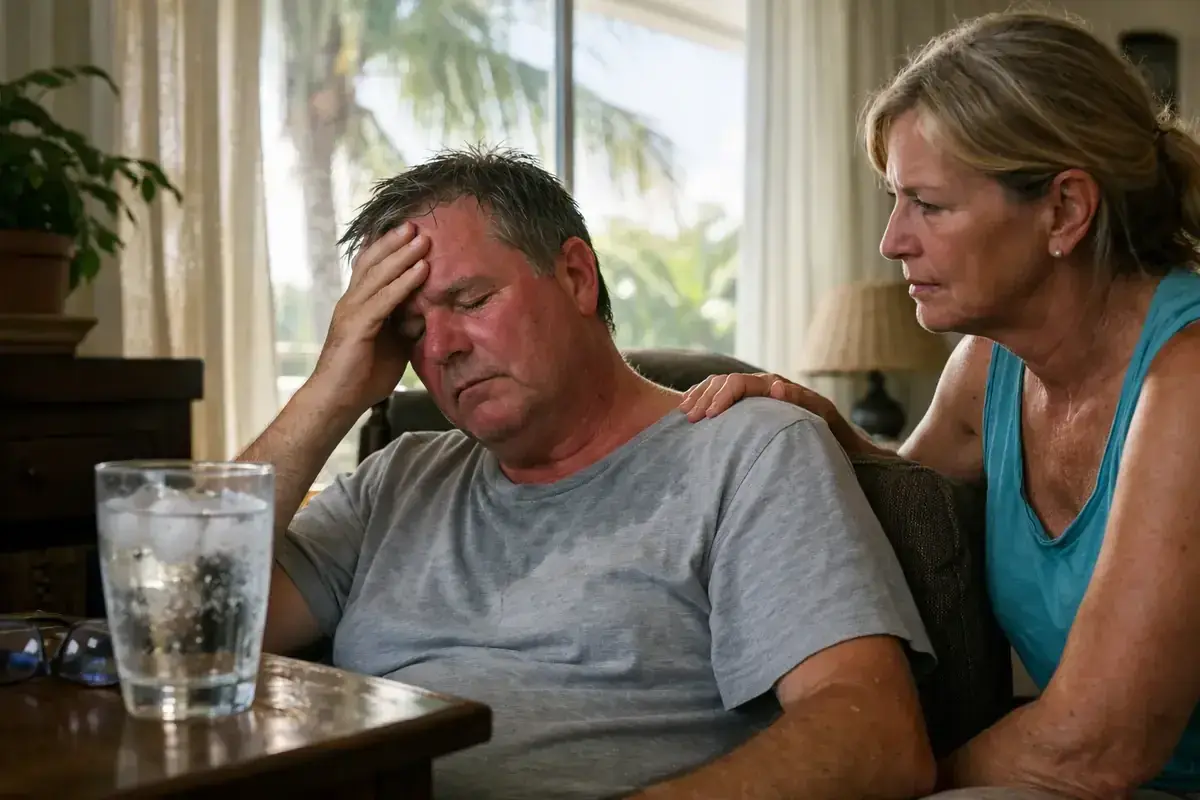
Alcohol withdrawal can be dangerous anywhere, but Florida’s heat and humidity can make it harder on the body. High temperatures increase fluid loss, raise the risk of dehydration, and can worsen symptoms like sweating, rapid heart rate, nausea, dizziness, and confusion. For people trying to stop drinking after regular or heavy alcohol use, what feels like “just getting through it” in a hot Florida home, car, job site, or outdoor setting can become a medical issue quickly.
Florida Helps offers medically supervised detox in Florida. If withdrawal is starting or you are afraid to stop on your own, call 866-931-9677 today.
If you or someone you love is showing alcohol withdrawal symptoms in Florida heat, it is important to take the risk seriously and seek professional help. Florida Helps provides medically supervised detox, with next-step care determined by assessment, including residential and outpatient treatment when appropriate. To start help now, call 866-931-9677 or visit https://floridahelps.com/programs/detox/. For many people, supervised detox is the safest place to begin.
Why Florida heat makes alcohol withdrawal more serious
Alcohol withdrawal affects the nervous system, circulation, sleep, digestion, and body temperature regulation. In Florida, where heat index levels can stay high for long stretches and humidity limits the body’s ability to cool itself, common withdrawal symptoms may feel more intense and escalate faster. Heavy sweating, vomiting, poor appetite, and diarrhea can all contribute to fluid and electrolyte loss, which is especially concerning when the weather is already putting extra stress on the body.
Heat can also blur the picture. A person may assume they are simply overheated, exhausted, or dehydrated from being outside, when they are actually entering alcohol withdrawal. Families may miss early signs for the same reason. According to ASAM and NIDA, alcohol withdrawal can range from mild symptoms to severe complications, including seizures and delirium tremens. That is one reason Florida Helps strongly encourages medically supervised detox rather than trying to quit alone in Florida conditions.
Symptoms to watch for when alcohol withdrawal happens in hot weather
Early alcohol withdrawal symptoms often begin within hours after the last drink, although timing varies from person to person. In Florida heat, symptoms may appear more distressing because the body is already working to manage temperature and hydration. Someone may become shaky, sweaty, irritable, restless, nauseated, and unable to sleep. They may also complain of headache, anxiety, sensitivity to light, or feeling like their heart is racing.
As symptoms progress, the situation can become urgent. Confusion, severe agitation, hallucinations, fainting, chest pain, and seizures are not signs to “wait out.” Families should know that severe withdrawal can be life-threatening. Medically supervised detox allows monitoring, symptom management, and care decisions based on an assessment rather than guesswork at home.
- Common symptoms include sweating, tremors, nausea, anxiety, headache, and insomnia.
- Florida heat can worsen dizziness, dehydration, fatigue, and rapid heartbeat.
- Warning signs that need immediate medical attention include confusion, hallucinations, seizures, or loss of consciousness.
- Symptoms can overlap with heat exhaustion, which makes professional evaluation especially important in Florida.
Alcohol withdrawal and Florida heat: quick comparison
| Situation | What it can look like | Florida heat concern | Safer response |
|---|---|---|---|
| Mild early withdrawal | Sweating, tremor, anxiety, nausea | Humidity increases fluid loss and distress | Get evaluated for medically supervised detox |
| Withdrawal plus outdoor exposure | Dizziness, weakness, racing heart | Heat can worsen dehydration and collapse risk | Move indoors and seek urgent assessment |
| Confusion or hallucinations | Disorientation, seeing or hearing things | Can be mistaken for severe overheating | Emergency medical care right away |
| Vomiting or poor intake | Cannot keep fluids down | Fast dehydration in hot conditions | Medical evaluation, not home management |
| History of severe withdrawal | Past seizure or delirium tremens | Heat adds body stress during a high-risk period | Start detox with professional monitoring |
Florida-specific risks: outdoor work, hurricane season, and year-round humidity
Florida presents real-life conditions that can complicate withdrawal. Many adults work outdoors in construction, landscaping, tourism, transportation, marine industries, and other jobs where long hours in the sun are common. If a person stops drinking and then continues working outside, they may underestimate how quickly sweating, nausea, and poor fluid intake can lead to collapse or severe distress. Even a short drive in a hot vehicle or time at the beach can increase risk during withdrawal.
Hurricane season and power outages add another Florida-specific concern. Homes without reliable air conditioning can become dangerous for someone in withdrawal, especially if they are already vomiting, sweating heavily, or unable to sleep. High humidity also means the body has a harder time cooling down. These are practical reasons to seek a stable, monitored environment for detox instead of trying to manage symptoms alone.
- Outdoor jobs and long commutes in the heat can accelerate dehydration during withdrawal.
- Power loss after storms may remove air conditioning and safe rest conditions.
- Florida humidity can make sweating less effective and heat stress worse.
- Heat exposure may hide the seriousness of withdrawal until symptoms are advanced.
Why medically supervised detox is the safer first step
Alcohol withdrawal is not just a comfort issue. It can involve sudden changes in blood pressure, pulse, mental status, sleep, and neurologic function. In medically supervised detox, the focus is safety, monitoring, and individualized care. An assessment helps determine the right level of support based on drinking history, current symptoms, co-occurring mental health concerns, past withdrawal episodes, medical conditions, and environmental risks such as Florida heat exposure.
For families, supervised detox also removes the burden of trying to judge what is normal and what is dangerous. A person may need hydration support, observation, or a higher level of medical attention depending on how symptoms develop. Florida Helps offers medically supervised detox as an entry point to treatment, with recommendations for residential or outpatient care made after assessment. To learn more, visit https://floridahelps.com/programs/detox/ or call 866-931-9677.
Withdrawal can be dangerous to manage alone. Our Florida detox program provides 24/7 medical monitoring and a plan for what comes next. Call 866-931-9677.
At-home withdrawal versus detox in a Florida setting
People often hope they can stop drinking at home, rest, drink water, and push through. In Florida, that plan can be less predictable than expected. Heat exposure, interrupted sleep, ongoing work demands, caregiving responsibilities, and easy access to alcohol can all make home withdrawal harder and less safe. A person may start with mild symptoms and then become much sicker overnight.
Detox provides a more controlled setting for the early phase of withdrawal. Instead of trying to decide whether sweating, shaking, confusion, or rapid heartbeat are “normal,” the person is in a place designed to monitor change and respond appropriately. That matters in a state where high heat and humidity can magnify physical stress.
What families can do today in Florida
If your loved one is drinking daily or heavily and wants to stop, do not assume Florida heat is a minor factor. Help them move out of the sun and into a cool environment, but do not rely on cooling down alone if withdrawal is suspected. Avoid arguments, do not leave them alone if symptoms are escalating, and seek urgent help for any seizure, severe confusion, fainting, or hallucinations. If they are ready for treatment, act while the window is open.
The strongest next step is to begin medically supervised detox and let a clinical team assess what level of care fits best afterward. Florida Helps can help adults and families start with detox and then move into residential or outpatient treatment when appropriate. Call 866-931-9677 now or go to https://floridahelps.com/programs/detox/. In Florida’s climate, waiting for symptoms to pass on their own can add unnecessary risk.
- Move the person to a cool indoor space if possible, but do not treat this as only a heat issue.
- Call emergency services right away for seizures, severe confusion, hallucinations, or collapse.
- Do not encourage “one more drink” as a home fix; get professional guidance instead.
- Use a detox assessment to decide the safest next step, then follow through quickly in Florida heat.
Related reading
- Alcohol Withdrawal Symptoms
- Can Florida Urgent Care Treat Alcohol Withdrawal?
- Tampa Alcohol Withdrawal Symptoms and ER Risks
- Florida 988 for Alcohol Withdrawal Crisis Support
- Florida Baker Act and Alcohol Withdrawal
If you are seeing alcohol withdrawal symptoms in Florida heat, do not wait for the weather or the symptoms to improve on their own. Start with medically supervised detox so a professional team can assess safety and recommend the right next step. Call Florida Helps at 866-931-9677 or visit https://floridahelps.com/programs/detox/ today.
Start medically supervised detox in Florida
Do not wait for withdrawal to get worse. Our admissions team can talk through detox at Florida Helps and the next level of care. Call 866-931-9677.
Frequently asked questions
Can Florida heat really make alcohol withdrawal worse?
Yes. Florida heat and humidity can increase sweating, fluid loss, fatigue, and strain on the heart and nervous system. Those effects can intensify common withdrawal symptoms and make severe symptoms harder to recognize. If someone is stopping alcohol after regular or heavy use, professional detox is safer than trying to manage symptoms in a hot environment.
How do I know if it is alcohol withdrawal or heat exhaustion?
The symptoms can overlap, including sweating, dizziness, nausea, weakness, and confusion. A recent reduction or stop in alcohol use is an important clue, but families should not try to sort this out alone when symptoms are significant. In Florida, the safest response is prompt medical evaluation, especially if symptoms are worsening or the person is disoriented.
Is it safe to detox from alcohol at home in Florida?
It may not be safe, particularly for people with heavy daily drinking, a history of severe withdrawal, other medical issues, or active symptoms beyond mild discomfort. Florida’s climate can add extra stress through heat exposure and dehydration. A detox assessment helps determine the safest setting and whether residential or outpatient follow-up is appropriate.
What symptoms mean we should call 911 right away?
Call emergency services for seizures, severe confusion, hallucinations, chest pain, fainting, trouble staying awake, or any sudden collapse. These can signal a medical emergency, whether caused by severe withdrawal, heat illness, or both. Do not wait for the person to “sleep it off” or improve with fluids alone when these warning signs are present.
What happens after detox at Florida Helps?
After detox, recommendations depend on an assessment of symptoms, substance use history, mental health needs, medical concerns, and recovery supports. Some people may benefit from residential treatment, while others may be appropriate for outpatient care. The goal is to begin with safe withdrawal management and then move into the level of treatment that fits the person’s needs.
Further treatment information
These public health resources offer background for comparing options and preparing questions for a care team. They do not confirm local appointment availability.