
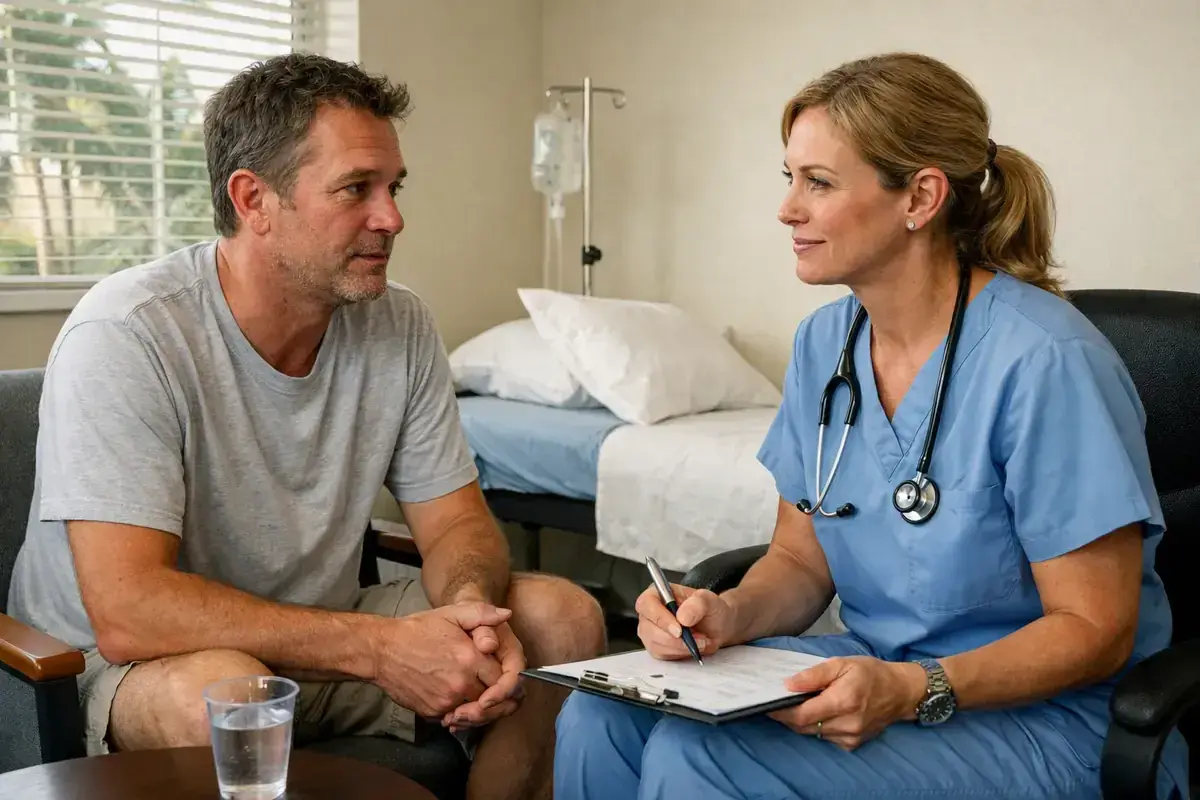
For adults and families searching for florida delirium tremens prevention, the most important point is simple: severe alcohol withdrawal can become a medical emergency, and trying to quit suddenly without professional help can be dangerous. Delirium tremens, often called DTs, is a serious withdrawal complication that can involve confusion, agitation, shaking, fever, sweating, and seizures. Because symptoms can escalate quickly, prevention starts with prompt medical evaluation and supervised detox rather than waiting to see what happens at home.
Florida Helps offers medically supervised detox in Florida. If withdrawal is starting or you are afraid to stop on your own, call 866-931-9677 today.
If you are in Florida and worried about alcohol withdrawal, Florida Helps offers medically supervised detox with next-step residential and outpatient care based on an assessment. The goal is not to promise a specific outcome, but to reduce risk, monitor closely, and respond quickly if symptoms worsen. If you or someone you love may be at risk, call 866-931-9677 and ask about the detox program at Florida Helps. Starting care early can be an important step in delirium tremens prevention.
Why delirium tremens prevention matters in Florida
Delirium tremens does not happen in every alcohol withdrawal case, but when it does occur, it requires urgent medical attention. According to the American Society of Addiction Medicine and the National Institute on Alcohol Abuse and Alcoholism, alcohol withdrawal can range from mild symptoms to severe complications such as seizures and delirium. That is why florida delirium tremens prevention should focus on early assessment, symptom tracking, hydration, medication management when appropriate, and a safe treatment setting.
In Florida, people often delay care because they hope they can push through withdrawal on their own at home, in a hotel, or while trying to keep work and family routines intact. That can be especially risky in a state where heat, sweating, vomiting, poor sleep, and dehydration may add stress to the body during withdrawal. A medically supervised detox setting offers monitoring and support that home withdrawal does not. Florida Helps can evaluate the situation and recommend the appropriate level of care.
For families, prevention also means not waiting for extreme symptoms before acting. If a loved one has a history of heavy alcohol use, prior detox attempts, withdrawal seizures, blackouts, or severe agitation when they stop drinking, it is wise to seek immediate guidance. The detox program at Florida Helps is designed to begin with an assessment and then connect each person to detox, residential treatment, or outpatient follow-up as clinically appropriate.
- Delirium tremens is a severe alcohol withdrawal emergency, not a routine hangover.
- Risk can rise when someone stops drinking suddenly after prolonged heavy use.
- Florida heat and dehydration can complicate already stressful withdrawal symptoms.
- An assessment helps determine whether detox, residential care, or outpatient treatment is the safer starting point.
Who may be at higher risk for severe alcohol withdrawal
No online article can diagnose risk, but certain patterns should raise concern. People who drink heavily on a daily basis, have gone through withdrawal before, or have a history of alcohol withdrawal seizures may need a higher level of monitoring. Co-occurring mental health conditions, use of other substances, older age, and certain medical conditions can also increase complexity. A professional assessment is the safest way to decide what level of care is needed.
Families in Florida often ask whether someone can simply taper at home. In some cases, self-managed withdrawal can become dangerous because symptoms change quickly and judgment may be impaired. A person may start with anxiety, tremor, nausea, or sweating and then worsen over hours. That is why florida delirium tremens prevention should never rely on guesswork. Medical detox provides observation, symptom relief, and a structured environment away from alcohol access.
If the person has become confused, is seeing or hearing things, has had a seizure, cannot keep fluids down, or is extremely agitated, seek emergency help right away. If symptoms are not yet emergent but there is clear concern about alcohol withdrawal, calling Florida Helps at 866-931-9677 can be a practical next step to discuss medically supervised detox and what assessment-based admission may look like.
- Daily heavy alcohol use or long-term alcohol dependence
- Previous withdrawal, especially seizures or severe confusion
- Co-occurring medical or psychiatric concerns
- Use of other substances at the same time
- Inability to stay hydrated, sleep, or remain safe at home
Comparison: home withdrawal and medically supervised detox
| Situation | Risk level | Best setting | Why |
|---|---|---|---|
| Mild symptoms only, no major history | Needs assessment | Case by case | Risk can change quickly |
| Past withdrawal seizures | High | Medical detox | Needs close monitoring |
| Confusion or hallucinations | Emergency | Immediate medical care | Possible severe withdrawal |
| Heavy daily drinking for years | Elevated | Medical detox | Complication risk may be higher |
| Strong home support but unstable symptoms | Moderate to high | Medical detox | Safer observation and response |
How medically supervised detox helps prevent delirium tremens
Detox is not just about getting alcohol out of the body. In a medically supervised setting, the team watches for changes in pulse, blood pressure, orientation, tremor, sweating, sleep disruption, and other signs that withdrawal may be intensifying. Medications may be used when clinically appropriate to reduce withdrawal severity and help lower the chance of dangerous complications. Care decisions follow an assessment, not a one-size-fits-all plan.
At Florida Helps, medically supervised detox can create a safer starting point for people who should not attempt alcohol withdrawal alone. Monitoring matters because delirium tremens often develops after earlier withdrawal symptoms have already started. A structured detox setting also supports hydration, nutrition, rest, and reduced environmental stress, all of which can matter when the nervous system is under strain.
Equally important, detox should not be the end of treatment. Once immediate withdrawal risk is addressed, the next step may be residential treatment, outpatient care, medication management, therapy, or dual-diagnosis support, depending on clinical needs. Florida Helps offers a path from detox into ongoing care in Florida, which can help families maintain momentum instead of scrambling to find the next level of support after a crisis.
What to expect from a Florida assessment and admission process
When someone reaches out for florida delirium tremens prevention, the first step is usually a conversation about current alcohol use, prior withdrawal experiences, physical health, mental health symptoms, and immediate safety concerns. This helps determine urgency and whether the person may need emergency care, detox, residential treatment, or another level of support. The recommendation should follow an assessment rather than assumptions based on age, appearance, or willpower.
In Florida, practical issues also matter. Families may be coordinating care across counties, helping a seasonal resident, or trying to transition a loved one from a hospital or crisis setting into treatment. A local provider with detox, residential, and outpatient options can make that handoff easier. Florida Helps can assess the situation and explain appropriate next steps based on current needs rather than making broad promises.
You can review the detox program page at Florida Helps when considering options, and you can also call 866-931-9677 for guidance on whether medically supervised detox may be appropriate. If alcohol withdrawal is a concern, acting early is usually safer than waiting for symptoms to become severe. Starting with the detox program at Florida Helps may help reduce avoidable risk while building a plan for continued treatment in Florida.
Withdrawal can be dangerous to manage alone. Our Florida detox program provides 24/7 medical monitoring and a plan for what comes next. Call 866-931-9677.
Florida detox versus trying to stop at home
People often compare home withdrawal with detox because they want privacy, convenience, or lower disruption. But convenience should not be confused with safety. At home, there may be no trained observer, no way to respond quickly if confusion or seizures begin, and no clear structure for hydration, sleep, or medication support. For someone at elevated risk, home withdrawal can become an emergency before the family realizes how serious it is.
Medically supervised detox in Florida offers an environment designed for observation and response. It also removes a person from immediate alcohol access and from the pressure to keep functioning as if nothing is wrong. This can be especially important for adults who have tried to quit before and relapsed quickly because withdrawal became overwhelming. The right treatment setting depends on assessment, but high-risk alcohol withdrawal should be taken seriously from the start.
Related reading
- Delirium Tremens
- Can Florida Baker Act Apply to Delirium Tremens?
- Orlando Delirium Tremens Signs and Hospital Care
- Delirium Tremens in Florida: When to Call 911
- Tampa Delirium Tremens Risk After Heavy Drinking
If you are searching for florida delirium tremens prevention, do not wait for alcohol withdrawal to become a crisis. Medically supervised detox can be a safer place to start, especially when there is heavy alcohol use, prior withdrawal, or uncertainty about risk. Call Florida Helps at 866-931-9677 to discuss an assessment and next steps, and ask about the detox program and continued residential or outpatient care in Florida.
Start medically supervised detox in Florida
Do not wait for withdrawal to get worse. Our admissions team can talk through detox at Florida Helps and the next level of care. Call 866-931-9677.
Frequently asked questions
What is the safest first step if I am worried about delirium tremens?
The safest first step is to get a professional assessment as soon as possible. If there is confusion, hallucinations, a seizure, chest pain, or severe agitation, seek emergency care right away. If symptoms are not yet emergent but alcohol withdrawal is a concern, call Florida Helps at 866-931-9677 to discuss medically supervised detox and the appropriate level of care.
Can delirium tremens be prevented at home?
Home management may not be safe for people at elevated risk of severe alcohol withdrawal. Symptoms can worsen quickly, and judgment may be impaired during the process. Prevention is stronger when there is medical monitoring, structured support, and the ability to respond if withdrawal intensifies. The best setting depends on an assessment of alcohol use history, prior withdrawal, and overall health.
How long after stopping alcohol can delirium tremens happen?
Timing can vary, which is one reason self-monitoring is unreliable. Alcohol withdrawal symptoms often begin within hours after the last drink, and more severe complications can develop later. Because the course is not identical for every person, Florida families should avoid a wait-and-see approach when there is a history of heavy use or prior severe withdrawal.
Why choose a Florida detox program instead of going straight to outpatient care?
Outpatient care can be helpful for many people, but it may not be the safest place to start if alcohol withdrawal risk is significant. Detox focuses on immediate medical monitoring and stabilization. After that, a person may step down into residential or outpatient treatment based on clinical need. Beginning with the right level of care can help reduce unnecessary risk during early recovery.
What happens after detox at Florida Helps?
After detox, the next recommendation follows an assessment of withdrawal status, mental health needs, relapse risk, home support, and recovery goals. Some people may benefit from residential treatment for more structure, while others may transition to outpatient services. Continuing care matters because detox addresses the withdrawal phase, but ongoing treatment supports longer-term recovery work.
Further treatment information
These public health resources offer background for comparing options and preparing questions for a care team. They do not confirm local appointment availability.