
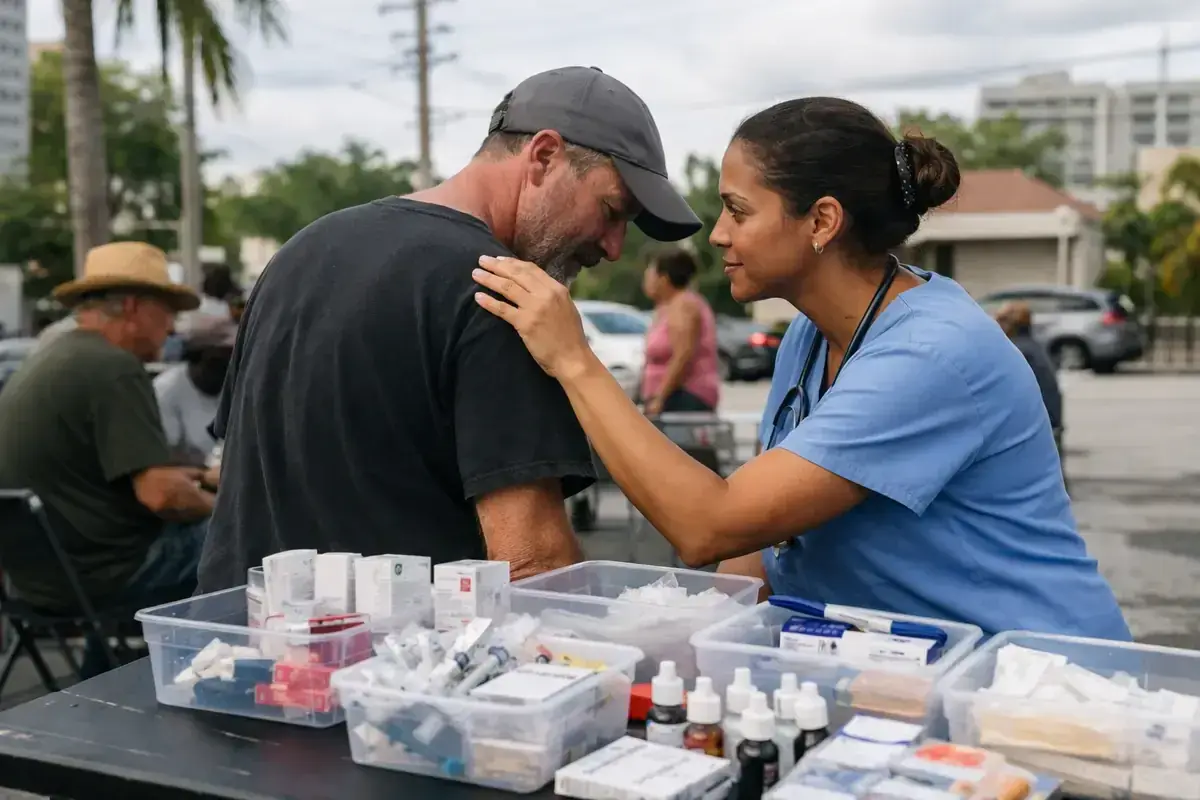
If you are searching where to get fentanyl test strips in Miami, you may be trying to protect yourself or someone you love from an overdose emergency. In Miami-Dade County, fentanyl can show up in opioids, counterfeit pills, cocaine, and other street drugs. The National Institute on Drug Abuse, or NIDA, warns that people may not know fentanyl is present. Test strips are one harm reduction tool that may help reduce risk, but they are not a substitute for treatment.
Florida Helps offers medically supervised detox in Florida. If withdrawal is starting or you are afraid to stop on your own, call 866-931-9677 today.
If drug use has become hard to control, the safer next step is professional care. Florida Helps provides medically supervised detox, residential treatment, and outpatient support in Florida. Every care recommendation follows an assessment, so treatment is matched to the person rather than forced into a one-size-fits-all plan. To learn about starting detox, visit https://floridahelps.com/programs/detox/ or call 866-931-9677.
What fentanyl test strips can and cannot do
Fentanyl test strips are small screening tools designed to detect the presence of fentanyl in a drug sample. They can be used as part of a broader harm reduction approach, alongside naloxone, avoiding use when alone, and seeking prompt medical help if an overdose is suspected. In Florida, including Miami, people often look for these strips because the local drug supply can be unpredictable.
Just as important is understanding the limits. A test strip may detect fentanyl, but it does not measure how much is present or whether other dangerous substances are mixed in. A negative result also does not make drug use safe. SAMHSA and NIDA both emphasize that overdose risk can still be present. If someone is using opioids or any non-prescribed drug regularly, medically supervised detox is often the more protective next step.
- May help identify fentanyl in a sample
- Does not confirm safety or purity
- Should be paired with naloxone and overdose planning
- Does not replace assessment, detox, or treatment
Where to get fentanyl test strips in Miami
In Miami, the most realistic places to check first are local harm reduction programs, county public health outreach, community health organizations, and some recovery-oriented nonprofits. Availability can change, so it is smart to call ahead before traveling. Ask whether they currently distribute fentanyl test strips, whether pickup is in person, and whether naloxone is available at the same time.
You can also ask Miami-area addiction treatment providers and behavioral health organizations whether they offer overdose prevention supplies or referrals to local partners that do. Some emergency departments, mobile outreach teams, or community events in Miami-Dade may also distribute test strips. If you are finding yourself repeatedly searching for supplies to stay safe, that is a sign to consider a higher level of care such as detox. Florida Helps can walk you through assessment-based options at https://floridahelps.com/programs/detox/.
- Miami-Dade harm reduction and syringe service programs
- Florida Department of Health resources in Miami-Dade County
- Community health nonprofits and outreach teams
- Some local treatment providers and hospital-linked programs
- Recovery events or public health distribution events
Miami options: harm reduction versus treatment
| Option | Best for | Limits | Next step |
|---|---|---|---|
| Harm reduction outreach | Immediate risk reduction | Availability may vary | Ask about naloxone and treatment referrals |
| County or community health source | Local public health support | May have set hours | Call ahead before visiting |
| Emergency department | Urgent overdose concerns | Not ongoing treatment by itself | Request substance use evaluation |
| Medically supervised detox | Withdrawal and stabilization | Requires assessment | Plan transition to further care |
| Residential or outpatient care | Continuing recovery support | Not a fit for every person | Use assessment to match level of care |
How to ask for them and what to ask before you go
When you call a Miami resource, keep the conversation simple. Ask whether fentanyl test strips are available now, whether there is a limit on how many can be picked up, and whether naloxone is offered too. It may also help to ask whether they provide brief overdose prevention education. These details matter because some sites may have changing inventory, event-based distribution, or service hours that differ by day.
If you are helping a family member, remember that the goal is safety without shame. A calm tone often works better than confrontation. You can say that you want to lower immediate overdose risk today and also explore treatment options right away. If withdrawal, cravings, or repeated return to use are part of the picture, ask about medically supervised detox instead of trying to manage everything alone at home.
- Do you have fentanyl test strips available today?
- Do you also distribute naloxone?
- Are there set pickup hours or outreach events?
- Do you offer referrals for detox or treatment?
When test strips are not enough and detox is the safer next step
For many families in South Florida, test strips become part of a cycle of crisis management. They may help in the moment, but they do not treat opioid use disorder, stimulant misuse, or co-occurring mental health symptoms. If someone is using daily, has overdosed before, mixes substances, cannot stop despite consequences, or feels sick when trying to quit, professional care should move to the front of the conversation.
Detox can be especially important when withdrawal is likely or when a person has been using fentanyl, heroin, counterfeit pills, alcohol, benzodiazepines, or multiple substances together. At Florida Helps, treatment planning follows an assessment so the level of care reflects medical needs, substance use patterns, and mental health concerns. You can learn more about medically supervised detox here: https://floridahelps.com/programs/detox/.
Starting care quickly can reduce the chance that a scary situation in Miami turns into a medical emergency. Detox also creates a bridge to residential or outpatient treatment, where people can begin working on the drivers of substance use rather than only reacting to the latest crisis. Families who feel stuck often benefit from making the call first, even if their loved one is uncertain.
Withdrawal can be dangerous to manage alone. Our Florida detox program provides 24/7 medical monitoring and a plan for what comes next. Call 866-931-9677.
What medically supervised detox can offer in Florida
A medically supervised detox program is designed to help people stop using substances with clinical support, monitoring, and a plan for what comes next. That matters because withdrawal can range from deeply uncomfortable to medically serious, depending on the substance, the amount used, how long it has been used, and a person’s health history. In Florida, where fentanyl exposure is a concern, supervised care can provide structure and immediate support.
At Florida Helps, detox is part of a broader continuum that may include residential treatment and outpatient services after assessment. That step-down planning is important because detox alone is usually only the beginning. The American Society of Addiction Medicine, or ASAM, supports matching treatment intensity to the person’s needs, which is why an assessment guides decisions rather than assumptions.
If you are weighing whether to keep searching for test strips or start treatment, think about what the last few weeks have looked like. More close calls, more secrecy, more withdrawal, or more fear usually point toward needing more than a harm reduction tool. Calling 866-931-9677 can help you understand what an assessment-based detox admission process may involve.
- Clinical monitoring during withdrawal
- Support for opioid, alcohol, benzo, and polysubstance concerns
- Assessment-based recommendations for next levels of care
- Transition planning into residential or outpatient treatment
How families in Miami can respond today
If you are a spouse, parent, adult child, or sibling, it is common to feel pulled between keeping someone safe today and wanting real change for tomorrow. You do not have to choose only one. A practical same-day response in Miami may include locating fentanyl test strips, making sure naloxone is available, and having a direct conversation about entering detox. Approaching the situation with urgency and compassion can lower conflict while keeping the focus on safety.
Try to avoid long debates about whether things are bad enough. Repeated risky use, failed attempts to stop, and fear of overdose are enough reason to seek help now. If your loved one agrees to talk, move quickly to an assessment conversation and a detox discussion. Florida Helps can explain program options in Florida and what the next steps may look like after clinical review.
Related reading
- Fentanyl Test Strips
- Florida Harm Reduction Rules for Test Strips
- Free Fentanyl Test Strips in Jacksonville
- Where to Get Fentanyl Test Strips in Orlando
- Broward Fentanyl Test Strips and Naloxone
If you are looking for where to get fentanyl test strips in Miami, take the immediate safety step you need today, but do not stop there if substance use is escalating. Real help is available in Florida. To talk through assessment-based options for medically supervised detox and continuing treatment, call Florida Helps at 866-931-9677 or visit https://floridahelps.com/programs/detox/.
Start medically supervised detox in Florida
Do not wait for withdrawal to get worse. Our admissions team can talk through detox at Florida Helps and the next level of care. Call 866-931-9677.
Frequently asked questions
Are fentanyl test strips legal to get in Florida?
Florida laws and local practices can change, and distribution often happens through harm reduction and public health channels. The most practical step is to contact Miami-Dade harm reduction or public health resources directly to confirm current availability. Even when you can get test strips, remember they are only one safety tool and not a replacement for treatment.
Can I buy fentanyl test strips at a pharmacy in Miami?
Some people first check pharmacies, but availability is inconsistent and may depend on the store. In Miami, many people have better luck contacting local harm reduction programs, public health outreach, or community organizations that focus on overdose prevention. Call ahead before visiting, and ask whether naloxone is available too.
Do fentanyl test strips mean the drug is safe if the result is negative?
No. A negative result does not make a substance safe. Test strips have limits, and they do not measure potency, purity, or the presence of every dangerous substance. NIDA and SAMHSA both support broader overdose prevention steps. If use is continuing despite risk, an assessment for medically supervised detox is a safer direction.
When should someone go to detox instead of relying on test strips?
Detox should be considered when there is regular opioid or polysubstance use, withdrawal symptoms, previous overdose, use of counterfeit pills, inability to stop, or major effects on work, family, or mental health. Test strips may help in the short term, but they do not stabilize withdrawal or address addiction. A professional assessment helps determine the right level of care.
How do I start treatment with Florida Helps?
The easiest first step is to call 866-931-9677 and ask about an assessment. Care decisions follow that assessment, which helps determine whether detox, residential treatment, or outpatient care is appropriate. You can also review the detox program information at https://floridahelps.com/programs/detox/ to understand why medically supervised support may be important.
Further treatment information
These public health resources offer background for comparing options and preparing questions for a care team. They do not confirm local appointment availability.